The Silence of a Failing Furnace and the Mentor’s Ghost
It was 3 AM in the dead of a January freeze, the kind of cold that makes the nails in a house’s framing pop like gunshots. I was kneeling in a crawlspace, my breath visible in the beam of my headlamp, staring at a furnace that refused to stay lit. My old mentor, a man who had more soot in his lungs than a chimney sweep, used to growl at me, ‘You can’t cool what you can’t touch, and you can’t burn what you don’t measure!’ That night, his voice was echoing in my head. This is the fundamental law of the heating service trade: if you aren’t using a calibrated combustion analyzer, you aren’t a technician; you’re just a parts-changer playing a dangerous game of ‘guess and check.’ Most homeowners think a ‘tune-up’ involves a guy with a rag wiping off some dust. That’s a lie. Real service is about the chemistry of the flame and the physics of the heat exchanger.
“The most expensive equipment in the world cannot overcome a bad duct system or an uncalibrated burner.” – Industry Axiom
The Anatomy of the Flame: Why Combustion Analysis Matters
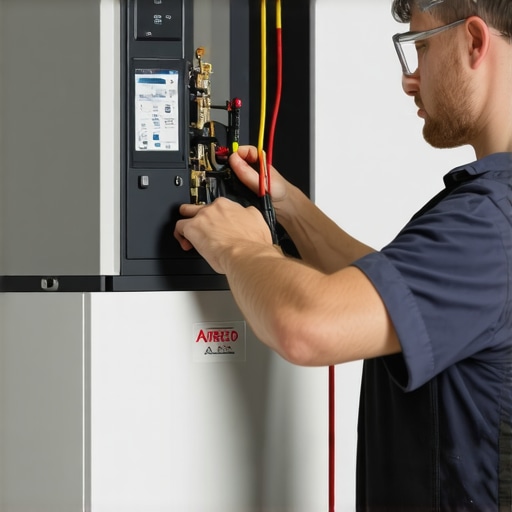
When we talk about modulating furnace repair or even standard 80% AFUE units, we are dealing with a controlled explosion inside your home. Combustion analysis is the process of sticking a probe into the flue pipe to read the ‘blood pressure’ of your furnace. We are looking for Oxygen (O2), Carbon Monoxide (CO), Carbon Dioxide (CO2), and stack temperature. If the O2 is too high, you’re losing heat up the chimney. If the CO is climbing, you’re looking at incomplete combustion, which is the precursor to a cracked heat exchanger and a 24/7 heating emergency response call that nobody wants to make. This is where combustion analysis findings that save homeowners thousands really come into play. By identifying a drifting gas valve or a clogged secondary heat exchanger early, we prevent the entire system from ‘slugging’ and burning out the inducer motor or, worse, leaking CO into the bedroom.
The ‘Sales Tech’ Scam vs. The Forensic Diagnosis
I’ve followed behind dozens of ‘Sales Techs’—those guys who get a commission for every unit they sell. They’ll walk into a house, see a 10-year-old furnace, and immediately claim the heat exchanger is cracked without ever pulling a tool out of their bag. They want that $12,000 replacement. A real pro uses the analyzer to prove the failure. If I see CO levels spiking in the air stream while the blower kicks on, that’s a forensic confirmation of a breach. I’m not guessing; I’m measuring. If you’re unsure about your current system’s health, learning how to identify when furnace repair is urgent and why can save you from being hustled. Sometimes, a unit just needs a propane conversion service adjustment or a new orifice, not a total replacement.
Thermodynamic Zooming: Latent Heat and the Northern Climate
In the North, where we face the ‘Polar Vortex’ every few years, our furnaces are the only thing standing between a comfortable night and burst pipes. When we look at high-efficiency condensing furnaces, we’re dealing with the latent heat of vaporization. We are cooling the flue gases so much—below the dew point—that the water vapor turns back into liquid. That transition releases extra BTUs. But if that condensate line freezes or the heat recovery ventilators (HRV) aren’t balanced, the whole system chokes. An HRV is vital in modern, ‘tight’ homes because it swaps stale indoor air with fresh outdoor air without losing the heat you just paid for. Without proper airflow, your furnace ‘short cycles,’ which is the equivalent of driving your car in stop-and-go traffic for 24 hours a day. It kills the ‘juice’ and fries the control board.
The Danger of Improper MERV Filter Upgrades
I see it every week: a homeowner buys the thickest, most expensive ‘allergy-reducing’ filter they can find. They think they’re doing their family a favor. In reality, they are suffocating their furnace. Those high MERV filter upgrades increase static pressure—the resistance the blower motor has to fight against. It’s like trying to run a marathon while breathing through a cocktail straw. The heat exchanger gets too hot because there isn’t enough air moving across it to carry the heat away. Eventually, the metal fatigues and cracks. If you want better air quality without killing your ‘Sparky’ (electrical components), you need a media cabinet designed for high-flow filters, not just a thicker 1-inch pleat stuffed into a standard slot. This is a core part of preventative HVAC repair tips for year-round efficiency.
Specialized Solutions: From Wood Stoves to Warehouses
Not every home relies on a gas furnace. I’ve spent days doing wood burning stove installation for folks who want off-grid reliability. The physics don’t change: you still need proper drafting and a ‘Tin Knocker’ who knows how to run a chimney liner that won’t burn the house down. On the other end of the spectrum, warehouse heating solutions often involve massive infrared tubes or unit heaters that require precise gas pressure settings to avoid soot buildup. Even baseboard heater repair for those old hydronic systems requires an understanding of thermal expansion and air binding. No matter the heat source, the goal is the same: transfer energy as efficiently as possible.
“Fuel-burning appliances shall be placed in an environment that allows for proper combustion air and ventilation to prevent the accumulation of hazardous gases.” – International Fuel Gas Code (IFGC)
The 2025 Tech Shift: App-Controlled Systems
We are entering the era of app-controlled heating systems where I can see your furnace’s performance from my truck before I even walk through your front door. These systems monitor ‘static pressure’ and ‘temperature rise’ in real-time. If the furnace detects a problem, it pings me. This isn’t just a gadget; it’s a way to catch a failing capacitor or a restricted ‘suction line’ before the system locks out. When integrated with heating service innovations transforming 2025 climate control, these tools make the ‘Sales Tech’ even more obsolete because the data doesn’t lie. You can see the efficiency drop on your phone.
Final Verdict: Don’t Skip the Science
When the ‘Pookie’ (mastic) is dry and the tools are packed, the only thing that matters is the printout from that combustion analyzer. It’s the birth certificate of a healthy furnace. If your tech doesn’t offer one, find a new tech. Whether you are dealing with a complex modulating furnace repair or just need a simple check-up, demand the numbers. You’re paying for physics, not just a guy in a van. For more on making the right choice, check out choosing the right HVAC fixes what homeowners need to know. Stay warm, stay safe, and remember: airflow is king, but combustion is the heart of the kingdom. “, “image”: {“imagePrompt”: “A professional HVAC technician in a dark basement using a digital combustion analyzer with a glowing screen to test a modern high-efficiency furnace flue pipe, technical and cinematic lighting.”, “imageTitle”: “HVAC Combustion Analysis in Action”, “imageAlt”: “Technician performing combustion analysis on a furnace”}, “categoryId”: 1, “postTime”: “2025-05-20T09:00:00Z”}