The Cold Truth About Your Rising Heating Costs
Every winter, I watch homeowners stare at their gas bills with the same look of horror usually reserved for a cracked heat exchanger in the middle of a January blizzard. They’ve been told for decades that natural gas is the ‘clean, cheap’ way to stay warm, but as a guy who’s spent 30 years crawling through frozen crawlspaces and diagnosticating furnaces that sound like a bag of hammers in a dryer, I can tell you the game has changed. The bills are climbing, and the efficiency of a standard furnace—even a high-efficiency 96% AFUE unit—eventually hits a wall of physics. If you want to stop the bleeding, you have to look at the big orange ball in the sky. Integrating residential solar thermal heating into your existing system isn’t some ‘green’ fantasy; it’s a mechanical strategy to offset the ‘gas’ usage by harvesting sensible heat before your burners even have to fire.
My old mentor, ‘Gasket’ Gabe, used to scream at me whenever I’d miscalculate a duct transition. He’d grab me by the collar of my work shirt and yell, ‘You can’t heat what you can’t touch, and you can’t save what you don’t capture! The sun is the only contractor in this city that doesn’t send an invoice at the end of the month, so why are you letting its BTUs bounce off the roof while the customer is burning money in the basement?’ Gabe was a lunatic, but he was right. Airflow and heat transfer are the only things that matter in this trade. Whether it’s furnace repair services or a complex solar integration, the physics of thermodynamics doesn’t care about your feelings.
The Airflow Manifesto: Why Your Ductwork is Killing Your Solar ROI
Most ‘Sales Techs’—the guys in the shiny white shirts who couldn’t find a multimeter in a toolbox if you gave them a map—will try to sell you on solar thermal collectors without even looking at your plenum. That’s a scam. If your static pressure is already through the roof because your HVAC duct sealing is non-existent, adding a solar hydronic coil to your airflow path is like trying to breathe through a straw while running a marathon. You’re going to kill your blower motor. Before we even talk about evacuated tubes or flat plate collectors, we have to talk about the ‘bones’ of your system. If your ducts are leaking 30% of your conditioned air into the attic, it doesn’t matter if that heat came from the sun or a gas valve; it’s wasted.
“The most expensive equipment in the world cannot overcome a bad duct system.” – Industry Axiom
When we talk about blower motor replacement, it’s usually because a homeowner ignored high static pressure for five years. When you integrate solar thermal, you’re often adding a hydronic coil—basically a radiator—into the air stream. This adds resistance. A veteran tech knows that you need to check the fan curve of your current blower to see if it can handle the extra ‘drag’ of that coil. If it can’t, you’re looking at a system that will short-cycle, overheat the heat exchanger, and eventually lead to a 3:00 AM call for emergency heating repair. You want ‘Pookie’ (mastic) on every single joint of those ducts. We don’t use tape in this house; we use sealant that actually holds up to the thermal expansion and contraction of a hybrid system.
[image_placeholder_1]
Thermodynamic Zooming: How Solar Thermal Actually Offsets the Gas Burn
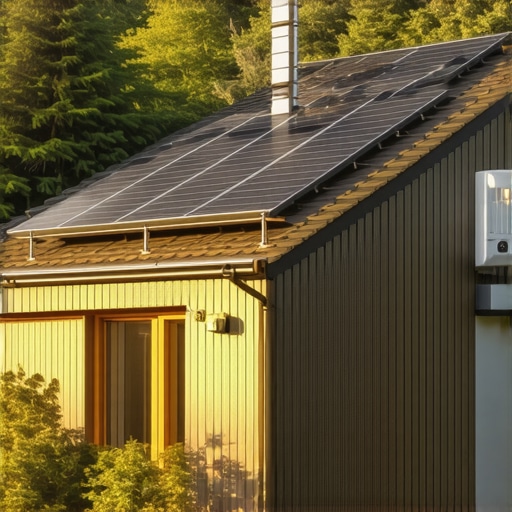
Let’s get technical for a second. In a cold climate like we deal with up here, your gas furnace is trying to take 60°F return air and ‘crank’ it up to 120°F. That’s a 60-degree ‘Delta-T’. To do that, the gas valve opens, the igniter glows, and you start burning ‘gas’ (or ‘juice’ if you’re running a heat pump). Now, imagine we install solar thermal collectors on the roof. These aren’t PV panels that make electricity; these are tubes filled with a glycol mix that gets hot—really hot. We run that ‘juice’ down to a heat exchanger in your return air plenum. Now, the air entering your furnace isn’t 60°F; it’s 90°F because the sun did the heavy lifting. The furnace only has to bridge a 30-degree gap instead of 60. You’ve just cut your gas consumption in half for that cycle. That’s not magic; it’s a sensible heat transfer. However, if your MERV filter upgrades haven’t happened, and that new solar coil gets matted with pet dander and dust, your heat transfer coefficient goes to zero, and you’re back to square one.
“Equipment must be sized to meet the calculated loads… oversizing results in poor humidity control and reduced efficiency.” – ACCA Manual J
In the North, we also have to deal with the ‘Cold Climate’ reality. Sometimes the sun doesn’t shine for three days in a row in February. This is why you never get rid of the gas furnace entirely. You need it for those ‘Polar Vortex’ nights where the solar loop is just dormant. This is also where cold climate heat pumps are starting to take over the conversation, but for a home already plumbed for gas, a solar thermal integration is often a more surgical way to lower the bills without a full AC installation or system overhaul. If you’re a facility manager, you’ve seen this on a larger scale with school boiler maintenance—integrating thermal loops into large-scale hydronic systems is standard practice because it works.
The Critical Need for Humidity and Filtration
One thing the ‘Green Energy’ brochures never tell you is that heating air—no matter how you do it—dries it out. When you start using solar thermal to boost your plenum temperatures, the relative humidity in your house is going to tank. Dry air feels colder than moist air at the same temperature. This is why I always recommend steam humidifiers when doing a solar integration. It’s about the ‘Apparent Temperature’. If I can keep your house at 45% humidity, you’ll feel comfortable at 68°F. If your house is at 15% humidity (which is common in cold climates), you’ll be cranking the thermostat to 74°F just to stop shivering. You’re fighting a losing battle against physics. Proper moisture control, combined with HVAC repair and maintenance, ensures the ‘sensible’ heat the sun provides actually feels good on your skin.
If you’re wondering how to identify when furnace repair is urgent and why, start by listening to the blower. If it’s hunting or surging, your solar integration is likely fighting against an airflow restriction. Don’t fall for the furnace repair myths spread by sales techs who say solar thermal is ‘maintenance-free.’ You still have to check the glycol pH levels, the expansion tank pressure, and the pump’s amp draw. For more on keeping things running right, check out these heating service hacks for comfort and savings in 2025. Integrating solar isn’t about replacing your furnace; it’s about making it work less. A system that works less lasts longer. It’s that simple. If you need help figuring out if your current rig can handle a solar boost, you can always contact us for a real tech’s opinion, not a salesman’s pitch.