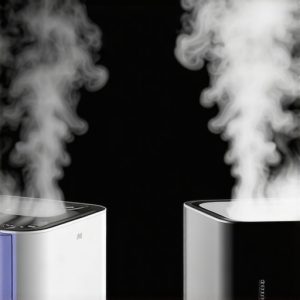
The Dry Truth About Winter Air and Failing Humidifiers
You wake up with a throat like a desert and a static shock every time you touch a light switch. You check your humidistat, and it says 15% relative humidity, even though you paid thousands for a high-end steam humidifier. You look at the unit, and it’s silent. No mist, no gurgling, just a blinking red light that mocks you. I’ve seen this a thousand times in 30 years of crawling through freezing crawlspaces and balancing hydronic heating systems. Most homeowners think the unit is shot, and some ‘Sales Tech’—those guys who care more about their commission than your comfort—will probably tell you that you need a total replacement. They are lying. Most steam humidifier failures come down to physics and chemistry, not a dead machine.
My old mentor, a grizzly veteran who could smell a gas leak from a block away, used to scream at me, ‘You can’t cool what you can’t touch, and you can’t humidify what you can’t boil!’ This is why airflow matters more than horsepower, and it’s why your steam humidifier is currently acting like a paperweight. If the water inside the canister can’t reach the boiling point, or if the system can’t accurately sense the water level, you get nothing but dry air. Dry air is ‘hungry’ air; it will pull moisture out of your skin, your hardwood floors, and even the structural wood of your house.
“The most expensive equipment in the world cannot overcome a bad duct system or poor water chemistry.” – Industry Axiom
The Anatomy of the Steam Mist: Thermodynamic Zooming
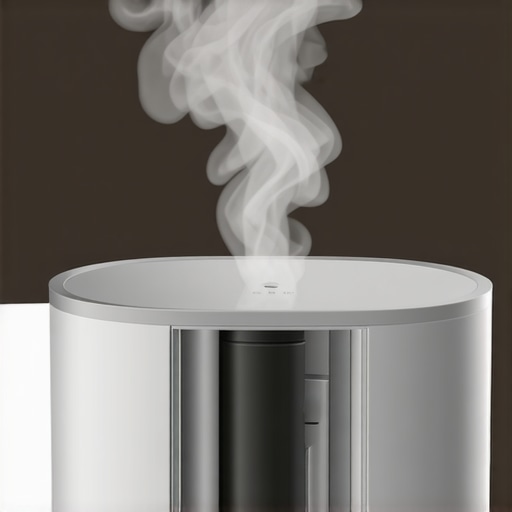
Unlike those cheap bypass humidifiers that just drip water over a pad, a steam humidifier is a power hog that actually boils water. It uses electrodes or a heating element to convert electrical energy into thermal energy. This process increases the internal energy of the water molecules until they hit the latent heat of vaporization. At this point, the liquid turns into a gas (steam) and is injected directly into your ductwork. In northern climates where we deal with polar vortexes, this is the only way to keep a house comfortable. But here is the catch: when you boil water, you leave behind every mineral that was in that water. Calcium, magnesium, and silica don’t evaporate. They stay in the canister, forming a rock-hard layer of scale. This scale acts as an insulator, preventing the electrodes from heating the water, or worse, it coats the water level sensors, tricking the unit into thinking it’s empty or over-full.
If your unit has stopped producing mist, the first thing I look at isn’t the circuit board; it’s the canister. In the trade, we call this the ‘heart’ of the system. If that heart is calcified, the unit won’t fire. This is where top HVAC repair strategies come into play—maintenance isn’t a suggestion; it’s a requirement for steam. You also need to check the contactor. If the contactor—the heavy-duty relay that sends power to the electrodes—has pitted or charred points, the ‘juice’ won’t flow, and the water stays cold. A simple contactor repair or replacement is often all that stands between you and a comfortable home.
The Forensic Diagnosis: Why the Mist Stopped
When I’m called out for a ‘no mist’ complaint, I follow a specific mechanical anatomy check. First, I check the drain valve. If the drain valve is stuck open or leaking because of a tiny piece of scale, the tank can never fill high enough to submerge the electrodes. The unit will just keep calling for water, dumping it down the drain, and eventually timing out with an error code. Second, I look at the solenoid valve. These tiny valves get gummed up with ‘Pookie’ (well, not actual mastic, but mineral gunk) and stop opening. If no water gets in, no steam gets out. This is similar to the issues we see with urgent furnace repair, where a single failed component like a pressure switch can shut down the whole heat cycle.
“Humidity control in the built environment requires precise measurement of both dry-bulb and wet-bulb temperatures to prevent microbial growth while maintaining occupant health.” – ASHRAE Standard 62.1
In the North, we also have to worry about the flue pipe installation and how it interacts with the humidifier. If your steam humidifier is piped into a return air duct that is too cold, the steam will flash-condense back into liquid water before it ever reaches your living room. You’ll end up with a puddle inside your furnace cabinet instead of humidity in your bedroom. This is why proper AC installation and duct design are critical even for heating accessories. If you’re seeing moisture around the unit but the air is still dry, your flue pipe installation or steam dispersion tube might be angled incorrectly, causing a ‘trap’ that blocks the mist.
The Simple Fix: The ‘Blow-Down’ and Reset
The fix is usually simpler than you think. 90% of the time, it’s a ‘canister swap.’ Most modern steam humidifiers use a disposable plastic canister. You shut off the power (don’t play with the 240V ‘juice’ unless you want a ride to the ER), drain the unit, pop the old canister out, and snap a new one in. While you’re in there, you check the fill and drain lines for scale. If you have a ‘cleanable’ tank, you’ll need a gallon of vinegar and a stiff brush. You have to scrub those electrodes until they look like new pennies. If they are coated in white crust, they can’t conduct electricity through the water. This is the same logic we use for heat exchanger cleaning in furnaces—if the surface is dirty, the heat transfer stops. While you are at it, checking for pilot light relighting issues or hot water heater repair needs is a smart move since the humidifier is often tied into the same water line.
Preventing Future Failure
If you don’t want to keep fixing this every winter, you need a preventative maintenance contract. A pro will come in, test the water conductivity, and ensure the drain cycle is programmed correctly for your local water hardness. If your water is ‘soft,’ the unit might actually struggle to start because pure water doesn’t conduct electricity well—it needs those minerals to carry the current. If the water is too hard, it scales up in a week. We sometimes have to add a pinch of baking soda to a new canister just to get the ‘juice’ flowing. It’s science, not magic. For those with complex setups like hydronic heating systems or those looking into spa heater services, water chemistry is your number one enemy. Keeping it in check saves you thousands. If your system is truly ancient and the board is fried, you might look into financing for heat pump installs that include integrated humidity control, but usually, a little elbow grease and a fresh canister will get that mist flowing again. Check out these heating service hacks for more ways to keep your home comfortable this year.