The Winter Desert and the Sound of Static
You know that sound? That sharp crack when you reach for a doorknob in February? That is the sound of your house turning into a structural desert. As an HVAC veteran who has spent three decades crawling through freezing crawlspaces and searing attics, I have seen what dry air does to a home. It doesn’t just make your skin flake; it pulls the moisture out of your hardwood floors, your crown molding, and even the structural studs. Most homeowners think a $200 bypass pad humidifier is the fix. They are wrong. My old mentor used to scream, ‘You can’t cool what you can’t touch, and you can’t hydrate a home with a damp rag in a windstorm!’ This is why airflow matters more than horsepower, and why steam is the only real solution when the mercury hits zero.
When we talk about heating service in the North, we aren’t just talking about a flame in a box. We are talking about managing the psychrometric properties of air. When you heat air from 30°F to 70°F, its relative humidity drops faster than a lead weight. You end up with air that is technically warm but feels like a kiln. This is where the ‘tin knockers’ and ‘sparkies’ usually disagree on the fix. The traditional bypass humidifier relies on the furnace’s sensible heat to evaporate water off a mesh pad. It is inefficient, wasteful, and often leads to mold if the ‘pookie’ (mastic) isn’t sealed right around the plenum. [image_placeholder]
“Relative humidity should be maintained between 30% and 60% to minimize the growth of biological organisms.” – ASHRAE Standard 62.1
The Thermodynamic Zoom: Why Steam Wins
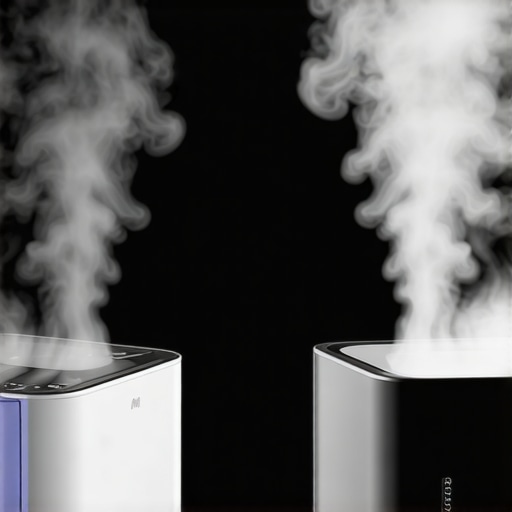
Let’s talk about the physics of the ‘juice’ and the steam. An evaporative humidifier is a passive slave to your furnace. If the furnace isn’t running on a high-heat cycle, that pad is just sitting there getting crusty with calcium. Steam humidifiers, however, are independent operators. They use electrodes or heating elements to boil water and inject pure, gaseous moisture directly into the air stream. We are talking about the difference between latent heat transfer and hope. In a variable speed furnace services environment, steam is king because it doesn’t need 120°F air to work. It can pump moisture into the ductwork even when the fan is just circulating air on low speed.
For larger structures, such as church heating systems, the volume of air is simply too great for a bypass unit. You need the capacity of a canister-style steam generator. I have seen 10,000 square foot sanctuaries where the wood pews were literally splitting down the middle because the old ‘sales tech’ sold them three bypass units that did nothing but leak. A single steam unit, properly sized via Manual S, solved it in a week. If you’re looking for real solutions, checking out heating service hacks for comfort and savings in 2025 will show you that precision beats brute force every time.
The R-454B Transition and Your Mechanical Room
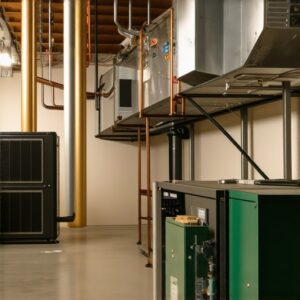
We are entering the era of the R-454B refrigerant transition services. While this mostly affects cooling, it changes the entire footprint of your mechanical room. The new A2L refrigerants require better sensors and often more complex thermostat wiring upgrades to handle the safety interlocks. If you are doing an oil to gas conversion or upgrading to a high-efficiency system, you need to think about the total atmospheric control of the space. Steam humidifiers require a dedicated 240V circuit in many cases, which means your ‘sparky’ and your HVAC tech need to be on the same page.
“The most expensive equipment in the world cannot overcome a bad duct system or improper atmospheric balance.” – Industry Axiom
I recently followed a guy who tried to wire a steam unit into a basic 4-wire thermostat. He fried the board and nearly took out the contactor repair I’d just finished. You cannot shortcut the electronics. These units are high-precision instruments. They require a ‘C-wire’ and often a dedicated humidistat that communicates with the variable speed blower. It is the difference between a ‘parts changer’ and a technician. If you’re worried about the cost of these high-end installs, many companies now offer ultimate guide to ac installation advice that includes financing for heat pump installs and steam humidification packages.
Maintenance: Preventing the Sour Smell
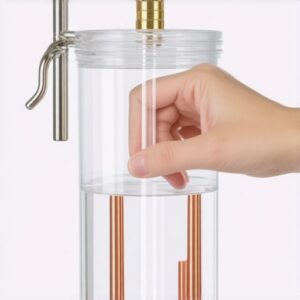
One thing those ‘sales techs’ won’t tell you is that steam cylinders are consumable. Depending on your water hardness, you’ll be swapping that canister every year or two. If you don’t, you’ll start getting that acidic, sour smell—not unlike a compressor burnout—coming from the mineral buildup. This isn’t like swamp cooler maintenance where you just throw a new pad in. You have to check the drain line for scale and ensure the dispersion tube isn’t ‘pitting’ the inside of your ‘tin’ (ductwork). This is why preventative hvac repair tips for year-round efficiency always emphasize the humidifier’s water quality.
If you’re still running an old system, you might be considering solar thermal heating integration to offset costs. Just remember that the more complex the heat source, the more you need a stable humidifier that doesn’t rely on high-plenum temps. Whether you’re dealing with a residential split system or a massive church heating system, the goal is the same: stay above the dew point on the windows, but high enough to keep your lungs from feeling like sandpaper. If you have questions about which model fits your specific duct static pressure, contact us to talk to someone who actually knows how to use a manometer, not just a sales brochure.