The Frustrating Click of a Dying Cycle
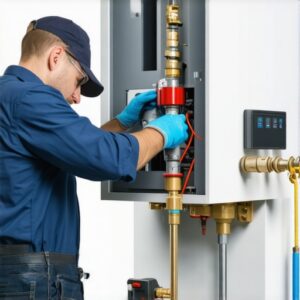
I’ve spent thirty years in the rust belt, crawling through damp basements and soot-stained mechanical rooms where the air smells of wet iron and old copper. If there’s one sound that sets my teeth on edge more than a screeching blower bearing, it’s the relentless click-whoosh-click of a boiler short cycling. It’s the heartbeat of a system in distress, a mechanical panic attack that burns through fuel and components like a brushfire. When a homeowner calls me out for a heating service because their boiler won’t stop turning on and off every three minutes, I know I’m not just looking for a broken part; I’m looking for a physics failure. Most ‘Sales Techs’—those guys in crisp white shirts who wouldn’t know a pipe wrench from a prying bar—will look at a cycling boiler and immediately quote a fifteen-thousand-dollar replacement. They’ll tell you the ‘heat exchanger is tired.’ Absolute nonsense. A boiler is a heavy-duty beast, and usually, the problem is that it’s being suffocated or confused by its own controls.
“Boiler short cycling occurs when the heat plant exceeds the load requirements of the building in such a short duration that the burner is unable to sustain a steady fire, leading to premature component failure and degraded AFUE.” – ASHRAE Standard 155-2017
The Physics of the Short Cycle: My Mentor’s Lesson
My old mentor, a man who could identify a gas leak by the taste of the air, used to scream at me, ‘You can’t heat what you can’t touch!’ He was talking about the interface between the combustion gases and the hydronic loop. If the water isn’t moving, or if there’s not enough water to absorb the BTUs, that boiler is going to trip its high limit before the house even knows it’s winter. This is the ‘Airflow Manifesto’ of the hydronic world. In a furnace, we worry about the tin knocker getting the ducts right; in a boiler, we worry about the flue pipe installation and the pump head. If your boiler is cycling every few minutes, it’s usually because the heat has nowhere to go. It’s like trying to dump a five-gallon bucket of water into a shot glass. The ‘shot glass’ is your plumbing, and if it’s clogged with air or scale, that heat stays in the cast iron block until the safety sensors scream ‘enough!’
The Forensic Diagnosis: Anatomy of a Cycling System
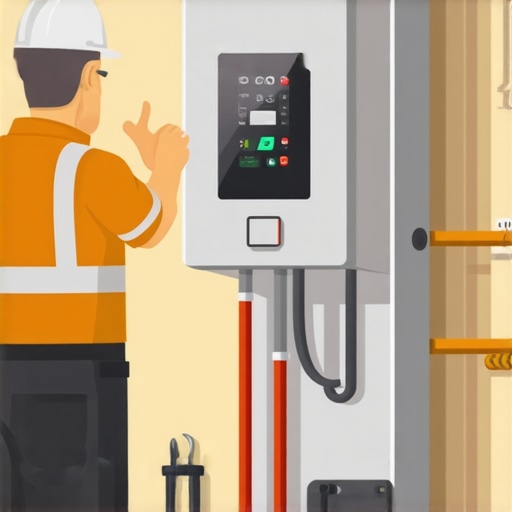
When I start a forensic diagnosis, I look at the Aquastat first. This is the brain of the boiler. It tells the gas valve when to open and close based on water temperature. If the ‘differential’ is set too tight—say, only 5 degrees—the boiler will kick on the moment the temperature drops slightly, only to shut off sixty seconds later. It’s mechanical madness. I also check the expansion tank. If that tank is waterlogged, there’s no room for the water to expand as it heats. Pressure spikes, the relief valve might weep, and the system cycles because it’s hitting its limits. This isn’t just about comfort; it’s about survival. In cold climates like Chicago or the Northeast, a cycling boiler is a precursor to a cracked heat exchanger. You need to know how to identify when furnace repair is urgent versus when it’s just a nuisance, but with a boiler, ‘urgent’ is the baseline. If that burner doesn’t stay lit for at least ten minutes, you’re killing the gas valve and the igniter.
From Church Heating to Wood Burning Stoves: The Scale of the Problem
The scale of the system dictates the complexity of the fix. I’ve worked on church heating systems where the boiler was the size of a minivan. In those massive old stone buildings, short cycling is often caused by ‘zoning’ issues. If the thermostat in the rectory is calling for heat but the main sanctuary is closed off, that giant boiler is trying to heat a tiny loop of pipe. It’s overkill. We see similar issues in biomass boiler services and pellet stove repair. If the feed rate of the fuel—whether it’s gas, wood pellets, or biomass—isn’t matched to the heat dissipation, the system chokes. Even a wood burning stove installation requires a ‘flue pipe installation’ that handles the draft correctly. If the draft is too strong, you lose heat up the chimney; too weak, and the fire dies. It’s all about equilibrium. I’ve even seen pool heater repair calls where the heat exchanger was so fouled with calcium that the unit would cycle on its internal thermal limit every thirty seconds. It’s the same physics, just a different body of water.
“The most expensive equipment in the world cannot overcome a bad duct system—or in the case of hydronics, a poorly piped distribution loop.” – Industry Axiom
The Regulatory Cliff and the 2025 Shift
We are entering a new era of heating. With the push toward high-efficiency condensing boilers, the old ‘rules of thumb’ are dead. These new units require surgical precision. You can’t just slap one in and hope for the best. Proper furnace tune-up services now involve checking the pH of the condensate and ensuring the air purification integration isn’t causing static pressure issues if you’re running a hybrid system. If you’re looking for heating service hacks for 2025, the biggest one is this: check your return water temperature. If the water coming back to the boiler is too hot, the boiler has nowhere to dump its energy. It’s like trying to cool off by jumping into a hot tub. You need that temperature delta to keep the system running long, steady cycles.
The ‘Sparky’ and the Pilot Light: Common Electrical Failures
Sometimes the problem is purely electrical. I’ve followed behind many a sparky who tried to wire a boiler like a lighting circuit. Boilers have sensitive flame rectification circuits. If your pilot light relighting efforts are constant, or if the burner starts and then immediately drops out, you might have a dirty flame sensor or a bad ground. It’s not ‘gas’ (refrigerant) we’re worried about here, but the gas-to-air ratio. A soot-covered sensor won’t ‘see’ the flame, and the control board will shut everything down for safety. This is where preventative HVAC repair strategies save you thousands. A simple cleaning of the burner assembly and the pilot orifice can stop a cycling issue before it burns out the transformer.
Conclusion: Don’t Let the Sales Tech Win
If your boiler is acting up, don’t let some suit-and-tie tech talk you into a whole new system without checking the basics. Is the pump moving water? Is the Aquastat differential set correctly? Is the expansion tank heavy? These are the questions of a technician, not a salesman. Troubleshooting is an art form rooted in the laws of thermodynamics. Whether you’re dealing with a residential unit, a complex biomass boiler, or a massive church heating system, the goal is always long, steady run times. Short cycles are the sound of money burning and metal fatiguing. For more deep dives into keeping your system alive, check out our blueprint for cooler summers and warmer winters. Physics doesn’t lie, even if the salesman does.