The Sound of a Silent Furnace and the Smell of Hot Dust
It’s 3 AM in the middle of a February deep freeze, the kind where the wind off the lake cuts through brick, and you wake up to a silence that feels heavy. No hum from the basement. No gentle rush of air from the registers. Just the metallic ‘tink-tink-tink’ of a cooling heat exchanger. You walk over to the thermostat, and despite it being set to 72°F, the display shows a shivering 64°F. This is the moment most homeowners panic and call for a 24/7 heating emergency response, fearing a total system collapse. But more often than not, what you’re experiencing isn’t a dead motor—it’s a furnace that has quite literally tried to commit suicide by heat, only to be saved by its own internal ‘brain’: the limit switch. Over my thirty years of crawling through crawlspaces and dragging tool bags across frozen rooftops, I’ve seen this safety device blamed for being ‘broken’ when it was actually the only thing keeping the house from burning down.
The Physics Lesson: You Can’t Heat What You Can’t Move
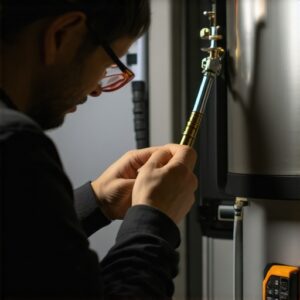
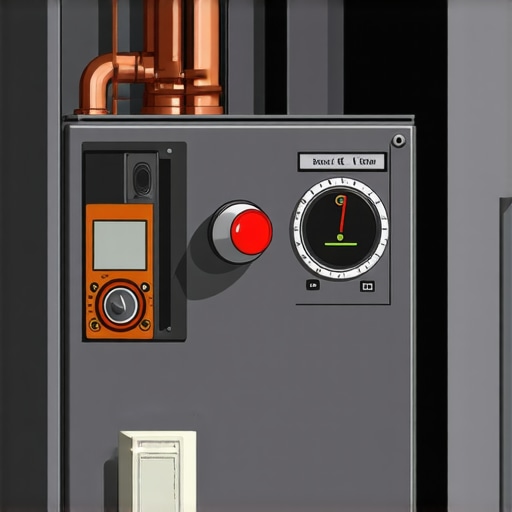
My old mentor, a grizzly veteran who could sniff out a gas leak from a block away, used to scream at me, ‘Kid, you can’t heat what you can’t touch!’ He wasn’t talking about the flame; he was talking about the airflow. This is the core tenet of thermodynamics in a North-specific climate. When we talk about warehouse heating solutions or a standard residential split system, the furnace is essentially a giant heat-swapping machine. The burners create a controlled explosion inside the heat exchanger, and the blower motor pushes cold return air over those metal cells to absorb that energy. If that air doesn’t move fast enough, the heat exchanger doesn’t get cooled down. It starts to glow. It starts to warp. That’s when the limit switch—a simple bimetallic disc or a probe—snaps open and kills the gas valve. It’s the safety net between you and a cracked heat exchanger that leaks carbon monoxide into your bedroom. [image_placeholder_1]
“Proper airflow is the fundamental requirement for the safe and efficient operation of any forced-air heating system. Without it, the integrity of the heat exchanger is compromised.” – ACCA Manual J Standards
The Forensic Diagnosis: Why Your Limit Switch is Screaming
When I arrive at a call for boiler repair services or a furnace lockout, I don’t just swap parts. I play detective. A tripped limit switch is a symptom, not the disease. Most ‘Sales Techs’ will see a tripped switch and immediately try to sell you a whole new unit, claiming the ‘computer is fried.’ That’s a scam. Usually, the issue is far more pedestrian but requires a ‘Tin Knocker’s’ eye for detail. The first thing I check is the filter. If you haven’t changed your filter and it’s matted with pet dander, you’ve essentially put a pillow over your furnace’s face. The static pressure spikes, the blower struggles, and the heat exchanger temperature skyrockets. I’ve seen oil to gas conversion jobs where the installer used the old, undersized ductwork from the 1950s for a high-efficiency modern furnace. It’s like trying to breathe through a cocktail straw while running a marathon.
The Mechanical Anatomy of Overheating
Let’s talk about variable speed furnace services. Modern furnaces use ECM motors that can ramp up to try and overcome high static pressure, but even they have limits. If your ductwork is ‘Pookie’d’ (sealed with mastic) but the returns are too small, the furnace will ‘short cycle.’ It runs for five minutes, hits the high-limit temperature, shuts off the burners but keeps the fan running to cool down, and then tries again. This constant thermal expansion and contraction is what leads to the catastrophic failure of the metal. If you’re dealing with this, you need to understand how to identify when furnace repair is urgent and why. A limit switch that trips once is a warning; one that trips ten times is a death warrant for the unit. This is why programmable thermostat programming needs to be precise; forcing a system to jump 10 degrees in an hour on an undersized duct system is asking for a lockout.
The Regulatory Cliff: Refrigerants and Future-Proofing
While we’re talking about safety and longevity, we can’t ignore the massive shift hitting our industry in 2025. The R-454B refrigerant transition services are changing how we look at total home comfort. While that applies more to the AC side and heat pumps, if you’re considering a ductless mini-split installation or a hybrid dual-fuel system, the engineering is getting tighter. We are moving toward ‘mildly flammable’ refrigerants which require even more precise sensors.
“The transition to A2L refrigerants necessitates a higher standard of technician training and more robust safety protocols within the residential envelope.” – ASHRAE Standard 15.2
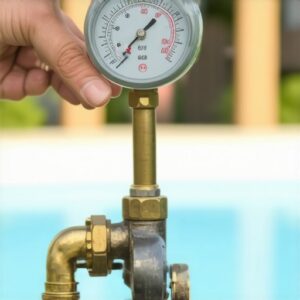
This means the days of the ‘Sparky’ or a ‘Tin Knocker’ just ‘winging it’ are over. Everything—from your biomass boiler services to your standard gas furnace—is becoming a high-precision instrument. If your tech doesn’t own a manometer to check gas pressure and static pressure, they aren’t a tech; they’re a parts-changer. I’ve seen hot water heater repair jobs turn into house fires because someone bypassed a safety limit. Never, ever let a technician ‘jump out’ a limit switch just to get the heat back on temporarily. That switch is there to keep the fire inside the box.
The Math of the Modern Mechanical Room
So, do you repair or replace? If your furnace is 15 years old and the limit switch is tripping because the heat exchanger is already ‘popping’ or showing signs of stress cracks, it’s time to pull the plug. Investing in efficient HVAC repairs is great, but physics eventually wins. If you’re in a North/Cold climate, look into the AFUE rating. Moving from an 80% to a 96% efficient unit can save you a fortune, but only if the airflow is right. If you’re looking for heating service hacks for comfort and savings in 2025, start by ensuring your return air drops are sized correctly. It’s cheaper to add a return duct than to replace a $5,000 heat exchanger. For those in specialized environments, like warehouse heating solutions, the scale is larger, but the physics remains the same: move the air or lose the equipment. Preventative care is the only way to avoid the ‘July 4th Panic’ (or in this case, the ‘February Freeze’). Check out preventative HVAC repair tips for year-round efficiency to stay ahead of the curve. At the end of the day, comfort isn’t magic—it’s just math and a little bit of ‘Pookie’ in the right places.