
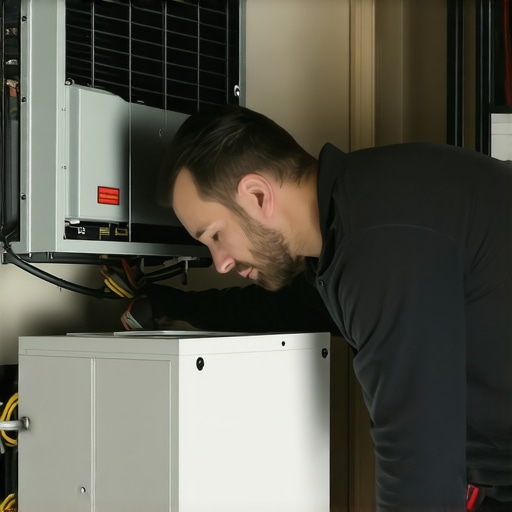
The Invisible Line Between a Cold House and a Paperweight
My old mentor, a man who had more refrigerant in his veins than blood, used to scream at me while we were hunched over a rusted-out condenser in a blizzard: ‘You can’t cool what you can’t touch!’ He wasn’t talking about the outdoor unit; he was talking about the physics of airflow across the evaporator coil. If the tin knocker didn’t size the returns right, or if the installer didn’t perform system performance testing, that expensive piece of equipment is nothing more than a very loud lawn ornament. As we move into the 2025 regulatory shift, the stakes for AC installation have never been higher. With the industry pivoting from R-410A to A2L refrigerants like R-454B, the ‘side-job Bob’ who installs units for a case of beer is now a liability that could literally burn your house down or, at the very least, leave you with a voided warranty and a $10,000 headache.
“The most expensive equipment in the world cannot overcome a bad duct system.” – Industry Axiom
The Regulatory Cliff: Why 2025 Changes Everything
We are currently standing on a regulatory cliff. The EPA is phasing out the ‘juice’ we’ve used for two decades. The new A2L refrigerants are classified as ‘mildly flammable.’ This isn’t a scare tactic; it’s a engineering reality. Professional AC installation now requires specialized sensors and leak detection systems integrated into the air handler. If you don’t have a certified tech who understands relay services and how to properly wire these safety circuits, the manufacturer—be it Trane, Carrier, or Rheem—will laugh at your warranty claim. They require a documented commissioning report that proves the unit was evacuated to 500 microns and that the system performance testing matches the design specifications. Without that paper trail, your 10-year parts warranty is worth less than the furnace filter replacement you forgot to do last winter.
In our northern climate, we deal with extreme temperature swings that cook relay services and demand high-performance cold climate heat pumps. When the mercury drops to -10°F, your heat pump isn’t just a luxury; it’s a survival tool. A hack-job installation often skips the HVAC duct sealing, leading to static pressure issues that cause the blower motor to ramp up, overheat, and eventually fry the transformer replacement you’ll be paying for out of pocket. You can read more about avoiding these pitfalls in our AC installation secrets guide.
The Thermodynamics of the North: Latent vs. Sensible Heat
In the North, we often ignore humidity until the three weeks in July when the house feels like a locker room. Professional installers don’t just ‘slug’ some gas into the line and call it a day. We look at the demand-controlled ventilation and ensure the ductless mini-split installation in your upstairs bedroom isn’t fighting the central air. If a unit is oversized—a common mistake of ‘Sales Techs’ trying to pad their commission—it ‘short cycles.’ It cools the air fast (sensible heat) but leaves all the moisture (latent heat). You end up with a ‘cold swamp’ effect. A professional will perform a Manual J load calculation to ensure the coil temperature stays exactly below the dew point, wringing that water out of the air and down the condensate drain where it belongs.
“Equipment life and efficiency are directly proportional to the quality of the installation and commissioning process.” – ACCA Manual 5
Airflow Architecture and the Warranty Trap
If you think HVAC duct sealing is just about saving a few bucks on your electric bill, you’re missing the big picture. Leaky ducts in an unconditioned crawlspace or attic create a pressure imbalance. This pulls in raw, unfiltered air from the outside, bypassing your furnace filter replacement schedule and coating your brand-new evaporator coil in a layer of ‘gray felt’ (dust and skin cells). Within two years, the heat transfer efficiency drops by 30%, the head pressure skyrockets, and the compressor starts making that ‘death rattle’—the sound of a bearing screaming for mercy. When the manufacturer’s rep comes out to inspect the failed compressor and sees a coil choked with filth due to poor AC installation practices, they’ll deny the claim. They call it ‘lack of maintenance,’ but I call it a bad install. Check out our ultimate guide to 2025 AC success for the technical breakdown.
When the Board Bites the Dust: Transformer and Relay Failures
Many homeowners call us for a transformer replacement or relay services because their unit won’t kick on. Nine times out of ten, the root cause was a botched AC installation where the low-voltage wires were rubbed raw against a vibrating copper line, or the demand-controlled ventilation was wired into a circuit that couldn’t handle the load. This is why annual heating inspection and cooling checks are vital. We look for the ‘sour’ smell of a burning winding before it cascades into a total system failure. If you’re smelling something odd now, you need to know how to identify urgent repair needs immediately.