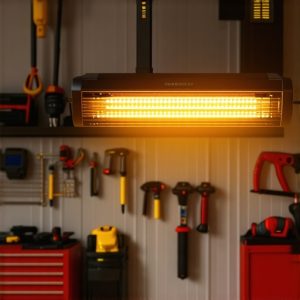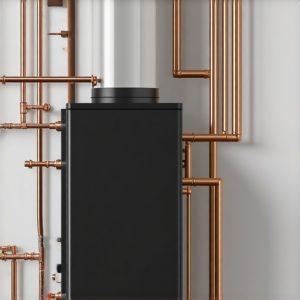
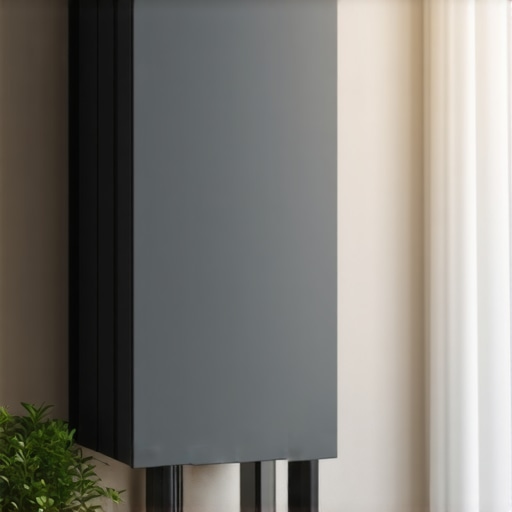
My old mentor, a guy who forgot more about BTUs than most of these modern ‘sales techs’ will ever learn, used to swat the back of my head whenever I stared too long at a thermostat. ‘Stop looking at the plastic on the wall, kid,’ he’d bark. ‘You can’t heat what you can’t touch!’ This was his way of saying that airflow is the ghost in the machine. If you don’t move the air, you don’t move the heat. In a small apartment or a tight back-office, a massive central system is like using a sledgehammer to hang a picture frame. This is why, when I walk into a 600-square-foot footprint in the middle of a Chicago winter, I’m looking for a wall furnace, not a bloated forced-air unit that’ll short-cycle itself to death.
The Physics of Small-Space Thermodynamics
In the trade, we talk about ‘sensible heat’—that’s the actual temperature change you can feel on your skin. When you’re heating a small space, your biggest enemy isn’t the cold outside; it’s the static pressure inside. If you try to shove 1,200 CFM (cubic feet per minute) through ductwork designed by some ‘tin knocker’ who was in a hurry, you get noise and equipment failure, not comfort. A wall furnace operates on a much more surgical level. It utilizes natural or fan-forced convection to circulate air directly into the living zone without losing 20% of its energy to unconditioned crawlspaces or leaky ducts sealed with cheap tape instead of proper Pookie (mastic).
“The most expensive equipment in the world cannot overcome a bad duct system.” – Industry Axiom
When we perform airflow measurement services, we often find that central systems in small homes are choked. A wall furnace, especially one with an Energy Star heating certification, bypasses the ductwork disaster entirely. It’s about the direct transfer of energy. You’re burning the juice (gas) and immediately radiating that heat where it’s needed. For property managers handling school boiler maintenance or small multi-unit dwellings, this efficiency is the difference between a profitable building and a money pit.
Why Bigger Is Often Bitter (The Short-Cycling Trap)
I’ve seen it a thousand times: a ‘Sales Tech’ quotes a sweet old lady for a 3-ton AC installation and a 100k BTU furnace for a tiny cottage because they want the commission. It’s a crime. When a heater is oversized for a small space, it hits the setpoint in three minutes and shuts off. This is called short-cycling. The heat exchanger never gets hot enough to burn off the corrosive condensates, and the capacitor replacement services start becoming a monthly occurrence because the motor is starting and stopping constantly.
“Proper equipment sizing is critical; an oversized system will fail to provide uniform temperature and will undergo premature component failure.” – ACCA Manual J Standards
Instead, a wall furnace provides a steady, modulated heat. It’s designed to run longer cycles at a lower intensity. This is why you need an annual heating inspection to ensure the flame rollout switch isn’t tripped and the venting is clear. If you’re worried about long-term costs, looking into heating service hacks for comfort and savings in 2025 can save you from the ‘replace-it-all’ trap these big companies push.
The Anatomy of Efficiency: From Refrigerant to Radiation
Even though we’re talking about heating, the principles of the refrigeration cycle often apply to the heat pumps that some wall units now use. If I’m out on a refrigerant leak detection call and I find the suction line isn’t ‘beer can cold’—or in the case of a heat pump, not moving the thermal energy correctly—it’s usually an airflow issue. For gas-fired wall furnaces, the efficiency comes from the heat exchanger’s proximity to the room. You aren’t heating a basement and hoping the heat wanders upstairs. You are heating the air you breathe. This is why top HVAC repair strategies to extend your systems life always start with cleaning the specific heat-exchange surfaces of these compact units.
The Maintenance Reality Check
Don’t think these units are ‘set it and forget it.’ You still need priority service memberships to keep the dust from blanketing the pilot assembly or the sparky (electrician) from having to come out and fix a fried control board. Whether it’s hot water heater repair or keeping a wall furnace humming, the mechanical anatomy requires respect. Small spaces trap dust faster than open floor plans. If that dust hits the burners, you’ll smell that unmistakable singed-hair scent—the precursor to a cracked heat exchanger. Knowing how to identify when furnace repair is urgent and why is vital when you’re relying on a single heat source in a tight space. We also recommend warranty service plans because even the best wall furnaces can have a sensor go bad during a polar vortex.
Final Verdict: Comfort is Physics, Not Magic
Stop trying to over-engineer your small space. If you have a studio, a guest house, or a compact office, the wall furnace is the architectural king of efficiency. It respects the laws of thermodynamics by focusing on local airflow and minimizing static loss. If you’re still on the fence, checking out choosing the right HVAC fixes what homeowners need to know will help you realize that sometimes, the simplest solution—the one without the miles of ductwork—is the one that keeps you warmest. Don’t let a ‘sales guy’ sell you a jet engine when you just need a reliable heater. Comfort is about the math, and the math says wall furnaces win in small spaces every single time.