The Thermodynamic Lie Your Utility Company Hopes You Never Uncover
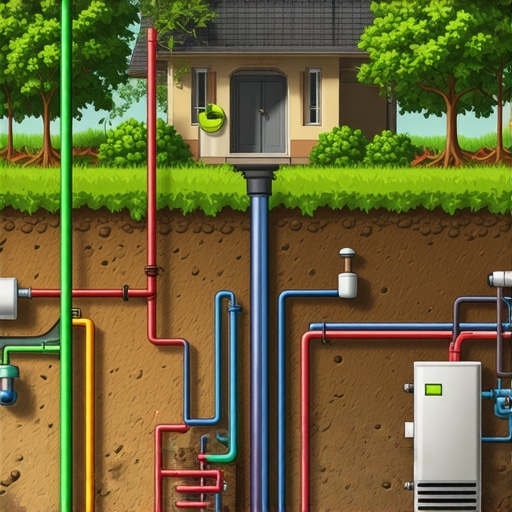
My old mentor used to scream at me until his face turned the color of a cherry-red heat exchanger: ‘You can’t cool what you can’t touch, and you can’t heat what you don’t understand!’ He’d stand over me in a drafty basement in the middle of a January polar vortex, watching me struggle with a stubborn 80% AFUE furnace. He wasn’t just talking about the physical contact between air and metal; he was talking about the fundamental physics of heat transfer. Most homeowners are burning money because they are fighting against the outdoor ambient temperature. When it is -10°F outside, your standard air-source heat pump is gasping for air, struggling to find any thermal energy to pull into your home. That is when the ’emergency heat’ strips kick in, and your electric meter starts spinning fast enough to power a small aircraft. Geothermal heat pumps change the math because they don’t care about the air. They care about the ground, which stays a constant, reliable temperature year-round.
The Regulatory Cliff: Why 2025 Makes Geothermal the Logical Choice
We are currently standing on a precipice in the HVAC industry. The transition away from R-410A refrigerant to A2L options like R-454B is driving the cost of traditional air-source equipment through the roof. These new ‘mildly flammable’ refrigerants require sophisticated sensors and spark-proof electrical components, making a standard ac installation more complex and expensive than ever. If you are going to pay the ‘regulatory tax’ on new equipment, it makes more sense to invest in geothermal heat pump systems that bypass the inefficiency of air-to-air heat transfer. While a standard unit is fighting 100-degree summers or sub-zero winters, a geothermal loop is pulling from a steady 55-degree thermal bank. This isn’t just a slight improvement; it is a total shift in the thermodynamic landscape of your home.
“The most expensive equipment in the world cannot overcome a bad duct system.” – Industry Axiom
The Anatomy of Efficiency: From Ground Loops to Airflow
As a veteran tech, I’ve seen thousands of ‘high-efficiency’ systems fail because the tin knocker who installed the ducts didn’t understand static pressure. When we talk about heating service innovations, the geothermal unit is the heart, but your ductwork is the circulatory system. If your ducts are restricted or caked in dust, the blower motor has to work twice as hard, which is why duct cleaning services are not just a luxury—they are a requirement for system longevity. A geothermal system uses a compressor to concentrate heat from the earth. If that heat cannot be released into your home because of poor airflow, the ‘juice’ (refrigerant) won’t phase-change correctly, and you’ll end up with a slugged compressor. This is why preventative hvac repair and regular heat exchanger cleaning are vital. You have to maintain the interface where physics happens.
Why Geothermal Outperforms Infared and Wood Burning Stoves
I often get asked about a wood burning stove installation or an infared heater installation as a way to cut costs. Look, I love the smell of a wood fire as much as anyone, but from a BTUs-per-dollar perspective, they are primitive. A wood stove is a localized heat source that relies on natural convection; it doesn’t solve the problem of a cold bathroom at the end of the hall. Geothermal, on the other hand, provides a consistent, whole-home solution. It eliminates the need for pilot light relighting and the constant worry of cracked heat exchangers that come with gas furnaces. When you move to a geothermal setup, you are moving from a combustion-based economy to a transfer-based economy. You aren’t creating heat; you are just moving it from where there’s plenty (the earth) to where there’s not enough (your living room).
“Design conditions shall be based on the 99% heating and 1% cooling design temperatures found in the ASHRAE Handbook.” – ACCA Manual J
The Maintenance Reality: It’s Not Set and Forget
Don’t let a sales tech tell you that geothermal is maintenance-free. That’s a flat-out lie. You still have a contactor repair to worry about eventually because high-voltage arcing is a fact of life. You still need HVAC maintenance plans to check the ‘Pookie’ (mastic) on your plenum and ensure your loop pressures are correct. Even your peripheral systems matter; for example, neglecting dryer vent cleaning can increase the internal latent heat load of your home, forcing your geothermal system to run longer to dehumidify the air. A master technician looks at the house as a pressurized vessel. If you have air leaks or dirty coils, you are wasting the ‘beer can cold’ suction line performance that geothermal provides during the summer months. To truly win against energy bills, you have to pair the best tech with the best maintenance practices, as outlined in our top hvac repair strategies. Invest in the ground, protect the airflow, and stop giving your paycheck to the utility company.