The Physics of Warmth and the Sound of Money
My old mentor used to scream, ‘You can’t heat what you can’t move!’ until he was blue in the face. This was back when we were installing cast-iron beasts that weighed 400 pounds and ran on pure optimism. He was right then, and he’s even more right now. In the frozen trenches of a January polar vortex, airflow matters more than horsepower. If your furnace is pushing air against a restricted duct system, you aren’t just uncomfortable; you are literally burning cash and venting it out of a PVC pipe. When we talk about How High-Efficiency Furnace Installation Changes Your Home Value, we aren’t just talking about a shiny new box in the basement. We are talking about a fundamental shift in the thermodynamic profile of your property.
“The most expensive equipment in the world cannot overcome a bad duct system.” – Industry Axiom
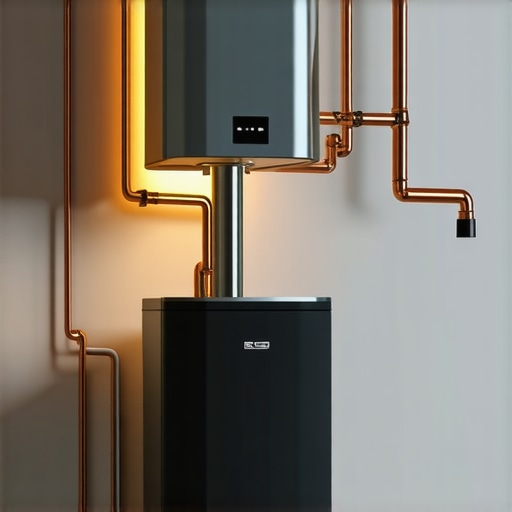
We are currently staring down the barrel of a regulatory cliff. The era of the ‘cheap’ 80% AFUE (Annual Fuel Utilization Efficiency) furnace is sunsetting. By 2025, the standards for residential heating are becoming so stringent that a basic furnace repair on an old atmospheric unit will soon cost half as much as a new installation. If you are still running an old oil burner, the oil to gas conversion or propane conversion services we provide are no longer luxury upgrades—they are survival strategies for your bank account. A high-efficiency unit (96% AFUE or higher) uses a secondary heat exchanger to pull latent heat out of the exhaust gases. That’s heat that used to just disappear into the sky. Now, it stays in your living room.
The Manual J Calculation: Why Your Contractor Is Probably Guessing
Most ‘Sales Techs’ walk into a house, look at the old unit, and say, ‘Yep, looks like a 100,000 BTU beast. Let’s put the same one back in.’ That is a professional sin. To actually increase home value, you need a Manual J calculation. This is the only way to determine the true heat loss of your structure. If the unit is oversized, it will short-cycle—turning on and off so fast that it never reaches its peak efficiency and kills the contactor repair budget before the first season is over. Over-sizing is the enemy of comfort; it leads to hot and cold spots that drive homeowners crazy. Proper sizing is the first step in expert HVAC success.
The IAQ Package: HEPA, ERV, and the Breath of Life
If you want to talk about real value, we have to talk about Indoor Air Quality (IAQ). Modern high-efficiency furnace installations are often paired with HEPA filter systems and energy recovery ventilators (ERV). In a tightly sealed, energy-efficient home, the air gets stagnant and toxic. An ERV swaps out that stale, indoor air with fresh, pre-conditioned outdoor air without losing your thermal energy. It’s like giving your house a set of lungs. Combine that with a bypass humidifier repair or new install, and you’ve eliminated the ‘winter nosebleed’ and the static shocks that come with dry, cracked air. This level of climate control is what appraisers look for in high-end listings.
“A minimum of 0.35 air changes per hour is required to maintain acceptable indoor air quality in residential structures.” – ASHRAE Standard 62.2
The Complexity of the Secondary Heat Exchanger
In the North, where the cold doesn’t just bite—it chews—the 90%+ AFUE furnace is king. These units are complex. They create condensation (acidic water) as a byproduct of extracting that extra heat. If a ‘tin knocker’ doesn’t pipe that drain correctly, it will eat through your floor or freeze up and shut the whole system down in a ‘no-heat’ emergency. This is where relay services and specialized contactor repair knowledge come in. You can’t just slap these in. You have to understand the chemistry of the condensate. This isn’t just a commercial furnace repair project; it’s a precision installation that requires a tech who knows his ‘Pookie’ (mastic) from his foil tape. Check out our 2025 heating innovations for more on this.
Commercial Crossover: From Restaurants to Residential
I often get asked why I care so much about static pressure. It’s because I spent a decade doing restaurant kitchen exhaust repair. In a commercial kitchen, if the air balance is off, the doors won’t open, and the pilot lights go out. Your home is no different. If you don’t have enough return air, that high-efficiency furnace will ‘choke’ and overheat the heat exchanger, leading to the dreaded cracks that leak carbon monoxide. This is why we debunk furnace repair myths regularly—the ‘filter’ isn’t just for dust; it’s to protect the blower motor from dying an early death due to high static pressure. Learn more about identifying urgent repairs before they become catastrophes.
The ROI: When Does the Investment Pay Off?
Home buyers in 2025 are savvy. They aren’t looking at the paint; they are looking at the utility bills. A home with a documented Manual J calculation, a 98% AFUE furnace, and a HEPA filter system commands a premium. It’s a sign that the property has been maintained with technical precision rather than just ‘topped off with gas’ (which is a scam, by the way—refrigerant and fuel systems are sealed). If you are wondering what homeowners need to know about HVAC fixes, it’s this: Quality costs once; a cheap install costs every month in the gas bill. Don’t let a ‘sales tech’ talk you into a bargain-bin unit that will need contactor repair or a new blower within three years. Invest in the physics of the system, and the home value will follow naturally. If you’re ready to stop the bleeding, contact us to do it right the first time.