The Sound of a Stifled Flame
My old mentor, a grizzled tin knocker who could smell a cracked heat exchanger from the driveway, used to grab me by the collar of my work shirt whenever he saw a sloppy flue pipe. He’d scream, ‘You can’t vent what you can’t lift!’ To him, and eventually to me, physics wasn’t a theory; it was the law of the land. This is why airflow matters more than horsepower, especially when we are talking about wood burning stove installation or gas-fired garage heaters. If you don’t give that heat a clear path to the sky, it will find a way back into your lungs. I’ve spent thirty years in the North/Cold climate zone, crawling through frozen crawlspaces in Chicago and over snow-caked roofs in the Northeast, and the most dangerous thing I see isn’t a gas leak—it’s a vent that stops short of the roof line.
“The most expensive equipment in the world cannot overcome a bad duct system or improper venting architecture.” – Industry Axiom
The Physics of the Stack Effect
Let’s get into the thermodynamic zooming here. When you fire up a garage heater or complete a wood burning stove installation, you aren’t just creating warmth; you are creating a buoyancy problem. Hot air is less dense than the cold, heavy air sitting over your garage roof. That temperature differential creates a natural ‘draft.’ If your venting terminates under an eave or alongside a wall, you run into a pressure wall. The wind hits the side of the building, creates a high-pressure zone, and literally pushes the combustion gases back down the pipe. This isn’t just a nuisance; it’s how you end up needing urgent furnace repair because your pressure switch is tripping every ten minutes.
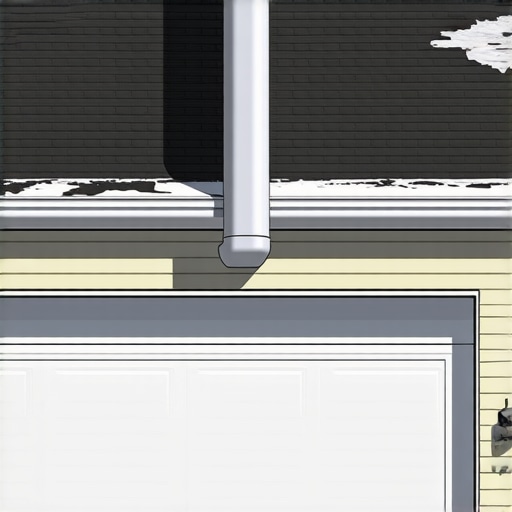
In cold climates, we deal with the ‘Polar Vortex Effect.’ If your vent pipe doesn’t clear the roof line by at least two feet (following the 10-2 rule), snow accumulation will cap that pipe like a cork in a bottle. I’ve seen commercial furnace repair calls where the entire heat exchanger was choked with soot because the unit was ‘slugging’—trying to breathe through three feet of drifted snow. Proper chimney liner installation is critical here; an unlined masonry chimney in a cold garage will never get warm enough to establish a draft, leading to acidic condensation that eats your mortar joints for breakfast.
The Anatomy of a Garage Heat System
When I’m performing a forensic diagnosis on a failing system, I look at the components like organs. The thermostat wiring upgrades you did last weekend? That’s the nervous system. The MERV filter upgrades? That’s the lungs. But the venting? That’s the exhaust, and if it’s blocked, the whole body dies. A common mistake I see is homeowners trying to save a buck by using single-wall pipe all the way to the exit. You need B-vent—double-wall pipe with an air gap—to keep the ‘juice’ (the heat) inside the flue. If the flue gas cools down before it exits the roof, the water vapor (a byproduct of combustion) turns back into liquid. This liquid is acidic and will rot your ‘pookie’ (mastic) and your metal faster than you can say ‘carbon monoxide.’
“Gas venting systems shall be designed and installed so as to develop a positive flow adequate to remove flue or vent gases to the outdoors.” – NFPA 54 / ANSI Z223.1 National Fuel Gas Code
The Trap: Short-Circuiting Your Comfort
A ‘Sales Tech’—those guys in shiny shirts who wouldn’t know a manifold gauge from a torque wrench—will tell you that you just need a bigger unit. They’ll try to sell you on new AC installation strategies or high-end heat pump installation when your garage heater is perfectly fine, just choking on its own exhaust. If your heater is short-cycling, it’s often because the venting isn’t clearing the roof line, causing the high-limit switch to pop. You don’t need a $10,000 system; you need a tin knocker to extend your flue and maybe a heating service hack like adding a chimney liner installation to stabilize the draft.
We also need to talk about demand-controlled ventilation. In a garage, you’re often dealing with gasoline fumes, sawdust, and paint thinners. If you don’t have proper venting that clears the roof, you aren’t just failing to vent the heater; you’re failing to provide the ‘make-up air’ needed for the building to breathe. This is where dehumidification services come into play. A cold, damp garage with a poorly vented heater is a breeding ground for mold and rust on your expensive tools.
Repair vs. Replace: The Financial Reality
When is it time to pull the plug? If your heat exchanger is cracked due to years of poor venting and condensation, the repair cost is often 60% of a new unit. At that point, I’ll talk to you about financing for heat pump installs or a new high-efficiency unit. But if the ‘iron’ is still good, extending that vent through the roof and upgrading your thermostat wiring is a few hundred bucks versus thousands. Don’t let a Sparky tell you it’s an electrical issue when you can hear the flame rollout ‘woofing’ every time the burner ignites. That ‘woof’ is the sound of a system that can’t breathe.
The 2025 Regulatory Cliff
As we move into 2025, the industry is shifting toward A2L refrigerants and higher AFUE (Annual Fuel Utilization Efficiency) requirements. This means venting is becoming even more technical. New high-efficiency garage heaters often use PVC venting, but the rules for clearing the roof line remain just as strict to prevent ‘ice-bridging.’ If you’re looking for strategies to extend your system’s life, start with the roof. Get a pro to check the flashing, the storm collar, and the rain cap. A missing rain cap is an open invitation for water to dump straight into your burner assembly, which is the fastest way to turn a working heater into a boat anchor.
Before you sign a contract for preventative maintenance, ask the tech if they carry a manometer. If they don’t know how to measure ‘draft’ or ‘static pressure,’ they aren’t a technician; they’re a part-changer. Proper heating requires a respect for the laws of physics. Whether it’s wood burning stove installation or a high-output gas furnace, that pipe has to go up, and it has to go out. Anything less is just a slow way to ruin your equipment and your health. If you’re unsure about your setup, it’s time for a professional technical evaluation. Comfort is physics, not magic, and physics doesn’t take days off.