
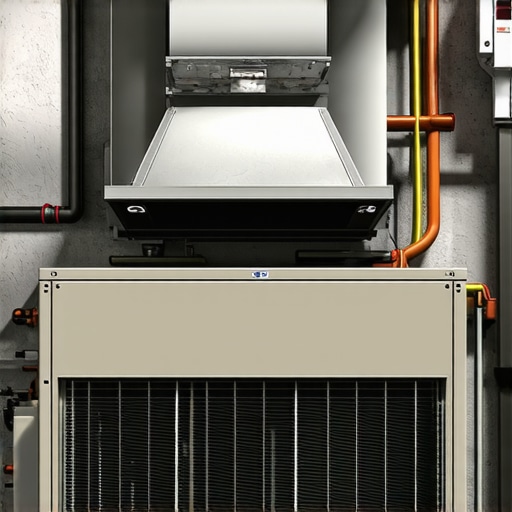
The Death of R-410A and the 2025 Regulatory Cliff
I’ve spent thirty years smelling acidic compressor burnouts and listening to the rhythmic screech of failing bearings in mechanical rooms across the North. If you think you can just swap out a condenser and keep your old indoor coil, you’re being sold a bill of goods by a Sales Tech with a clean uniform and a high commission. We are currently staring down a regulatory cliff. The shift from R-410A to A2L refrigerants like R-454B is not just a change in the juice we pump into the system; it’s a fundamental shift in how we handle thermodynamics. In the cold corridors of the Northeast and Midwest, where boiler maintenance services and hydronic heating systems often share space with split-system AC, the complexity is doubling. If you don’t match your evaporator coil to your new SEER2 condenser, you aren’t just losing efficiency—you’re killing your compressor before it even has a chance to break in.
“The most expensive equipment in the world cannot overcome a bad duct system or a mismatched component set.” – Industry Axiom
My old mentor, a grizzly veteran who could diagnose a bad TXV just by looking at the frost pattern, used to scream at me, “Kid, you can’t cool what you can’t touch!” This was his way of teaching me about surface area. He wasn’t talking about horsepower or BTUs; he was talking about the physics of the heat exchange. This is the core of duct design services and proper system matching. When you upgrade to a SEER2-compliant outdoor unit, the heat transfer surface area is significantly larger. If you try to push that refrigerant through a tiny, 15-year-old indoor coil designed for R-22 or early R-410A, the pressures will be all wrong. The refrigerant won’t fully boil off in the evaporator. Instead of a gas, you’ll send liquid back to the compressor on the suction line. We call that liquid slugging, and it’s a death sentence for your new investment.
The Physics of the Matched Set: SEER2 and Surface Area
In our northern climate, we deal with extreme temperature swings. One month we’re performing chimney liner installation for a furnace, and the next we’re diagnosing short-cycling AC units. A SEER2 rating isn’t just a sticker; it’s a reflection of how the system performs under the new M1 testing procedures, which account for higher static pressures. If your tin knocker didn’t size the transition correctly or if you’re using an undersized coil, your system will struggle to remove latent heat. You’ll end up with a house that feels like a cold swamp—the air temperature drops, but the humidity stays because the coil never hit the proper dew point. This is why multi-family heating upgrades often fail when managers try to piecemeal the system rather than doing a full matched replacement. You can read more about making the right choice in our choosing the right HVAC fixes guide.
“Standard practice requires that all components of the refrigeration system be matched according to the manufacturer’s performance data to ensure capacity and efficiency.” – ACCA Manual S
The transition to A2L refrigerants also brings new safety requirements. These are “mildly flammable,” meaning the new systems require leak sensors and specific mitigation boards. If you try to mix and match old and new tech, those safety protocols are nonexistent. This is as critical as school boiler maintenance or hospital HVAC zoning; in high-occupancy environments, precision isn’t optional. Even a simple capacitor replacement services call can turn into a nightmare if the system’s electrical load is mismatched because of a botched upgrade. We’ve seen it all, from DIY thermostat wiring upgrades that fry boards to swamp cooler maintenance in the few places they still exist up north, but nothing is as consistently disastrous as a mismatched coil. Check our ultimate guide to AC installation for more technical depth.
The Static Pressure Nightmare
Static pressure is the resistance to airflow in your ducts. Most homes in this region are already suffering from undersized returns. When you install a high-efficiency SEER2 coil, it’s often physically thicker—meaning it has more fins per inch. This creates more resistance. If your duct design services didn’t account for this, your blower motor is going to work twice as hard and die half as fast. I’ve seen Sparkies (electricians) baffled by why a motor is drawing high amps when the real culprit is a coil that’s literally choking the system. Using pookie (mastic) to seal every gap is a start, but it won’t fix a mismatch. For those looking to extend their system’s life, look at our top HVAC repair strategies. Don’t let a Sales Tech talk you into a ‘dry ship’ unit to bypass regulations; it’s a short-term fix that leads to long-term bankruptcy. Always verify the AHRI matching numbers. If they don’t match, walk away.