The Thermodynamics of the Basement Cave
If I had a nickel for every time I walked into a basement renovation and saw a ‘tin knocker’ hacked-in supply vent tapped directly into the main trunk line, I’d be retired on a beach in Florida instead of crawling through joist spaces. Most homeowners think adding comfort to a finished basement is as simple as cutting a hole in the existing ductwork and letting the furnace do the rest. That is the fastest way to kill your static pressure and ensure your upstairs master bedroom feels like a sauna while the basement remains a damp tomb. Comfort is a product of physics, not a wish.
“The most expensive equipment in the world cannot overcome a bad duct system.” – Industry Axiom
My old mentor, a guy who could diagnose a bad TXV valve just by listening to the refrigerant hiss, used to scream at me, ‘You can’t cool what you can’t touch!’ He was talking about airflow. In a basement, you are fighting a two-front war: thermal stratification and latent heat. Since cold air is denser than warm air, that basement is naturally going to be the heat sink of the house. If you try to force your main floor’s high-efficiency furnace installation to handle the extra load without a proper HVAC load calculation services, you’re just asking for a draft inducer motor repair or a cracked heat exchanger down the road because the system is short-cycling against a static pressure it wasn’t designed for.
The Airflow Manifesto: Why Your Existing Ductwork is Failing You
In the North, where the ground stays a crisp 55°F, your basement walls are essentially giant heat exchangers working against you. When you finish that space, you’re adding ‘sensible heat’ (people, lights, electronics) and ‘latent heat’ (the moisture migrating through the concrete). A standard furnace is sized for the original footprint of the home. When you tap into those lines, you’re stealing CFMs (Cubic Feet per Minute) from the rooms that actually need them. This is where ductless mini-splits shine. They operate on an inverter-driven compressor that doesn’t just turn ‘on’ or ‘off’—it ramps up and down like a dimmer switch. This is critical for basement humidity control.
When we talk about ‘Thermodynamic Zooming,’ we have to look at the evaporator coil in a mini-split. In a basement, you need that coil to stay just below the dew point for long enough to wring the water out of the air without freezing the house out. A traditional oversized central system hits the thermostat setpoint in ten minutes (short-cycling) and shuts off, leaving the air cold but ‘sticky.’ A mini-split stays in the game, constantly moving the air and stripping the moisture. It’s the difference between a cold swamp and a dry, comfortable living room. This is why I often suggest humidifier installation for the upper floors but dedicated dehumidification or mini-split logic for the below-grade spaces.
The Regulatory Cliff: Why 2025 Changes Everything
We are currently standing at the edge of the A2L refrigerant transition. The old R-410A ‘juice’ is being phased out for mildly flammable refrigerants like R-454B. This means if you’re planning a renovation, you need to understand that the hardware is getting more complex and expensive. Getting a ductless system installed now, or planning for a high-efficiency heat pump, requires a technician who understands ac-installation-secrets-that-hvac-pros-wont-tell-you. You can’t just slap these units on a wall; they require precision vacuum pulls (down to 500 microns) and leak testing that would make a NASA engineer sweat.
If you’re also considering fireplace insert services or wood burning stove installation for that cozy basement vibe, you have to account for the ‘Stack Effect.’ A wood stove sucks air out of the room for combustion. If your basement is tight, you’ll create a negative pressure zone that can actually pull carbon monoxide back down the furnace flue. This is why we look at demand-controlled ventilation. You need a system that understands the house as a single breathing organism. Adding attic insulation for heating efficiency is great, but if the basement is a vacuum, you’re just pulling cold air in through every electrical outlet.
“Design shall be based on the heat loss and heat gain of the building, including the effects of internal loads and ventilation air.” – ACCA Manual J
The Mechanical Anatomy of a Mini-Split
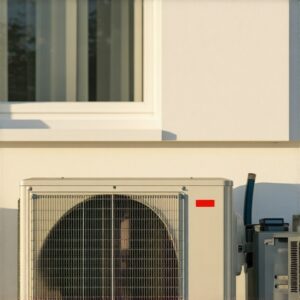
Think of a mini-split as a surgical strike. You have the outdoor condenser (the heart) and the indoor air handler (the lungs). They are connected by a small lineset—the suction line should be ‘beer can cold’ if the charge is right. Because there is no ductwork, there is no ‘duct loss.’ In a typical home, you lose 20-30% of your energy through leaky, uninsulated ducts in the crawlspace or attic. With a mini-split, 100% of the energy you pay for is delivered directly to the room. No ‘Pookie’ (mastic) needed, no tin knocker banging on pipes, just pure, modulated comfort.
I’ve seen guys try to save a buck by using solar thermal heating integration or DIY kits. Don’t. Those ‘pre-charged’ linesets are a gamble. If you get moisture in that system, it reacts with the POE oil and creates hydrofluoric acid. That acid eats the motor windings from the inside out. I’ve smelled enough burnt-out compressors to know that a ‘deal’ on a cheap unit is just a down payment on a replacement in three years. This is why priority service memberships are vital—even a perfect install needs the ‘mud’ washed off the outdoor coils every spring to keep head pressures low and the compressor happy.
The Verdict: Comfort is Physics
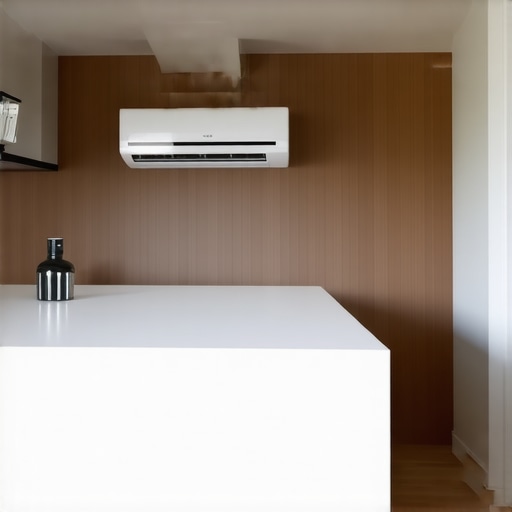
Whether you’re looking into heating-service-innovations-transforming-2025-climate-control or just trying to stop your toes from freezing while you watch TV, the ductless move is the only one that makes sense for a basement. It gives you independent zone control. If you aren’t using the basement, you turn it down. You don’t have to heat the whole house just to warm up the man-cave. And if you’re worried about the look, remember: a sleek wall unit is a lot better than a bulky bulkhead that cuts six inches off your ceiling height because a sparky and a HVAC guy couldn’t agree on where to run the wires.
Before you commit, check out choosing-the-right-hvac-fixes-what-homeowners-need-to-know and make sure you’re not just putting a band-aid on a bigger problem. A basement renovation is the perfect time to audit your entire envelope. If you’re doing the work, do it right. Use a mini-split, insulate your rim joists, and for heaven’s sake, stop cutting holes in your main trunk line. Your furnace—and your wallet—will thank you.