The Thermodynamic Reality of Winter Heating
My old mentor, a man who had more soot in his lungs than a 1970s coal furnace, used to scream at me whenever I complained about a stubborn unit: ‘You can’t cool what you can’t touch, and you can’t heat with what you don’t have!’ This is the primary physics lesson every tech forgets when they transition from traditional combustion to heat pumps. In the northern climate zones, where the wind bites through your Carhartt jacket like a serrated knife, the logic of moving heat rather than creating it becomes a battle of atmospheric pressure and mechanical integrity. Most systems fail during that first January freeze because the installers treated a heat pump like a standard AC with a reversing valve, ignoring the brutal reality of the defrost cycle and the latent heat of vaporization. If you don’t respect the physics of the evaporator coil, the winter will humble you.
“The most expensive equipment in the world cannot overcome a bad duct system.” – Industry Axiom
We are currently standing at the edge of a regulatory cliff. With the industry-wide shift toward low-GWP refrigerant retrofits and the phase-out of R-410A in favor of A2L refrigerants like R-454B and R-32, the margin for error has evaporated. These new ‘mildly flammable’ gases require precise control board diagnostics and a level of technical finesse that most ‘Sales Techs’ simply don’t possess. They want to swap the box, take your check, and disappear before the first snowfall. But when that ambient temperature drops below 30°F, the ‘juice’ behaves differently. The pressure ratios tighten, and if your gas line installation for furnaces wasn’t complemented by a properly sized dual fuel heat pump system, you’re going to find yourself huddled around a space heater by midnight.
The Defrost Disaster: Why Your Outdoor Unit Becomes an Ice Cube
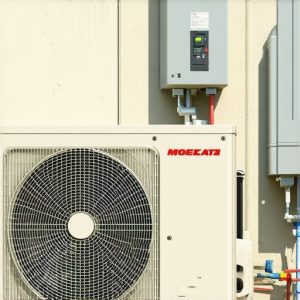
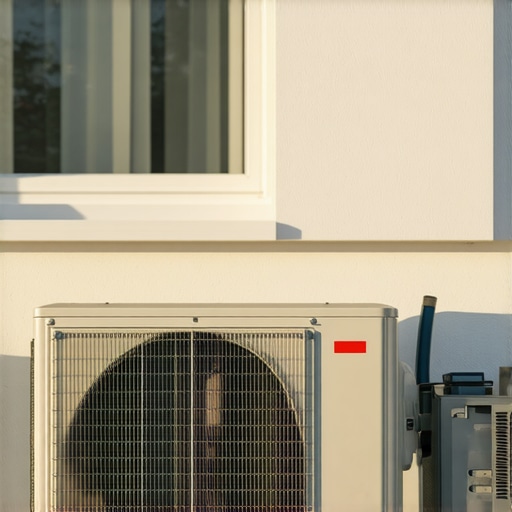
The number one reason for a ‘no-heat’ call in the dead of winter isn’t a dead compressor; it’s a failure of the defrost logic. When the outdoor coil drops below the dew point, moisture in the air freezes on the fins. A properly configured system should periodically reverse itself—essentially running in AC mode for a few minutes—to melt that ice. However, if the sensor is misplaced or the control board diagnostics aren’t dialed in for local humidity levels, the unit becomes a solid block of ice. This puts immense strain on the fan motor and eventually kills the compressor through liquid slugging. I’ve seen industrial heater services fail on a massive scale because someone forgot to account for the prevailing wind direction, which prevented the defrost cycle from ever reaching the necessary temperature to clear the coil.
For those in cold climates, relying solely on an air-source unit is often a recipe for a frozen house. This is where geothermal heat pump systems shine, as they pull heat from the constant 55°F temperature of the earth rather than the volatile outside air. If you’re stuck with an air-source unit, you better ensure your dual fuel heat pump systems are integrated correctly with a high-efficiency gas furnace. When the ‘Gas’ (refrigerant) can no longer pull enough heat from the -5°F air, the system must be smart enough to kick over to the furnace. This transition is governed by the ‘balance point,’ a calculation that most fly-by-night installers skip entirely. If the balance point is set too low, your heat pump will run 24/7, wearing out the bearings and driving your electric bill into the stratosphere without ever getting the house above 62°F.
“Design heating and cooling loads shall be determined in accordance with ACCA Manual J.” – ASHRAE Standard 183
The Hidden Culprits: Airflow and Humidification
Airflow is king. You can have the most expensive variable-speed compressor on the market, but if your ‘Tin Knocker’ (duct guy) undersized the return air, that system is dead on arrival. High static pressure is the silent killer of modern HVAC. It causes the indoor coil to reach extreme temperatures, leading to premature failure of the heat exchanger or the evaporator. This is why we focus so heavily on top hvac repair strategies to extend your systems life. Beyond just the ducts, the air quality matters. During winter, the air becomes bone dry. If your bypass humidifier repair has been neglected, that 70°F air is going to feel like 65°F because of the evaporative cooling effect on your skin. A functional humidifier is not a luxury; it’s a component of thermal comfort that keeps the thermostat from being cranked to 80°F, which further stresses the system.
We also need to talk about remote thermostat access. In 2025, if you aren’t monitoring your system’s performance via a smart hub, you’re flying blind. Modern commercial furnace repair often starts with a data log. These thermostats can alert you if the emergency heat (the ‘heat strips’) has been running for more than two hours. In many botched installations, the ‘Sparky’ (electrician) or the tech wires the system so that the expensive electric backup heat kicks on whenever there is a 2-degree difference between the setpoint and the room temp. That’s a great way to turn a $200 electric bill into an $800 nightmare. You can find more about avoiding these traps in our ac installation secrets that hvac pros wont tell you.
When to Call the Pros vs. When to DIY
If you hear a screeching sound coming from your outdoor unit, that’s likely a failing bearing in the condenser fan motor—shut it down immediately. If you smell something acidic or sour, that’s a compressor burnout, and you’re looking at a major ‘gas’ surgery. For boiler repair services, the stakes are even higher; a cracked heat exchanger is a carbon monoxide factory. I always tell homeowners to check their filters and ensures the outdoor unit is clear of snow drifts, but once you start poking around the control board diagnostics, you are in the realm of high-voltage danger. Understanding how to identify when furnace repair is urgent and why can save your life and your wallet.
Ultimately, a successful heat pump installation in a cold climate requires more than just mechanical skill; it requires an understanding of psychrometrics. You have to account for the sensible heat needed to raise the temp and the latent heat management to prevent the home from feeling like a swamp or a desert. Whether you are looking for efficient hvac repairs or a full system replacement, don’t let a ‘Sales Tech’ talk you into an oversized unit that will short-cycle itself into an early grave. Physics doesn’t care about a sales commission. It only cares about the transfer of energy, and in the first winter, those laws of thermodynamics will always have the final say.