The Physics of Comfort: A Lesson from the Attic
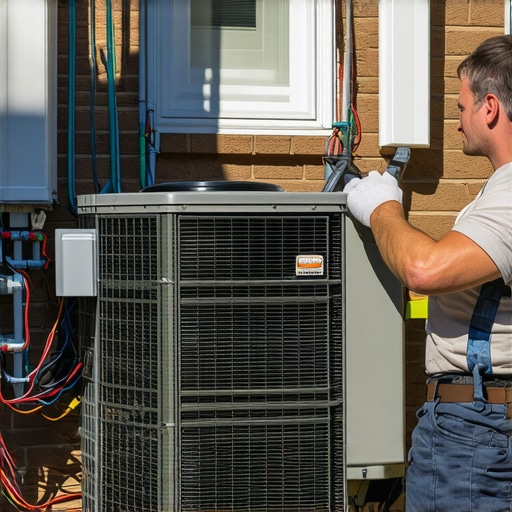
My old mentor, a guy who had silver solder in his veins and a permanent tan from 30 years of rooftop units, used to scream at me in 120-degree attics: ‘Kid, you can’t cool what you can’t touch!’ He wasn’t talking about the equipment; he was talking about the molecules. He’d stand there over a sweating 5-ton condenser and explain that if the air doesn’t hit the evaporator coil at the right velocity, your fancy system is just a very expensive paperweight. The biggest mistake homeowners make during a central AC installation isn’t picking the wrong brand—it’s thinking that ‘bigger is better.’ They want the 5-ton unit for a 2,000-square-foot house because they think it’ll cool faster. In reality, they are just building a cold, damp tomb.
“The most expensive equipment in the world cannot overcome a bad duct system.” – Industry Axiom
The Thermodynamic Reality of the 2025 Regulatory Cliff
As we barrel into 2025, the HVAC landscape is shifting under our feet. The EPA is phasing out R-410A in favor of A2L refrigerants like R-454B. This isn’t just a change in the ‘juice’ or gas we use; it’s a total overhaul of the system’s mechanical anatomy. These new refrigerants are ‘mildly flammable,’ which sounds terrifying to a homeowner but is actually manageable with proper leak detector integration. This regulatory cliff means that if you buy the cheapest unit on the market today without understanding the new sensor requirements, you’re buying obsolete technology. Choosing the right system now requires looking at ultimate guide to AC installation expert tips for 2025 success to ensure your investment doesn’t evaporate in three years. These new systems require precise programmable thermostat programming to manage the sensors and variable speeds effectively.
Thermodynamic Zooming: Why Oversizing Creates a ‘Cold Swamp’
When a unit is oversized, it hits the setpoint on your thermostat in ten minutes and shuts off. This is called ‘short cycling.’ In the HVAC world, we care about two types of heat: sensible heat (the temperature you see on the thermometer) and latent heat (the humidity). To remove latent heat, the evaporator coil must stay below the dew point of the air for a sustained period. This causes the moisture to condense on the fins and drip into the primary drain pan. If the unit only runs for ten minutes, it never removes the water. You end up with 72-degree air that feels like a Louisiana bayou. This is why dual fuel heat pump systems are becoming the gold standard; they can modulate their output to keep the air moving longer, pulling that humidity out of the ‘suction line’ until it’s ‘beer can cold’ and your home is actually dry.
“Design cooling loads shall be determined in accordance with the procedures described in the ASHRAE Handbook of Fundamentals or ACCA Manual J.” – ACCA Standard
The Anatomy of Failure: Beyond the Compressor
Most homeowners focus on the big box outside, but the real work happens in the ‘Pookie’ (mastic) sealed ductwork and the electrical components. I’ve seen brand-new installs fail within a month because some ‘Tin Knocker’ didn’t size the return air drop correctly, or a ‘Sparky’ didn’t tighten the lugs on the disconnect. We often see contactor repair or capacitor replacement services needed prematurely because high head pressure from poor airflow is cooking the electrical guts of the machine. If you’re in a climate like the Northeast, where you might be switching between an AC and a furnace, or even considering a wood burning stove installation for backup heat, your ductwork needs to be airtight. Poor seals lead to static pressure issues that burn out blower motors faster than you can say ‘warranty claim.’
The Solution: Precision Installation and Modern Integration
If you want to avoid the ‘Cold Swamp’ syndrome, you need a technician who performs a real Manual J load calculation, not a guy who ‘eyeballs’ it based on square footage. This involves checking every window, the insulation in the walls, and even the direction your front door faces. Integrating remote thermostat access allows you to monitor these cycles in real-time, ensuring the system isn’t cycling more than three times an hour. For those with larger properties or mixed-use spaces, industrial heater services or commercial furnace repair logic often applies—redundancy and staged cooling are better than one giant, struggling unit. You can learn more about these nuances in our AC installation secrets that HVAC pros wont tell you. Don’t let a sales tech talk you into a 5-ton monster when a properly ducted 3-ton variable speed unit will keep you more comfortable for half the operating cost.
The Long-Term Play: Maintenance and Repair Myths
Once the unit is in, the battle isn’t over. The ‘scam tune-up’ is a real thing in this industry. A real tech checks the subcooling and superheat; they don’t just ‘top off the Freon.’ Remember, it’s a sealed system—if it’s low, it’s leaking. We offer specialized electric heater services and capacitor replacement services to keep your system humming during the shoulder seasons. Whether it’s industrial heater services for a warehouse or a simple residential fix, the physics remains the same: airflow is king. If you suspect your current system was installed incorrectly, check out efficient HVAC repairs: the blueprint for cooler summers and warmer winters to see how to rectify sizing issues without replacing the whole rig. Proper maintenance is the only way to avoid commercial furnace repair costs on a residential budget.