The Myth of the ‘Lungs’ and the Mentor’s Scream
My old mentor used to scream at me until his face was the color of a Redfield boiler: ‘You can’t cool what you can’t touch!’ Back then, I was a green apprentice thinking that HVAC was all about the equipment—the shiny boxes from the factory. I was wrong. He was right. You can buy the most expensive, AI-driven HVAC optimization system on the planet, but if the ductwork is choked, you’re just burning money. I’ve spent 30 years in frozen Northeast basements and cramped attics, and I’ve seen thousands of homeowners get sold a new AC installation when their only real problem was a return air drop the size of a shoebox. This is the ‘Airflow Manifesto.’ We aren’t talking about ‘tonnage’ today; we’re talking about static pressure—the blood pressure of your home’s mechanical soul.
The Anatomy of Resistance: What is Total External Static Pressure?
In the cold North, where furnace repair is a life-or-death matter during a polar vortex, airflow is everything. When a tin knocker builds a duct system, they are creating a circuit. If that circuit is too tight, the blower motor has to work twice as hard, the heat exchanger starts to glow like a cherry, and eventually, the whole thing safeties out. Static pressure is the resistance the blower fan has to push against. If you have a high static pressure reading—meaning the resistance is too high—your 16-SEER unit is probably performing like an 8-SEER relic from the 70s. This isn’t magic; it’s physics. When the resistance goes up, the CFM (Cubic Feet per Minute) goes down. This is where we start Thermodynamic Zooming: your evaporator coil needs a specific amount of air to move across its fins to facilitate the heat exchange. If the air isn’t touching the coil because the blower can’t push it through a choked filter or a crushed flex duct, the coil freezes, the juice (refrigerant) stays liquid, and your compressor ends up slugging and dying a premature death. I’ve caught countless ‘Sales Techs’ trying to push a $12,000 replacement when the real fix was just a properly sized return. You can see more about avoiding these traps in our ac installation secrets.
‘Duct systems shall be sized according to the heat loss/gain calculations and shall be capable of delivering the required airflow at the system’s design static pressure.’ – ACCA Manual D
The Forensic Diagnosis: Measuring the Invisible
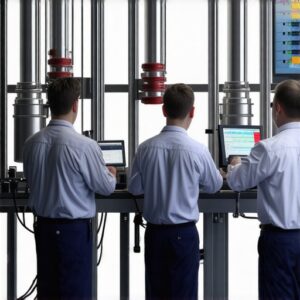
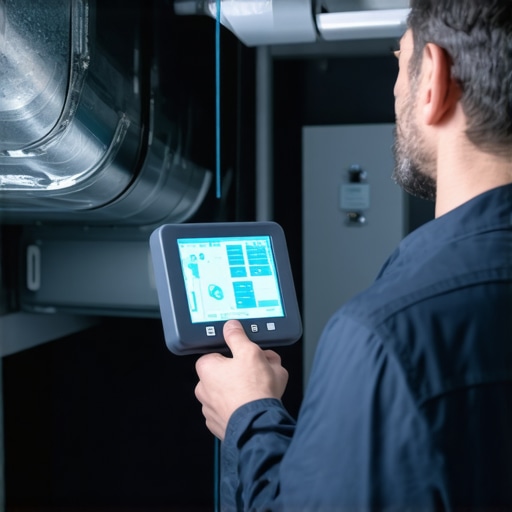
To find a bottleneck, you don’t use your eyes; you use a manometer. We drill small holes in the supply and return plenums, insert pitot tubes, and look at the numbers. Most residential blowers are rated for 0.5 inches of water column. When I walk into a house where one room is a meat locker and the other is a sauna, I usually find a static pressure of 0.8 or 0.9. That’s like trying to run a marathon while breathing through a cocktail straw. This is why furnace filter replacement is so critical. A dirty MERV 13 filter can add 0.3 inches of static pressure all by itself. I’ve seen people lose their entire secondary heat exchanger because they forgot to swap a $15 filter. If you’re struggling with these issues, understanding furnace repair myths can save you a fortune. In old church heating systems or large colonial homes, the ductwork was often designed for heating only. When someone slaps an AC coil on top of that old furnace, the resistance skyrockets because cold air is denser and harder to move. The tin knocker who didn’t upgrade the return air drop just signed the death warrant for that new compressor.
The North/Cold Climate Constraint: Beyond the Furnace
Up here, we deal with more than just forced air. I’ve spent my fair share of time on steam boiler repair and hot water heater repair. While boilers don’t have ducts, the concept of flow remains. But when we talk about airflow bottlenecks in the North, we have to talk about flame rollout. If your furnace isn’t moving enough air, the heat exchanger can’t shed its heat. It gets brittle, it cracks, and suddenly you have carbon monoxide leaking into the airstream. This isn’t just a comfort issue; it’s a safety issue. This is why we push for AI-driven HVAC optimization—not as a gimmick, but to monitor these pressures in real-time. Modern systems with remote thermostat access can actually alert you when the static pressure begins to climb, signaling a blocked intake or a failing motor before the ‘Sparky’ has to come out and replace the board. If you’re wondering when a repair is no longer an option, check out urgent furnace repair indicators.
‘Energy efficiency and indoor air quality are inextricably linked to the design and maintenance of the air distribution system.’ – ASHRAE Standard 62.2
The Fix: Mastic, Dampers, and Physics
So, how do we fix a bottleneck? We don’t use ‘Silver Tape’—that’s for amateurs. We use Pookie (mastic). Sealing the leaks is step one, but that actually increases static pressure because the air can no longer escape through the cracks. To actually lower the pressure, we often have to add return air capacity. I’ve solved ‘unfixable’ hot spots by simply cutting in a new return in a hallway or upgrading a 10-inch flex duct to a 12-inch hard pipe. In commercial settings, like a church heating system, we might use occupancy sensor installation to drive VFDs (Variable Frequency Drives) that adjust motor speed based on demand, but even the smartest VFD can’t beat the physics of a crushed duct. If you’re looking to extend the life of your current setup, I highly recommend reading about top HVAC repair strategies. Whether it’s a thermostat installation or a full system overhaul, if the tech doesn’t pull out a manometer, they aren’t doing their job. They’re just guessing. And in this business, guessing is expensive. Comfort isn’t magic; it’s a calculated balance of pressure, temperature, and volume. If you need a pro who knows the difference between a ‘Sales Tech’ and a technician, contact us today. We don’t just sell boxes; we fix physics. For more tips on keeping things running smooth, see our preventative repair tips. Stay warm, stay cool, and for heaven’s sake, change your filters.