Why Your Furnace Control Board Keeps Frying and How to Stop the Cycle
Nothing ruins a cozy Tuesday evening quite like the sound of silence – the kind of silence that happens when your furnace decides to call it quits in the middle of a cold snap. You head down to the basement, check the unit, and realize the diagnostic light is dead or flashing a code that translates to “catastrophic failure.” You call a tech, they swap out the control board, and you’re back in business. For three weeks.
Then it happens again. And maybe a third time.
As an electrician and HVAC specialist with years of dirt under my fingernails, I can tell you there is nothing more frustrating for a homeowner than a “parts cannon” approach to furnace repair. Simply replacing a fried board without finding out why it fried is like putting a band-aid on a broken leg. The control board is the “brain” of your system. If the brain keeps short-circuiting, there’s an underlying condition in the “body” of the HVAC system that needs to be addressed. Control board failure is consistently cited as one of the most common reasons for furnace malfunctions, but it’s rarely the root cause. If you’re stuck in this loop, you need to know how to identify when furnace repair is urgent and why the repeat failures are occurring.
Section 1: What Exactly is a Furnace Control Board?
Before we dive into the “why,” let’s talk about the “what.” In the industry, we call it the Integrated Furnace Control (IFC). Think of it as the air traffic controller for your home’s comfort. It receives a signal from your thermostat (the boss) and then dictates the timing and sequence of the entire heating cycle.
It tells the inducer motor to purge the heat exchanger, checks the safety sensors to make sure it’s safe to light a fire, opens the gas valve, ignites the burners, and finally, kicks on the blower motor to push that sweet, warm air through your vents. It’s a sophisticated piece of hardware that operates on a delicate mix of voltages. The logic circuits – the “thinking” part – usually operate on 24V AC, which is stepped down by a transformer. However, the components it controls, like the heavy-duty blower motor, run on 120V house current.
Because the board bridges the gap between low-voltage signals and high-voltage power, it’s uniquely vulnerable to electrical “noise” and mechanical stress. When you’re dealing with these complex electrical intersections, it’s often best to consult an electrician HVAC expert Mill Creek WA who understands how your home’s main power grid interacts with your furnace’s sensitive electronics.
Section 2: The “Usual Suspects” – Why Boards Fry
When I walk into a home where a board has “fried” (and I mean literally charred or smelling like burnt ozone), I’m looking for three main culprits. Most of the time, the board didn’t just decide to die; it was murdered.
1. Power Surges and Electrical Spikes
This is the most obvious one. A power surge doesn’t have to be a lightning strike. It can be a “dirty” power grid or even a large appliance in your home (like an old refrigerator or a well pump) kicking on and sending a spike through the lines. These spikes can overwhelm the Metal Oxide Varistors (MOVs) or capacitors on the board. Once those components are breached, the sensitive microprocessors are toast.
2. Vibration and Heat
Furnaces are mechanical beasts. If your blower wheel is out of balance or the furnace isn’t leveled correctly, the constant vibration can lead to “micro-cracks” in the solder joints on the control board. Over time, these cracks create high resistance, which generates heat, which eventually melts the solder or burns the trace on the board. Similarly, if the furnace cabinet is getting too hot due to restricted airflow, the ambient temperature can exceed the board’s operating rating, leading to premature component failure.
3. The “Blower Motor Trap”
This is the one that trips up a lot of rookie techs. A failing blower motor or a degraded start capacitor is a board-killer. If the motor is struggling to start, it draws significantly more amperage than it’s rated for. That extra current flows right through the relays on the control board. According to technical field reports, a fried motor start capacitor often takes the board down with it because it creates a “back-feed” of voltage that the board isn’t designed to handle. If you suspect your motor is the culprit, you should read about high static pressure: the real reason your blower motor failed.
Section 3: The Hidden Culprit – Static Pressure & Airflow
If you want to know the real secret to why boards keep frying, look at the ductwork. This is where the mechanical meets the electrical. Every HVAC system is designed to operate against a certain amount of resistance, known as “static pressure.” Think of it like your blood pressure. If it’s too high, the heart (the motor) has to work harder.
When you have dirty filters, undersized ducts, or too many closed registers, the static pressure skyrockets. To move the air, the blower motor has to pull more “amps” (electrical current). Since the blower motor is powered through a relay on the control board, that relay becomes a localized heater. Eventually, the relay contacts weld shut or the board traces burn out. This is why why static pressure testing is the only way to find hidden ductwork bottlenecks. Without testing the pressure, you’re just guessing why the motor is overworking the board.
According to Energy.gov, proper airflow is critical not just for efficiency, but for the longevity of the electronic components within the furnace. When airflow is restricted, the heat exchanger can also overheat, causing the high-limit switch to trip repeatedly. Every time that switch trips, the control board has to manage an emergency shut-down protocol, which adds further wear and tear to the logic circuits.
Section 4: Troubleshooting – Signs Your Board is Toast
How do you know if the board is actually the problem? Sometimes, the symptoms of a bad board look like something else entirely. Here are the red flags I look for:
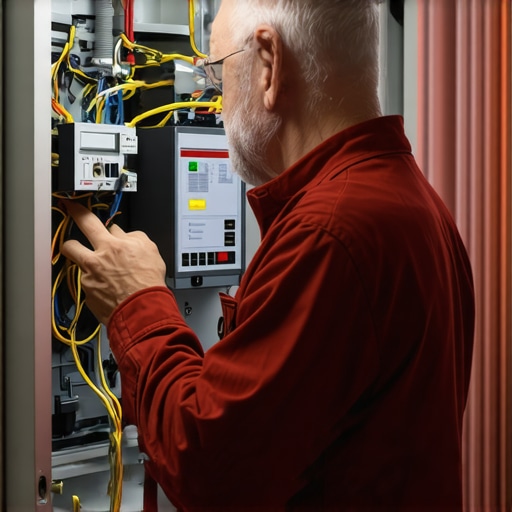
- The Diagnostic “Heartbeat”: Most modern boards have an LED light. If it’s off entirely, the board isn’t getting power, or the internal fuse has blown. If it’s flashing, you need to check the legend on the blower door. However, if the light is flashing erratically or doing “nonsense” patterns, the microprocessor is likely failing.
- The Smell of Ozone: If you open the cabinet and it smells like a laser printer or burnt plastic, a component has let the smoke out. Once the “magic smoke” is gone, the board is done.
- Ghosting Issues: Does the furnace start, run for three minutes, and then quit for no reason with no error code? Does the blower fan run constantly even when the thermostat is off? These “ghost” behaviors are often the result of failing relays or logic gates on the board.
- Stuck Relays: If you hear a “click” but the blower doesn’t start, or if the blower won’t stop running even after the cooling/heating cycle is done, the relay on the board is likely stuck.
If you’re seeing these signs, it’s time to call in professional HVAC installers who can perform a full diagnostic. Don’t just buy a board online and swap it; you might be throwing money into a furnace that is ready to eat the next board you give it.
Section 5: How to Stop the Cycle – Pro Solutions
If you’ve already replaced your board once, you need to take preventive measures to ensure you don’t do it again. Here is my checklist for stopping the cycle of “frying” electronics:
1. Install an HVAC-Specific Surge Protector
Standard whole-home surge protectors are great, but for a furnace, I recommend a dedicated surge protector installed right at the furnace disconnect. Brands like ICM or Mars make protectors specifically designed to clamp down on the voltage spikes that kill HVAC boards. It’s a $100 investment that can save a $600 board.
2. Check the Transformer
The transformer takes your 120V and turns it into 24V. If the transformer is failing or was replaced with the wrong model, it might be outputting 28V or 30V. That slight over-voltage will cook the logic chips on your board over a period of months. A quick check with a multimeter can confirm if your “brain” is being fed the right diet of electricity.
3. Address Home Wiring Issues
If your home is older, your furnace might be sharing a circuit with other heavy appliances, or you might have a loose neutral wire in your main panel. Loose neutrals cause voltage fluctuations that are lethal to electronics. In these cases, I often recommend an electric panel upgrade Bothell WA to ensure your home’s electrical foundation is solid enough to support modern, sensitive HVAC equipment.
4. Cleanliness and Maintenance
Dust is a conductor. If your furnace room is dusty and that dust makes its way onto the control board, it can cause “tracking.” Tracking is when electricity finds a path across the dust between two points on the board where it shouldn’t go. This causes a short circuit. Keep your furnace cabinet clean and change your filters regularly to keep the air – and the electronics – cool.
Technical standards from organizations like ASHRAE emphasize that the environment surrounding the control electronics is just as important as the electrical input itself. Moisture, in particular, can lead to corrosion on the board’s pins, leading to intermittent failures that are a nightmare to diagnose.
Conclusion: Don’t Just Swap Parts, Solve the Mystery
Replacing a furnace control board is a symptom-level fix. To truly solve the problem, you have to look at the system as a whole. Is it a power surge from the grid? Is it a blower motor that’s drawing too many amps because of a clogged filter? Or is it a ductwork issue that’s turning your furnace into an oven?
As an electrician, I’ve seen far too many homeowners spend thousands on repeat repairs because the root cause – usually electrical or airflow-related – was ignored. Don’t let your furnace become a money pit. If your board has fried once, it’s a fluke. If it fries twice, there is a “killer” in your system that needs to be caught.
Stop the cycle of frustration. If you’re tired of your furnace letting you down, it’s time for a professional inspection that goes deeper than just checking the parts. We can test your static pressure, check your electrical loads, and ensure your control board has the protection it needs to last for years. Contact Us today to schedule a comprehensive system diagnostic and get your home back to the comfortable sanctuary it’s supposed to be.