The Anatomy of a Dying Flame: When Physics Fights Your Heater
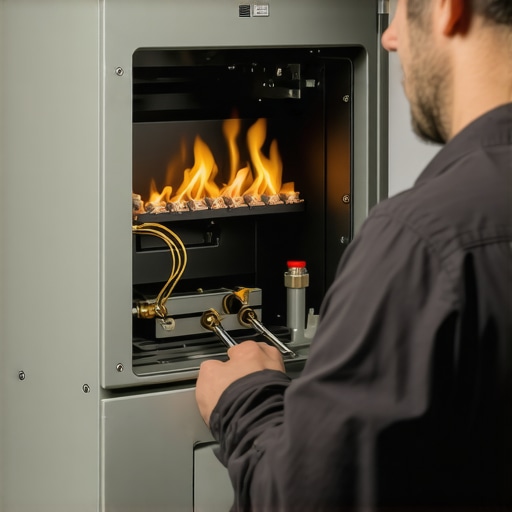
My old mentor used to scream, ‘You can’t burn what you can’t breathe!’ This is why airflow matters more than horsepower. He was a grizzled veteran who had seen too many ‘Tin Knockers’ slap units into closets without a square inch of combustion air, and that voice still rings in my ears every time I’m staring down a ventless gas heater that refuses to hold a pilot. We aren’t just talking about a nuisance click-click-click; we are talking about the fundamental laws of thermodynamics and the precise millivoltage required to keep your living room from becoming a walk-in freezer. If your pilot flame is dancing, lifting, or flat-out dying, it isn’t ‘ghosts’—it is chemistry, and usually, it’s a cry for help from a system choked by its own environment.
“The most expensive equipment in the world cannot overcome a bad duct system.” – Industry Axiom
In the trade, we call these units ‘room-breathers.’ Unlike a central furnace where we might perform furnace flame sensor cleaning or a limit switch replacement, a ventless heater is an open-loop system. It takes the oxygen from your room, mixes it with gas, and dumps the combustion byproducts right back into your face. In a cold climate like a Chicago winter or a damp Northeast morning, this creates a ‘sensible heat’ battle. When that pilot light won’t stay lit, you are likely dealing with an Oxygen Depletion Sensor (ODS) doing exactly what it was engineered to do: keep you alive by shutting down when the air gets ‘thin.’ This is why carbon monoxide detector installation is non-negotiable in these spaces.
The Forensic Diagnosis: The Seebeck Effect and the Thermocouple Heart
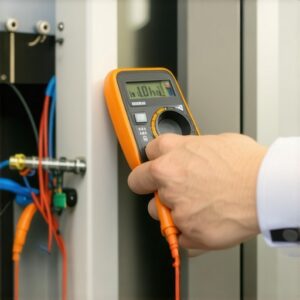
Let’s do some ‘Thermodynamic Zooming.’ Most homeowners think a pilot light is just a match that stays lit. In reality, it is a tiny power plant. The pilot flame engulfs the tip of a thermocouple—two dissimilar metals joined at a junction. When heated, these metals produce a tiny DC current, usually around 25 to 30 millivolts. This ‘juice’ is what holds the solenoid valve open in the gas control block. If that flame is weak, yellow, or lifting off the sensor, the voltage drops. Once it hits about 12 millivolts, the ‘brain’ of the heater thinks the fire is out and snaps the valve shut. That ‘click’ you hear is the sound of safety, but it’s also the sound of a cold house. This is why heating service isn’t just about changing filters; it’s about checking the micro-currents that keep the system operational.
If you’re in a Northern climate, the enemy is often ‘Flame Rollout’ or oxygen starvation. When the air is dense and cold, the heater needs a specific stoichiometric ratio—the perfect mix of gas and air. If the room is too tight (a ‘sick building’ syndrome), the oxygen levels drop below 18.5%, and the ODS system triggers. The pilot flame will literally lift off the burner, looking for oxygen like a drowning man looking for a snorkel. When it lifts, it stops heating the thermocouple, the millivolts vanish, and the gas shuts off. If this is happening, you don’t need more ‘gas’ or a bigger tank; you need airflow measurement services to ensure your room isn’t a vacuum sealed tomb. Using ‘Pookie’ (mastic) to seal every crack in your house is great for efficiency, but it’s a death sentence for a ventless heater’s pilot.
The Repair vs. Replace Math: When to Pull the Plug
I despise ‘Sales Techs’ who try to sell a heat pump replacement the second they see a dusty pilot. However, there is a point where the math doesn’t favor the old iron. If your ventless unit is more than 15 years old and the oxygen sensor is failing, you aren’t just looking at a $100 part; you’re looking at a compromised combustion chamber. A basic cleaning and thermocouple swap might run you $250 to $400 depending on the labor rates in your area. Contrast that with a new, high-efficiency unit that might cost $1,500 but saves you 30% on your gas bill while providing better safety features. Sometimes, the ‘Forensic Diagnosis’ leads us to realize that gas line installation for furnaces and moving to a vented system is the only way to sleep soundly. For larger properties, such as hotel boiler services, we see this scaling issue daily—bad air leads to bad combustion, which leads to early equipment death.
“Combustion equipment shall be installed in a location in which the facilities for ventilation permit satisfactory combustion of gas.” – NFPA 54 / ANSI Z223.1
Before you call a ‘Sparky’ (electrician) to check your wiring, look at the pilot orifice itself. Spiders love the smell of mercaptan (the stuff added to gas to make it stink). A tiny web inside the pilot tube can shroud the gas flow, making the flame lazy and yellow. A lazy flame doesn’t have the kinetic energy to heat the thermocouple. This is one of those heating service hacks for comfort and savings in 2025: keep the dust out. A simple can of compressed air can sometimes save you a $200 service call. But if the flame is blue and strong and the unit still dies, you’re likely looking at a failing internal limit or a clogged ODS. At that point, you need a pro who knows how to read a manometer, not a guy who just knows how to read a price book. Check out how to identify when furnace repair is urgent and why for more on these critical failure points.
Solving the Airflow Puzzle
If you are struggling with cold spots while the heater is running, you might be tempted to look into zoning system installation, but for a single-room ventless heater, the solution is usually much simpler: circulation. Heat rises, and in a ventless setup, it often gets trapped at the ceiling while the floor stays like an ice box. This temperature ‘stratification’ can actually cause the heater to short-cycle. The warm, oxygen-depleted air stays at the top, and the heater keeps pulling from a shrinking pool of fresh air at the floor. It’s a feedback loop that ends in a pilot outage. If your heater is in a commercial setting, we often recommend electric heater services for supplemental warmth or a complete preventative HVAC repair tips for year-round efficiency plan to keep the ‘gas’ flowing safely. You can also see top hvac repair strategies to extend your systems life for more technical deep dives on maintaining these finicky beasts. For more information, feel free to contact us to discuss your specific climate needs.