The Sound of a Silent Building: A Forensic Diagnosis of Commercial HVAC Failure
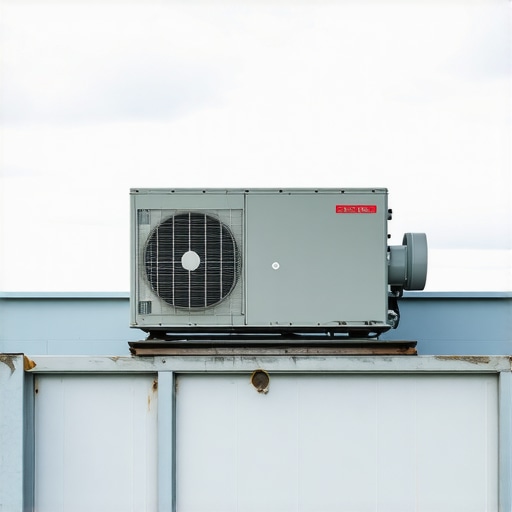
There is a specific kind of silence that hits a building manager at 6:00 AM on a Monday in February. It is the sound of a dead commercial rooftop unit (RTU). When you walk into a warehouse or a retail space and that ‘click’ of the thermostat isn’t followed by the low thrum of the centrifugal blower, you are already losing money. I’ve spent three decades on ladders, and I’ve learned that RTUs don’t just die; they are murdered by neglect and poor physics. My old mentor, a man who could smell a refrigerant leak from the parking lot, used to scream at me, ‘You can’t cool what you can’t touch!’ He was talking about the boundary layer of air on the evaporator coil, but the lesson was deeper: airflow matters more than horsepower. If the air isn’t moving, the heat isn’t moving, and your compressor is basically a $5,000 paperweight. Most ‘Sales Techs’ will tell you that a tripped limit switch means you need a whole new system. I call that a scam. Most of the time, the machine is just begging for a static pressure testing to see why it can’t breathe.
“The most expensive equipment in the world cannot overcome a bad duct system.” – Industry Axiom
1. The Short Cycle: Why Your RTU is ‘Hiccuping’
If your unit is kicking on and off every five minutes, it’s not ‘adjusting.’ It’s dying. In our northern climate, short cycling is often a symptom of high head pressure or a failing flame sensor. When the heat exchanger can’t move the sensible heat into the air stream because the filters are packed with gunk, the high-limit switch trips to prevent a meltdown. This constant expansion and contraction is how you get a cracked heat exchanger. You need to look at furnace repair urgency before your heat exchanger starts leaking carbon monoxide into the workspace. In commercial settings, this is often linked to poor duct cleaning services that have left the return air choked.
2. The Screech of the Tin Knocker’s Nightmare
A failing bearing has a specific frequency—a high-pitched metallic shriek that tells you the lubricant has turned to varnish. On a rooftop, where the wind is whipping at 30 mph and the ambient temp is sub-zero, those bearings are under literal tons of stress. If you hear that screech, your blower motor is about to seize. This is particularly critical for buildings utilizing hydronic heating systems or steam boiler repair setups where the RTU acts as the primary air handler. When that motor goes, the coil freezes, and if it’s a DX system, you risk liquid ‘juice’ (refrigerant) slugging back to the compressor. That’s an instant kill.
3. The Acidic Smell of a Burnout
If you open the electrical cabinet and it smells like a bucket of sour pickles, your compressor has suffered a burnout. This happens when the motor windings overheat and the oil breaks down into hydrofluoric acid. Once that acid is in the lines, it’s like a virus. Even a new compressor won’t last a month unless you flush the entire system. This is why electric heater services and proper electrical maintenance are non-negotiable. I always tell clients that extending your system’s life starts with checking the contactors for pitting. A $40 contactor saves an $8,000 compressor.
4. Spiking Static Pressure: The Invisible Killer
Commercial units are designed to work against a specific resistance. If your static pressure testing shows anything above 0.5 inches of water column on a standard RTU, you are killing the motor. High static pressure is usually caused by undersized ductwork or ‘Pookie’ (mastic) that has failed, causing internal liners to collapse. It’s like trying to run a marathon while breathing through a cocktail straw. This is where biomass boiler services or even infrared heater installation can sometimes take the load off a struggling central system, but if the main RTU can’t breathe, nothing else matters.
“A system’s performance is limited by the component with the lowest capacity for energy transfer, typically the air distribution network.” – ACCA Manual N
5. The Ice Trap: Low Airflow vs. Low Refrigerant
When a tech sees ice on a coil, they usually reach for the ‘gas’ (refrigerant) bottle. That’s a rookie move. In 90% of commercial failures, ice is caused by a lack of airflow. If the blower belt is slipping or the filters are plugged, the evaporator coil temperature drops below the dew point and then below freezing. The latent heat isn’t being removed because the air isn’t crossing the fins. This is why swamp cooler maintenance is so different from DX cooling—you have to understand the psychrometrics of the specific climate. In our region, snow melt systems installation often reminds us how much energy is required just to change the state of water; don’t let that phase change happen on your cooling coil.
6. Flame Rollout and the ‘Ghost in the Machine’
If you see scorch marks on the outside of the burner cabinet, you have a flame rollout. This is a life-safety issue. It means the flue gases aren’t exiting through the heat exchanger, usually because it’s cracked or the inducer motor is weak. This is common in older units that haven’t had a bypass humidifier repair or regular inspections. It’s also a sign that your steam boiler repair needs might be masking a larger combustion air issue in the mechanical room. Check out the expert tips for 2025 to see how newer modulating burners prevent this.
7. The Utility Bill Spike
If your power bill jumps 30% without a change in weather, your RTU is working overtime to compensate for a failing component. Maybe the electric heater services are stuck on ‘heat’ while the AC is running, or perhaps the ‘Sparky’ (electrician) didn’t balance the phases. High energy consumption is the final warning before catastrophic failure. This is often the best time to look at 2025 climate control innovations rather than pouring money into a 20-year-old R-22 relic.
The Forensic Verdict: Repair or Replace?
I’ve seen managers spend $4,000 on a 15-year-old unit just to have the heat exchanger crack two months later. If the repair cost is more than 50% of the value of a new unit—and the unit is over 12 years old—it’s time to pull the plug. With the 2025 transition to A2L refrigerants like R-454B, the cost of old R-410A is going to skyrocket. You need to understand the secrets pros won’t tell you about these transitions. Whether you are dealing with hydronic heating systems or snow melt systems installation, the physics of thermodynamic transfer remains the same: maintain your airflow, keep your coils clean, and never trust a tech who doesn’t own a manometer.