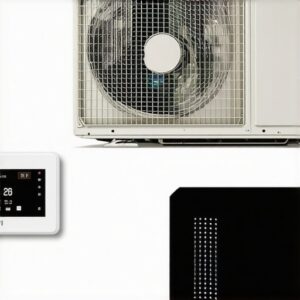
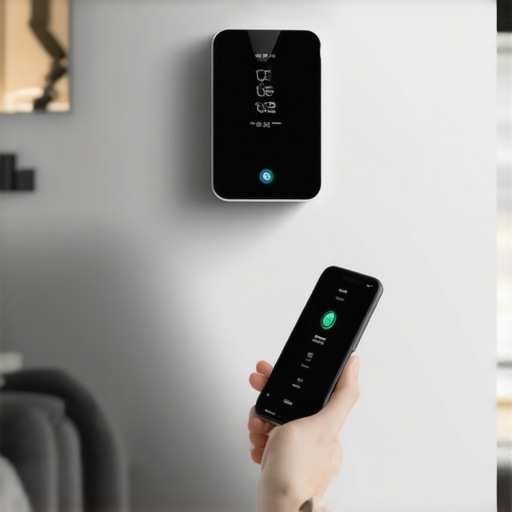
The silence is what gets you first. In the dead of a Northern winter, silence isn’t peaceful; it’s the sound of pipes about to burst. You walk over to that sleek, glowing piece of glass on the wall—the smart thermostat you spent three hundred bucks on—and it’s dead. Or worse, it’s blinking a cryptic error code that says ‘No Power.’ Before you call some ‘Sales Tech’ who will try to sell you a $15,000 multi-family heating upgrade just because your Wi-Fi dropped, let’s look at the actual physics of why your control circuit is failing. I spent thirty years crawling through spider-infested crawlspaces to learn that most ‘broken’ systems are just victims of poor wiring or a $40 part that any ‘Tin Knocker’ worth his salt could fix in twenty minutes.
“The most expensive equipment in the world cannot overcome a bad duct system.” – Industry Axiom
The Physics Lesson: Why Airflow and Voltage Rule Your Life
My old mentor, a man who could sniff out a gas leak from a block away, used to scream at me, ‘You can’t cool what you can’t touch, and you can’t control what you can’t power!’ He was talking about the fundamental relationship between airflow and the control signal. We aren’t just moving air; we are managing thermodynamic energy. In our cold climate, whether you are running cold climate heat pumps or a standard gas furnace, the thermostat is the brain. But even a brain needs blood, and in this case, blood is 24 volts of AC power. If that voltage drops because of a loose wire or a failing transformer, your ‘smart’ tech becomes a paperweight. Most homeowners don’t realize that smart thermostats pull significantly more ‘juice’ than the old mercury bulbs. If you didn’t perform thermostat wiring upgrades when you installed it, you’re likely ‘stealing’ power from the Y-circuit, which is like trying to run a marathon while breathing through a straw.
The Forensic Diagnosis: Anatomy of a Connection Failure
Let’s perform a forensic teardown of the system. Your thermostat is connected to the furnace or air handler via a bundle of 18-gauge wires. The most common culprit in a connection issue is the ‘C’ or Common wire. Without it, the thermostat tries to charge its internal battery by pulsing the heating or cooling circuit. This ‘power robbing’ often leads to a chatter in the contactor. You’ll hear it—a rhythmic click-clack-click coming from the outdoor unit or the furnace cabinet. That’s the sound of your contactor repair bill growing by the second. If the contactor points weld shut because of that chatter, your compressor will run until it dies, or until the high-pressure switch finally kicks in. We call this a ‘suction line’ nightmare. You want that line to feel ‘beer can cold’ when the AC is on, but in the winter, a bad connection means your gas furnace repair becomes urgent when the flame sensor doesn’t get the signal to stay open.
The Thermodynamic Zoom: Sensible vs. Latent Issues
In our region, we deal with extreme Sensible Heat during the brief summer and massive heat loss in the winter. A smart thermostat connection issue isn’t just about the Wi-Fi; it’s about the integration of the system. For instance, if you have a heat recovery ventilator (HRV) or an infrared heater installation in your shop, the wiring becomes a messy web. A single loose wire at the terminal block can cause a voltage drop that the thermostat interprets as a ‘lost connection.’ I’ve seen shop heater services where the ‘Sparky’ (electrician) ran the thermostat wire right next to a high-voltage line, causing electromagnetic interference. The thermostat isn’t broken; it’s just being ‘screamed’ at by the surrounding wires. This is why multi-family heating upgrades often fail during the first cold snap—the installers didn’t account for signal noise in the risers.
“Design for the cold climate, or the cold will design the end of your equipment.” – ASHRAE Standards Handbook
The Math: Repair vs. Replace
A ‘Sales Tech’ will see a blank thermostat and tell you the control board in your furnace is fried. They’ll quote you $1,200 for a board or $12,000 for a new unit. Don’t buy it. A 24V transformer costs about $40. A new run of thermostat wire costs $50. If your system is under 12 years old and you aren’t dealing with a cracked heat exchanger (which smells like a weird, sickly sweet ozone before the carbon monoxide alarm goes off), you likely just need a solid connection. Check the fuse on the control board first. It’s a tiny 3-amp or 5-amp automotive-style fuse. If it’s blown, you have a short in the wiring. This often happens in pool heater repair or hotel boiler services where moisture corrodes the terminals. Using ‘Pookie’ (mastic) to seal the hole behind the thermostat can prevent humid air from the wall cavity from corroding the backplate terminals, which is a pro-tip most ‘pros’ won’t tell you.
The Preventive Strategy
The best way to avoid a mid-winter lockout is to follow top hvac repair strategies that include a dedicated C-wire. If your house was built before 1990, you probably only have four wires. You need five. Don’t use a ‘power extender kit’ if you can avoid it; they are just another point of failure. Pull a new 18/8 wire bundle so you have extra conductors for future features like dehumidification or staging. While you’re at it, check the tension on the terminal screws. Over time, the heating and cooling of the wires cause them to expand and contract, eventually backing out of the lug. It’s physics, not magic. If you’re still seeing ‘offline’ messages, it might be your router’s 5GHz band interfering with the thermostat’s 2.4GHz radio. Move your router or get a dedicated access point for your HVAC gear. For more complex issues, especially in commercial settings, you can check our efficient hvac repairs blueprint. Don’t let a tiny wire be the reason you’re shivering tonight. Stay technical, stay cynical, and always check your voltages.