The Hidden Electrical Faults an Electrician Finds That Mimic a Broken AC Compressor
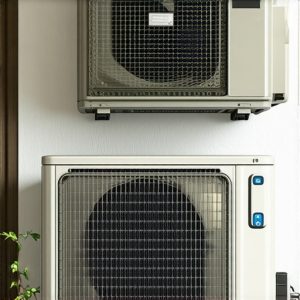
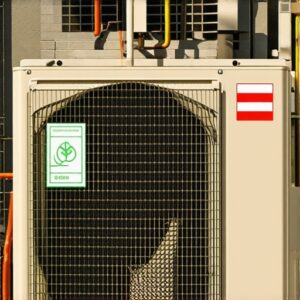
It is the middle of a sweltering July afternoon. You notice the temperature in your living room creeping upward, the thermostat is set to 70, but the readout says 78. You walk outside to check your condenser unit, and you’re met with a terrifying sound: absolute silence. Or worse, a low, ominous hum that sounds like a motor trying – and failing – to turn over. When you call a technician, the diagnosis you fear most is the “dead compressor.” It is the heart of your HVAC system, and replacing it can cost upwards of $3,000, often leading homeowners to simply replace the entire outdoor unit instead.
However, as an electrician and HVAC specialist, I have seen hundreds of cases where a homeowner was told they needed a new compressor, only for a secondary inspection to reveal a $100 electrical component was the real culprit. My name is Dominick Stoll, and throughout my career, I’ve made it my mission to help homeowners navigate these complex systems without getting overcharged for unnecessary replacements. Before you sign a check for a multi-thousand-dollar repair, you need to understand the hidden electrical faults that mimic compressor failure.
Why an Electrician Often Finds the “Dead Compressor” is a Lie
To understand why the compressor gets blamed so often, you have to understand its role. The compressor is the “heart” of your air conditioning system. Its job is to pump refrigerant through the coils, changing it from a low-pressure gas to a high-pressure liquid to facilitate heat exchange. If the compressor isn’t running, the cooling process stops entirely. Because it is the most vital – and most expensive – part of the machine, it is often the first thing people assume has failed when the system goes dark.
Think of it like a car that won’t start. If you turn the key and nothing happens, is the engine “blown”? Not necessarily. It could be a dead battery, a faulty starter, or a blown fuse. The engine is the heart, but it requires a precise delivery of electricity to function. According to data from the U.S. Department of Energy, electrical failure is actually one of the leading causes of HVAC downtime, often preceding mechanical failure. In many cases, the compressor is perfectly healthy, but the “spark” it needs to run is being blocked by a faulty relay or a burnt wire.
The Usual Suspect #1: The Dual Run Capacitor
If your AC unit is humming but the fan isn’t spinning, or if the fan is spinning but you don’t hear the distinct “thump” of the compressor kicking on, the first thing I check is the dual run capacitor. This small, silver cylinder acts like a high-capacity battery that provides the “kickstart” torque needed to get the compressor and the fan motor running. Compressors require a massive surge of electricity to overcome inertia and start pumping; the standard household current isn’t enough on its own.
Symptoms of a bad capacitor include a loud humming sound, the unit “shuddering” every few minutes, or an AC that takes a long time to start. Understanding how to identify a burnt start relay before it kills your AC compressor is essential, as these components work in tandem to protect the motor. When a capacitor begins to fail, it often “mushrooms” – the top of the cylinder bulges outward due to internal pressure. This is a clear sign of electrical distress. If left unaddressed, a failing capacitor can actually cause the compressor to overheat and eventually burn out for real, turning a cheap electrical fix into a catastrophic mechanical failure.
The Gatekeeper: Faulty Contactors and Pitted Points
The contactor is essentially a heavy-duty switch. When your thermostat calls for cooling, it sends a 24-volt signal to the contactor, which then closes a set of points to allow 240-volt power to flow into the compressor. Because this component handles a significant electrical load, it is prone to wear and tear. Over time, the silver-plated points on the contactor can become “pitted” or charred from repeated electrical arcing.
I’ve seen cases where a simple spider web or a dead beetle got stuck between the contact points, preventing the electrical connection from completing. To the homeowner, the unit is dead. To specialized HVAC installers, it’s a five-minute part swap. Often, how a faulty relay can mimic a broken compressor in your AC unit comes down to these physical contact points. If the points are burnt or stuck, the compressor never receives the “go” signal, leading many to believe the motor itself has seized.
Power Panels and Breakers: Why an Electrician is Your Best Friend in a Heatwave
Sometimes the problem isn’t inside the AC unit at all – it’s in your home’s electrical infrastructure. An AC compressor pulls a lot of Amps, especially during the initial startup. If your circuit breaker is old or the connections are loose, the breaker might trip every time the AC tries to kick on. If you find yourself resetting the breaker repeatedly, do not keep doing it. This is a sign of a “hard start” or an electrical short that could lead to a fire.
In older homes, the electrical panel may not be equipped to handle the demands of a modern, high-efficiency HVAC system. If your breaker keeps tripping or the lights flicker when the AC starts, it might be time for an electric panel upgrade Bothell WA. Ensuring your home has a stable, high-capacity power supply is the best way to extend the life of your compressor. Additionally, the “AC Disconnect” box – the small metal box mounted to the wall near your outdoor unit – contains fuses that can blow. If those fuses are gone, your compressor won’t have the power it needs to breathe.
The Brain Drain: Thermostat and Control Wiring Issues
Your AC system is split into two power systems: the high-voltage (240V) system that powers the motors, and the low-voltage (24V) system that acts as the “brain.” If the low-voltage wiring is damaged, the brain can’t tell the muscles to move. We often see issues where weed-whackers have nicked the control wires outside, or rodents have chewed through the insulation in the attic.
If your thermostat display is blank or if it isn’t sending the “Y” signal to the outdoor unit, your compressor will stay silent. Why your smart thermostat keeps showing a ‘no power’ error message is a common question I get, and it often traces back to a blown three-amp fuse on the furnace control board or a tripped float switch in the drain pan. If the drain line is clogged, the safety switch will cut power to the compressor to prevent a flood – making it look like a mechanical failure when it’s actually a safety shutdown.
Burnt Terminals and “Pushed” Wires
High heat is the enemy of electricity. The terminals where the wires connect directly to the compressor are subject to extreme temperatures and vibrations. Over years of operation, these connections can loosen. A loose connection creates resistance, resistance creates heat, and eventually, the wire insulation melts or the terminal itself “burns off.”
To an untrained eye, a burnt terminal looks like a compressor that has internally shorted. However, a skilled electrician or HVAC tech can often “re-stake” the terminals or use a specialized repair kit to restore the connection. Drawing from my experience with industrial-grade wiring, I always emphasize that the integrity of the connection is just as important as the part itself. A “pushed” wire – one that has been forced out of its housing by heat expansion – can be repaired for a fraction of the cost of a new unit. According to the National Electrical Code (NEC), maintaining proper torque on electrical terminations is vital for preventing this exact type of failure.
How to Tell the Difference: A Homeowner’s Diagnostic Checklist
Before you panic and start shopping for a new AC unit, go through this basic checklist. While you should never attempt to open the electrical cabinets yourself, these observations can help your technician find the real problem faster:
- Check the Breaker: Is the switch in the “On” position? If it’s tripped (in the middle), flip it all the way off and then back on once. If it trips again immediately, stop and call a pro.
- Listen for the Hum: If the unit is making a loud buzzing or humming sound but the fan isn’t moving, it’s likely a capacitor or a seized fan motor, not necessarily a dead compressor.
- Inspect the Capacitor: If you can see through the vents of the unit, look for a silver cylinder. Does the top look flat, or is it rounded like a soda can about to burst? A “mushroomed” top means it’s dead.
- Check the Thermostat: Is the screen on? Does it say “Cool On” or “Wait”? If it’s blinking, the system might be in a delay mode to protect the compressor from short-cycling.
- Look at the Fan Relay: Sometimes how a simple fan relay swap saves you from a total AC replacement is the most surprising fix for a homeowner who thought their whole system was toast.
If you’ve gone through these steps and your AC still won’t kick on, it is time to call in the experts. Don’t risk your safety by poking around high-voltage components. Contact an electrician HVAC expert Mill Creek WA to perform a safe, professional diagnostic. We use specialized multimeters to test the windings of the compressor; if those windings show continuity, your compressor is alive, and we just need to find the electrical break in the chain.
Conclusion: Don’t Let a Small Fault Lead to a Big Expense
The “dead compressor” diagnosis is a heavy blow to any homeowner’s budget, but it is often a premature conclusion. By understanding that capacitors, contactors, and control wiring are much more likely to fail than the rugged mechanical heart of the system, you can save yourself thousands of dollars. When choosing the Right HVAC Fixes: What Homeowners Need to Know, remember that a thorough electrical diagnostic should always come first.
At the end of the day, your AC is an electrical appliance. If the power isn’t reaching the motor in the right way, the motor won’t run. Before you agree to a full system replacement, ensure that a qualified professional has verified the health of your electrical path. A little bit of knowledge and a second opinion from an expert can be the difference between a cool house and a drained bank account.