The Desert Death Rattle: Why Your Swamp Cooler is Failing You
You know the sound. It is a dry, rhythmic scraping that starts in mid-May, just as the high desert sun begins to bake the shingles off your roof. Most folks call it the start of summer; I call it the season of the ‘Tin Knocker’s’ revenge. If you are running an evaporative cooler—or a ‘swampy’ as we call them in the trade—you are relying on the simplest physics known to man. But don’t let the simplicity fool you. I have seen more units murdered by a lack of basic maintenance than by actual mechanical failure. My old mentor, a guy who spent forty years hauling 50-pound jugs of gas up extension ladders, used to scream at me, ‘You can’t cool what you can’t touch!’ He was talking about the boundary layer of air on a coil, but in the world of swamp coolers, it means if that air isn’t moving through saturated pads, you are just blowing hot dust into your living room.
“The most expensive equipment in the world cannot overcome a bad duct system.” – Industry Axiom
When we talk about maximum airflow, we are talking about static pressure. Most homeowners think that if they hear the motor humming, everything is fine. Wrong. I have walked onto rooftops where the pads were so calcified they looked like prehistoric fossils. That motor was straining, the belt was slipping, and the ‘cool’ air was barely a whisper. This is where Thermodynamic Zooming comes in: we aren’t just ‘blowing air.’ We are using the phase change of water—from liquid to vapor—to strip sensible heat from the atmosphere. This process requires a precise volume of air to pass through the media at a specific velocity. If your pads are clogged with scale or ‘Pookie’ (mastic) from a sloppy roof repair, the physics just stop working. You end up with high humidity and zero relief, making your house feel like a tropical locker room instead of a desert oasis.
The Mechanical Anatomy of Evaporation
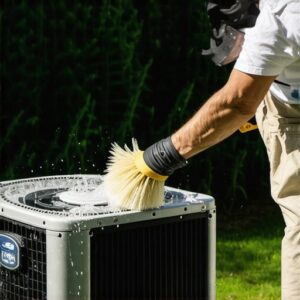
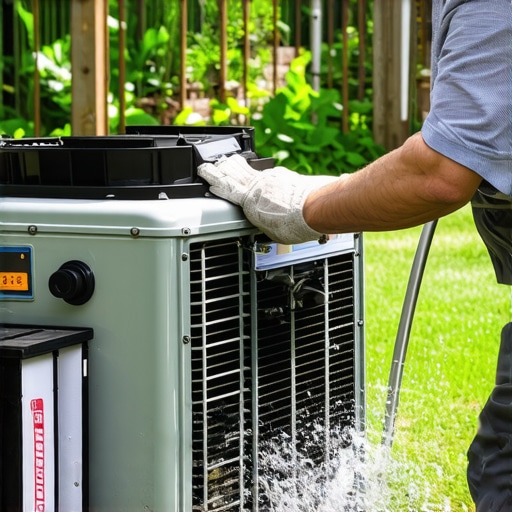
Before the heat wave hits, you need to treat your cooler like the lungs of your home. First, let’s talk about the media. If you are still using cheap aspen wood pads, you are fighting a losing battle. They sag, they rot, and they smell like a wet dog after three weeks. I always recommend moving to a rigid cellulose media if your cabinet can handle it. Why? Because the geometry allows for a higher surface-area-to-volume ratio, which means more evaporation and less resistance to airflow. While you are in there, check the ‘spider’—the water distribution manifold. If those lines are pinched or clogged with mineral deposits, you get dry spots. A dry spot on a pad is a hole where hot air enters your home uninvited. It is the same principle we use when diagnosing a two-stage furnace installation; if the delivery system is compromised, the high-efficiency ‘brain’ is useless.
Transitioning to Modern Comfort: Beyond the Swamp
Look, I love the low operating cost of a swampy, but as we move into 2025, the climate is changing and so is the tech. We are seeing more folks look into financing for heat pump installs because they are tired of the ‘monsoon effect’—that week in August when the humidity spikes and the swamp cooler just gives up. If you are sticking with your cooler, you need to be smart. Integrating a smart thermostat setup can help manage the cycle, but you have to be careful; most swamp coolers don’t play nice with standard Nest or Ecobee units without a specialized relay kit. If you are considering a move to a more permanent solution, checking out ultimate guide to ac installation expert tips for 2025 success is a good start to see what you are missing in terms of refrigerated air.
“Proper ventilation is the cornerstone of evaporative cooling performance, requiring a balance between incoming saturated air and exiting thermal loads.” – ASHRAE Fundamentals
One of the biggest mistakes I see—and it drives me absolutely insane—is people keeping their windows shut while running a swamp cooler. This isn’t your cold climate heat pumps or a standard AC. This is a positive pressure system. You have to give the old air a place to go. If you don’t crack a window in the rooms you want to cool, the static pressure builds up until the blower can’t push any more air through the pads. It’s like trying to blow air into a bottle that’s already full. You need to manage the ‘exhaust’ to direct the ‘cool.’ This is basic Airflow Manifesto stuff: the air will always take the path of least resistance. If you want the bedroom cool, crack that window two inches and shut the ones in the kitchen.
The 2025 Retrofit: Safety and Efficiency
If you are still running an old-school unit, you might be worried about the rising costs of energy and the new regulations. While swamp coolers don’t use low-GWP refrigerant retrofits because they don’t use ‘juice’ (refrigerant) at all, they do benefit from a leak detector integration for the water line. A cracked copper line in the sun can dump 500 gallons of water onto your roof before you even notice. And for those of you thinking about the winter ahead while you’re staring at your cooler, remember that your flue pipe installation for your furnace needs just as much attention as your cooler pads. I’ve seen many ‘Sparky’ (electrician) jobs where the cooler’s electrical was tied into the same circuit as a humidifier installation, leading to tripped breakers in the shoulder seasons. Always keep your systems isolated. If you’re wondering about the health of your heating side, read about furnace repair myths debunked by industry experts to make sure you aren’t being taken for a ride by some sales tech. Whether it’s an oil to gas conversion or just a basic tune-up, the goal is always the same: efficiency through airflow. Don’t let a $20 belt or a clogged water line stand between you and a comfortable summer. Proper maintenance isn’t just a suggestion; it’s the only way to beat the physics of the desert sun.