The Sound of a Starving System: Why Airflow is King
I’ve spent thirty years crawling through crawlspaces and bake-oven attics where the temperature hits a cool 130 degrees before noon. You hear it before you see it—that dry, wheezing rattle of a swamp cooler that’s gasping for air because the pads are choked with calcium and mineral scale. Most homeowners, and frankly, most of these greenhorn ‘Sales Techs’ who couldn’t tell a manifold gauge from a tire pressure gauge, think a dirty pad means the unit is trash. They’ll try to sell you a $15,000 replacement faster than you can say ‘thermal expansion valve.’ But here’s the reality: if you understand the physics of sensible heat and the heat of vaporization, you know that cleaning those pads is the difference between a house that’s ‘beer can cold’ and a swampy mess.
The Sales Tech Scam: A $20 Fix vs. a $15,000 Quote
I remember following a ‘Sales Tech’—I call them ‘Commission Cowboys’—out to a warehouse in the high desert last August. He’d quoted the owner a massive upgrade package involving warehouse heating solutions and a total overhaul of their evaporative cooling setup. He told a sweet office manager the system was ‘thermally compromised.’ I walked up there, looked at the pads, and saw they were just encrusted in two years of hard-water minerals. I spent forty-five minutes with a gentle hose and a specific vinegar solution. Total cost? About twenty bucks. The unit dropped the discharge temp by 15 degrees instantly. He wasn’t a tech; he was a salesman in a work shirt. That’s why I preach preventative maintenance contracts—not to line my pockets, but to keep the tin knockers and the ‘Sparkys’ from having to replace equipment that still has ten years of life in it.
“Evaporative cooling effectiveness is dependent upon the saturation efficiency of the media, which must remain free of mineral deposits to ensure maximum air-to-water interface.” – ASHRAE Standards Handbook
The Physics of the Pad: Why You Can’t Just ‘Blast It’
In the Southwest, we deal with sensible heat. We aren’t trying to wring moisture out of the air like those poor souls in Houston; we are using the evaporation of water to pull heat out of the dry air. When your swamp cooler pads—whether they’re Aspen wood or the high-efficiency Celdek media—get coated in scale, the water can’t penetrate the fibers. You lose surface area. You lose cooling. Most people grab a pressure washer. Don’t. You’ll shred the cellulose faster than a tin knocker shreds duct tape. You’re dealing with a delicate balance of airflow and moisture. If you destroy the structure of the pad, you create ‘channeling’ where air bypasses the water entirely, and now you’re just blowing 100-degree air into your shop.
The Forensic Diagnosis: Cleaning Without the Destruction
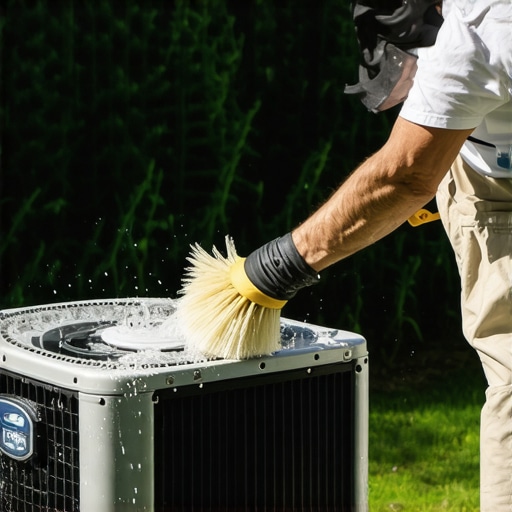
To clean these right, you have to treat it like surgery, not a car wash. First, shut off the pump but keep the fan running for a few minutes to dry the pads slightly—this makes the scale brittle. Then, pull the panels. If you’re looking at a commercial furnace repair situation or a large warehouse unit, you might have dozens of these. Use a soft-bristled brush to knock off the heavy ‘popcorn’ scale. For the deep clean, a 50/50 mix of white vinegar and water is the gold standard. It eats the calcium but leaves the media intact. While you’re in there, check the hydronic heating systems or the geothermal heat pump systems if you’ve got a hybrid setup; minerals don’t just hate your swamp cooler, they hate everything they touch.
Transitioning to the Cold: Beyond the Swamp Cooler
When the ‘Monsoon Effect’ ends and the desert air turns bone-chilling, those same pads need to be bone-dry and winterized. This is when I shift my focus to shop heater services and warehouse heating solutions. If you leave water in that pan, you’re asking for a rusted-out floor. I always tell my clients that preventative maintenance is the only way to avoid the ‘July 4th Panic’ or the ‘Christmas Freeze.’ Whether it’s MERV filter upgrades for your office or checking the heat exchanger on a commercial furnace repair job, the goal is always the same: efficiency through airflow.
“The most expensive equipment in the world cannot overcome a bad duct system or neglected heat exchange media.” – Industry Axiom
The Regulatory Cliff and 2025 Standards
We’re heading into a massive shift in 2025. With new Energy Star heating certification requirements and the phase-out of certain refrigerants, keeping your existing equipment healthy is more important than ever. If you have an older system, you’re sitting on a goldmine of ‘grandfathered’ tech. Don’t let a lazy tech tell you that a bit of scale on a pad means you need to jump into a new A2L refrigerant system. Check out the top hvac repair strategies to extend your systems life before you sign any five-figure contracts. For larger facilities, look into energy recovery ventilators to keep the air fresh without losing your sensible cooling or heating loads.
Summary of the Pro Method
Cleaning your pads isn’t just about aesthetics; it’s about static pressure. High static pressure kills motors. If your pads are clogged, your motor works harder, pulls more amps, and eventually, the windings cook themselves. You’ll smell that acidic, sour scent of a burnout—and that’s a bad day for everyone’s wallet. Keep them clean, keep the water bleed-off line clear to reduce mineral buildup, and never, ever use ‘Pookie’ (mastic) to patch a leaking swamp cooler pan. Do it right, or don’t do it at all. For those looking for a complete overhaul, I always recommend the ultimate guide to ac installation to see what the future of 2025 success looks like. Stay cool, keep the gas in the lines, and respect the airflow.