The Death Rattle of a Southwest Summer
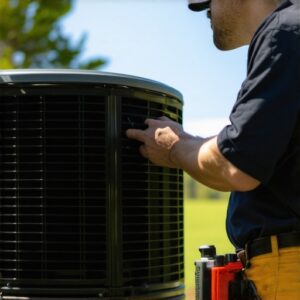
You hear it before you see it. That rhythmic, pathetic thrum-click-bzzzz coming from the side of the house. It’s 114 degrees in the shade, the asphalt is soft enough to leave footprints in, and your compressor is trying to start against a wall of head pressure that would make a submarine hull sweat. As a technician who has spent thirty years crawling through blown-in insulation and burning my forearms on condenser cabinets, I can tell you exactly what happened: your capacitor just gave up the ghost. It’s the single most common failure I see during the first real heat spike of the year, and it’s almost always preventable.
My old mentor, a grizzly veteran who smelled like tobacco and R-22, used to scream at me, ‘You can’t cool what you can’t touch!’ He wasn’t just talking about the air; he was talking about the physics of heat transfer. He taught me that airflow matters more than horsepower every single day of the week. When a system is struggling because the top HVAC repair strategies weren’t followed in the spring, the capacitor is the first soldier to fall in the line of duty. This isn’t just a part failure; it’s a forensic crime scene where the primary suspect is thermal abuse.
“The most expensive equipment in the world cannot overcome a bad duct system or improper electrical sizing.” – Industry Axiom
The Anatomy of a Thermal Heart Attack
To understand why these silver cylinders pop like popcorn, you have to understand Thermodynamic Zooming. A capacitor isn’t just a battery; it’s a storage device that provides the ‘kick’ needed to get the motors spinning. In the dry heat of the Southwest, where sensible heat rules the day, your AC unit is fighting a constant battle. When that first heatwave hits, the ambient temperature near the condenser often exceeds 120°F due to radiant heat from the ground. Inside that metal box, the capacitor is rated for a specific temperature. Once you exceed that, the electrolytic fluid inside starts to expand. The top of the capacitor bulges—we call it ‘mushrooming’—and eventually, the internal connection snaps. No juice, no cooling.
If you’re running the right HVAC fixes, you might have a hard start kit installed to help the compressor, but most builders-grade units are naked. They rely on a single dual-run capacitor to handle both the fan motor and the compressor. When the ‘Sparky’ (the electrician) or the original installer didn’t perform proper HVAC load calculation services, the unit may be short-cycling. Every time that compressor kicks on, it draws a massive amount of locked-rotor amps. That surge of electricity generates internal heat. Combine that with 110-degree Nevada or Arizona air, and you have a recipe for a service call at 2 AM.
The Humidity Trap and The Airflow Manifesto
While we talk about dry heat, many systems are now being integrated with app-controlled heating systems and UV light installation for HVAC to manage indoor air quality. However, if your static pressure is too high because some ‘Tin Knocker’ (duct guy) undersized your return air, the blower motor has to work twice as hard. This increased load translates back to the electrical components. Whether you are dealing with a standard heat pump installation or even industrial heater services in a warehouse, the physics of electrical resistance remain the same: heat creates resistance, and resistance creates more heat.
“Properly sized equipment must be based on a detailed load calculation using ACCA Manual J or equivalent.” – ASHRAE Standards
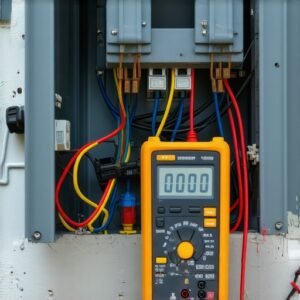
I’ve seen ‘Sales Techs’ try to quote a $15,000 replacement for a $20 capacitor. They’ll tell you the ‘gas’ (refrigerant) is low or the compressor is grounded. Don’t believe it until you see the multimeter readings yourself. If the technician isn’t checking microfarads, he isn’t a tech; he’s a collector. This is why AC installation secrets often revolve around simple maintenance. If your coil is buried in dirt, the head pressure skyrockets, making the compressor work harder and drawing more current through that poor capacitor. It’s like trying to run a marathon while breathing through a cocktail straw.
Beyond the Condenser: Seasonal Complexity
It’s not just the cooling side that suffers. In commercial settings, shop heater services and portable heater safety checks often reveal similar electrical stresses. Even spa heater services and swamp cooler maintenance are dictated by the same laws of thermodynamics. For instance, a swamp cooler (evaporative cooler) relies on a pump and a motor. If the pads are scaled up, the motor works harder, the capacitor heats up, and—pop—you’re sitting in a humid box. We also see this with occupancy sensor installation; if the sensors are causing the system to cycle on and off every ten minutes, you are essentially torturing the start components of your motors.
If you want to avoid the July 4th panic, check your capacitors in April. If they look even slightly swollen, replace them. And for heaven’s sake, wash your condenser coils. Get the ‘Pookie’ (mastic) out and seal your ducts. A system that can breathe is a system that keeps its capacitors alive. If you find yourself needing a professional look, you can always contact us before the mercury hits triple digits. Remember, the goal is ‘beer can cold’ suction lines and a capacitor that isn’t screaming for mercy. Don’t wait for the sound of silence to realize you ignored the warning signs of a preventative HVAC repair.