Why Your Outdoor AC Disconnect Box is Melting (and How to Stop the Burn)
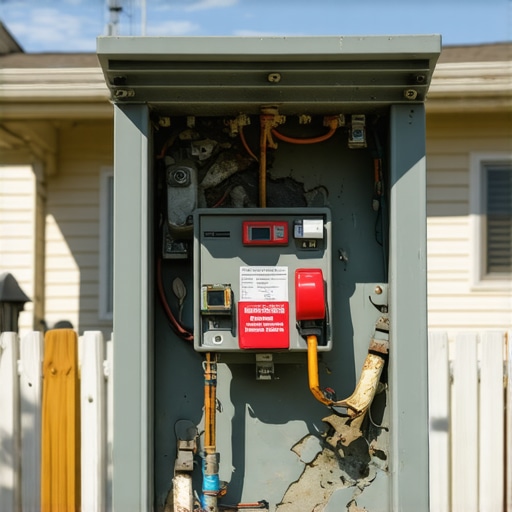
You’re out in the backyard, maybe firing up the grill or playing with the dog, when you catch a whiff of it. It’s that unmistakable, acrid scent of burning plastic and ozone. You follow your nose to the side of the house, and there it is: the grey metal box mounted next to your air conditioner looks like it’s been through a war. The plastic handle is warped, the edges are blackened, and if you look closely, the paint might even be bubbling.
As an electrician and HVAC specialist with over two decades in the trenches, I can tell you right now: that’s not just a “broken AC.” That’s a fire hazard waiting for a breeze. My name is Eric Dement, and as the owner of Heat Pros Services, I’ve seen hundreds of these melted disconnects. It’s a common failure, but it’s one that homeowners often ignore until the cooling stops entirely or, worse, the fire department shows up. Today, I’m going to pull back the curtain on why this happens and how we can stop the burn before it costs you a whole lot more than a service call.
What Exactly is an AC Disconnect Box?
Before we dive into the “why” of the melting, let’s talk about what that box actually does. In the trade, we call it the “disconnect.” Its primary job is safety. It acts as a local switch between your home’s main electrical panel and the outdoor condenser unit.
Think of it as a gatekeeper. When a technician like myself comes out to work on your system, we need to be 100% sure that there is no power flowing to those high-voltage components. By pulling the “T-handle” or flipping the internal breaker in that box, we can safely work on the unit without worrying about the 240 volts of electricity that power your compressor. It’s a requirement by the National Electrical Code (NEC) to have one of these within sight of the unit. This safety mechanism is a cornerstone of any professional installation, as discussed in our Ultimate Guide to AC Installation: Expert Tips for 2025 Success.
The Science of the Melt: Why Copper and Plastic Turn to Goo
Why does a box designed to handle electricity suddenly turn into a miniature furnace? It all comes down to a concept called electrical resistance.
Imagine a high-pressure water hose. If the hose is wide and clear, the water flows effortlessly. But if you pinch that hose, the water has to fight to get through, creating pressure and turbulence at the point of the restriction. In the world of an electrician, electricity behaves similarly. When the path for the current is restricted – usually by a loose connection or corrosion – it creates resistance.
According to the laws of physics (specifically Joule’s Law), resistance in an electrical circuit generates heat. When a connection is loose, the electricity has to “jump” across a tiny gap, or it has to squeeze through a very small contact point. This creates localized temperatures that can easily exceed 500°F. Since the internal components of your disconnect are often made of plastic or nylon insulators, they start to liquefy. Data from field inspections shows that loose connections are the #1 cause of heat-related failure in HVAC electrical components. Once the melting starts, the resistance increases, creating more heat – a “thermal runaway” that only ends when the wire burns through or the box catches fire.
5 Culprits Behind Your Melting Disconnect
Understanding the “why” helps, but let’s look at the specific “who” or “what” is causing the damage. Here are the five most common reasons I find myself replacing these boxes.
1. Loose Wiring and Vibration
Your AC unit is a mechanical beast. The compressor and the fan motor create constant, subtle vibrations throughout the summer. Over five, ten, or fifteen years, those vibrations can actually vibrate the screws (lugs) holding your wires in place until they are no longer “torque-tight.” Once a wire is loose, the resistance kicks in, the heat rises, and the melting begins. This is why a “tug test” during annual maintenance is so critical.
2. Corrosion and Humidity
We live in an environment where moisture is a constant battle. Whether your unit is near a damp crawl space or simply exposed to the elements, humidity leads to oxidation. Oxidation creates a thin layer of non-conductive “crust” on the copper wires. This crust acts as an insulator, forcing the electricity to fight through it, which – you guessed it – creates heat.
3. The Aluminum Wire Problem
If you live in an older home, there is a chance your 240V circuit is run with aluminum wiring. Aluminum was popular for a time because it’s cheaper than copper, but it has a major flaw: it expands and contracts significantly more than copper when it gets hot. This “creeping” eventually loosens the connections. Furthermore, aluminum oxidizes almost instantly when exposed to air. To prevent this, an electrician must use a special anti-oxidant paste called Noalox on the connections. If a previous installer skipped the Noalox, that disconnect is a ticking time bomb for oxidation and melting.
4. Pitted or “Arced” Contacts
Inside most disconnects is a “pull-out” head. This is a plastic block with two metal fins that slide into spring-loaded jaws. Every time that unit kicks on, there is a massive surge of power. If the fit between the fins and the jaws isn’t perfect, or if the disconnect is old, a tiny spark (an arc) occurs. Over time, these arcs “pit” the metal, making it rough and reducing the surface area where the metal touches. Less surface area means more resistance and more heat. This is a very common failure point in non-fusible disconnect types.
5. Undersized Components
Sometimes the issue is simply math. If you have a 5-ton AC unit that pulls a heavy load but it’s wired into a cheap, 30-amp rated disconnect, you are pushing that box to its absolute limit every single day. During a heatwave, when the unit is running 12 hours straight, the internal components never get a chance to cool down. Eventually, the constant high-heat cycles break down the integrity of the plastic components.
For more on how these electrical issues can manifest in other ways, check out our article on The Hidden Electrical Faults That Mimic a Broken AC Compressor.
Why “Just Replacing the Box” Might Not Be Enough
When I arrive at a home with a melted box, the homeowner often asks, “Can you just swap the box out real quick?” The answer is usually yes, but we have to ask *why* it melted. If we don’t fix the root cause, the new box will melt in a month.
Sometimes the melt is a symptom of a failing AC unit. If your compressor is “slugging” (trying to compress liquid refrigerant) or the bearings are seizing, it will draw excessive amperage, known as Locked Rotor Amps (LRA). This massive draw of power puts immense strain on the electrical path. If the compressor is dying, it’s going to take the disconnect with it. This is why you need HVAC installers who understand both the refrigeration cycle and the electrical load.
In some cases, the heat from the disconnect can even travel back through the wires to your furnace or air handler. I’ve seen instances where a bad outdoor connection contributes to internal failures, similar to Why Your Furnace Blower Motor Is Getting Too Hot to Touch. It’s also vital to understand How to Identify When Furnace Repair Is Urgent and Why, as electrical issues rarely stay confined to one area.
How to Stop the Melt: Preventative Maintenance for Homeowners
You don’t have to wait for the smell of smoke to protect your home. Here is a checklist to keep your AC’s electrical system healthy:
- Annual Professional Inspection: Have an expert perform “tug tests” on all lugs and check for any signs of discoloration on the wire jackets.
- Upgrade to a Breaker-Style Disconnect: The old “pull-out” style disconnects are prone to the pitting I mentioned earlier. Upgrading to a high-quality enclosure with a dedicated circuit breaker is much safer and more reliable.
- Check for “Noalox”: If you have aluminum wiring, ensure your electrician has applied anti-oxidant paste to every connection point.
- Clean the Area: Keep weeds, spider webs, and debris away from the box. Airflow around the enclosure helps dissipate the natural heat of the circuit.
If your home’s electrical system is aging, you might consider a more comprehensive electric panel upgrade Bothell WA to ensure your entire home can handle the loads of modern high-efficiency HVAC equipment.
When to Call a Master Electrician
If you see a melted box, do not try to open it yourself. The plastic inside may be holding high-voltage wires in place; if that plastic crumbles when you move the cover, those wires can touch the metal casing or each other, causing a massive arc-flash.
Furthermore, when a wire has been subjected to that kind of heat, it becomes “annealed.” This means the copper becomes brittle and loses its ability to conduct electricity efficiently. A professional electrician won’t just put a new box on old wires; we will cut the wires back to where the copper is healthy or pull new wire entirely if the damage is deep.
When you need a specialist who understands the intersection of high-voltage power and complex HVAC systems, you need an electrician HVAC expert Mill Creek WA. We have the tools to measure the exact amp draw of your unit and ensure your wiring is sized correctly for the load.
Remember, a melted disconnect isn’t just a nuisance that keeps your house warm – it’s a serious fire hazard. It’s often the first warning sign of a larger problem, like how a faulty relay can mimic a broken compressor in your AC unit. Don’t take chances with your family’s safety or your home’s integrity.
Conclusion & CTA
A melting AC disconnect box is your house’s way of screaming for help. Whether it’s caused by loose lugs, old aluminum wiring, or a compressor on its last legs, you need to act fast. For more advice on navigating these issues, read about Choosing the Right HVAC Fixes: What Homeowners Need to Know or learn the AC Installation Secrets That HVAC Pros Won’t Tell You.
Don’t wait for a spark. Contact Heat Pros Services today for a comprehensive safety inspection and let’s keep your cooling system running safely all summer long. Contact Us.