The Clammy Truth About Swamp Coolers and Physics
Listen, I’ve spent thirty years crawling through blown-in insulation and balancing on parapet walls, and I’ve heard the same complaint from El Paso to Vegas: ‘My swamp cooler is just blowing wet air.’ You’re sitting there in a house that feels like a locker room, the walls are sweating, and you’re ready to kick the side of the unit. Before you call some ‘Sales Tech’ who’s going to tell you the whole thing is shot and try to sell you a 16-SEER refrigerated unit for fifteen grand, let’s talk about the actual physics of why your evaporative cooler has turned into a glorified humidifier. My old mentor used to scream, ‘You can’t cool what you can’t touch!’ This is why airflow matters more than horsepower. If that air isn’t moving across the media correctly and escaping the house, you’re just recirculating misery. In the Southwest, we live and die by the psychrometric chart, even if most homeowners don’t know it exists.
“The most expensive equipment in the world cannot overcome a bad duct system.” – Industry Axiom
The Physics of the ‘Monsoon Effect’
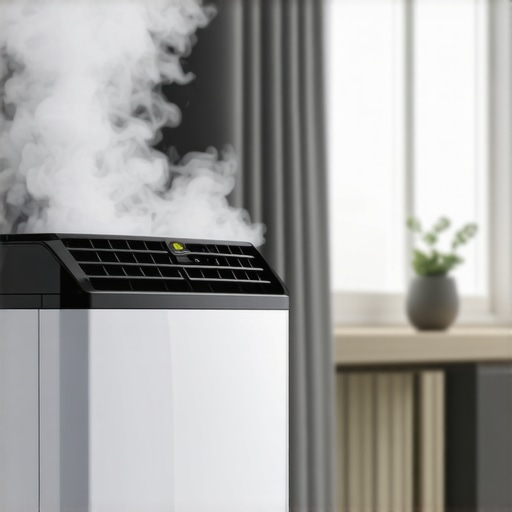
To understand why your unit is failing, we have to use some Thermodynamic Zooming. Evaporative cooling works on the principle of ‘sensible heat’ being converted into ‘latent heat.’ When dry air passes through a saturated pad, the water evaporates. This process requires energy, which it takes from the air in the form of heat, dropping the dry-bulb temperature. But here is the catch: it only works if the air has ‘room’ for that moisture. When the ‘Monsoon Effect’ hits and the ambient humidity spikes above 30 or 40 percent, the air is already crowded. It can’t take on more water, so the evaporation slows down. You’re no longer getting that 20-degree drop; you’re getting a 5-degree drop and a face full of steam. This is where choosing the right HVAC fixes becomes critical. You aren’t fighting a broken motor; you’re fighting the laws of nature. If you want to keep using an evap cooler during high humidity, you have to maximize the delta T by ensuring the pads are perfectly saturated and the airflow is unrestricted.
Why Your Airflow is Killing the Efficiency
Most people treat their swamp cooler like a furnace or a standard AC. They close the windows and wait for it to get cold. That is the fastest way to turn your living room into a swamp. A swamp cooler is a high-volume, ‘once-through’ system. You need a massive amount of ‘Gas’ (or in this case, air) moving through the house and exiting. If you don’t have enough windows open, or if your HVAC duct sealing is so tight that it creates high static pressure, the blower motor just spins its wheels. I’ve seen ‘Tin Knockers’ install ducts that are way too small for the CFM of the blower, leading to a screeching sound and zero cooling. Speaking of ducts, if you have leaks in the attic, you’re sucking in 140-degree attic air and mixing it with your cooled air. It’s like trying to cool a car with the heater on. You need a smart thermostat setup that can handle the staging or at least a technician who understands how to balance the dampers. If your house has hospital HVAC zoning levels of complexity, a simple swamp cooler might never satisfy the load requirements of every room.
The Maintenance Sins: From Pads to Pulleys
I’ve followed too many ‘Sales Techs’ who see a little scale on a pad and tell the homeowner they need a total replacement. Often, it’s just the ‘Pookie’ (mastic) on the water tray cracking, or a $15 relay service issue. The real culprit is usually the pads. If you’re using those cheap aspen wood shavings and they’ve slumped to the bottom of the frame, the air is just bypassing the water and blowing hot. I always recommend MERV filter upgrades for standard systems, but for swamp coolers, you need high-efficiency rigid media like Celdek. This stuff is designed to maximize the surface area for evaporation. Also, check your pump. If the distributor tubes are clogged with calcium, half your pad is bone dry. It doesn’t matter if your thermostat installation is state-of-the-art; if the water isn’t hitting the pads, you’re just running a very expensive fan.
“Evaporative cooling is only effective when the wet-bulb temperature is significantly lower than the dry-bulb temperature.” – ASHRAE Standards
The Winter Transition and Cross-System Issues
A lot of my customers run dual systems—swamp coolers for the dry months and a gas furnace repair or baseboard heater repair for the winter. The problem is the transition. If you don’t properly bleed the water lines, they freeze. If you don’t seal the ‘cookie sheet’ (the damper) in the winter, your wood burning stove installation or furnace is just heating the neighborhood. I’ve seen propane conversion services where the homeowner was burning through fuel because their swamp cooler vent was wide open in December. This is why preventative HVAC repair tips are so vital. You have to think about the system as a whole. Whether it’s a relay service for the blower or a smart thermostat setup to manage the switchover, the details matter. If you’re feeling a sour, acidic smell, that’s not your swamp cooler—that’s a gas furnace repair issue or a compressor burnout in a nearby AC unit. A swamp cooler should smell like nothing but wet rocks and clean air. If it smells like a swamp, your water is stagnant and you’re growing a science project in the pan.
Final Verdict: Repair or Replace?
When do you pull the plug? If your unit is a rusted-out bucket that’s leaking water all over your roof and the motor bearings are screaming like a banshee, it’s time. But don’t let a tech talk you into a $10,000 refrigerated system if you actually like the fresh air of an evaporative cooler. Often, top HVAC repair strategies like replacing the shaft and bearings or upgrading the pump can give you another ten years. If you’re tired of the humidity, that’s a physics problem, not a mechanical one. No ‘Sparky’ or ‘Tin Knocker’ can change the outdoor dew point. But we can make sure your system is optimized to handle it. For more on making these big decisions, check out the ultimate guide to AC installation or contact us to get a straight answer from a tech who actually knows what a manifold gauge is for.