The Physics of Exhaust: Why Your New Furnace is Choking on Old Infrastructure
My old mentor, a man who had more soot in his lungs than a Victorian sweep and could diagnose a cracked heat exchanger by the smell of the air alone, used to scream at me, ‘You can’t vent what you can’t push!’ This wasn’t just old-school bluster; it was a fundamental lesson in thermodynamics. He knew that the most expensive, high-tech heating unit is nothing more than a dangerous paperweight if the exhaust gases can’t escape the building. When we talk about flue pipe installation, we are talking about the lifeblood of the system. Most homeowners think that because they have an existing chimney, they are ‘good to go’ for a new furnace installation. That assumption is not just wrong; it is potentially lethal. In the cold climate zones of the North and Northeast, where furnaces run for six months straight, the physics of a chimney liner becomes the difference between a warm home and a basement full of carbon monoxide.
“Gas-fired appliances shall be vented in accordance with the manufacturer’s instructions and the National Fuel Gas Code, ensuring that the vent system is capable of conveying all combustion products to the outdoors.” – NFPA 54 / ANSI Z223.1
The Forensic Diagnosis: Anatomy of a Choked Flue
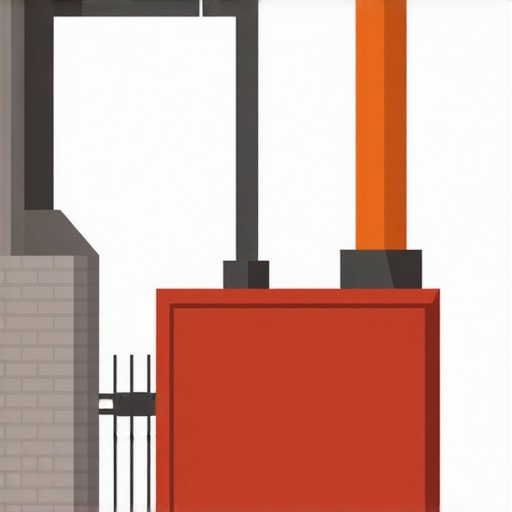
When I walk into a basement for a modulating furnace repair, the first thing I do isn’t look at the circuit board. I look at the flue. If I see white, crusty deposits (efflorescence) on the brickwork or rust streaking down the side of the vent pipe, I know the chimney is failing. Here is the mechanical reality: old furnaces were ‘natural draft’ behemoths. They were inefficient, meaning they wasted a ton of heat. That wasted heat was actually useful for one thing—it kept the chimney hot enough to create a strong upward draft. Modern units, specifically a two-stage furnace installation or a modulating unit, are much more efficient. They extract more heat into the home and send cooler exhaust into the flue. If that flue is a giant, oversized masonry chimney, those cool gases will slow down, stall, and condense into acidic water. This is why furnace repair myths debunked by industry experts often center around the idea that ‘a chimney is just a hole.’ It’s a precision instrument.
The Acidic Nightmare of Condensation
Physics doesn’t care about your budget. When combustion gases cool below their dew point—about 127°F for natural gas—they turn into a liquid. This isn’t just water; it’s a mild carbonic acid. In an oversized old chimney liner, the draft inducer motor struggles to push these heavy, wet gases out. The result? The ‘Pookie’ (mastic) and sealant around the joints fail, the liner tiles crack, and the draft inducer motor repair becomes a recurring nightmare because the motor is constantly fighting back-pressure. This is a common issue we see in commercial furnace repair too, where massive boilers are swapped for high-efficiency modules without resizing the common vent. If the vent is too big, the velocity of the air drops, the gases linger, and they eat your chimney from the inside out.
“The vent system must be capable of conveying all combustion products to the outdoors while avoiding the harmful effects of condensation within the vent.” – ACCA Manual G
Thermodynamic Zooming: From Draft Inducers to Inverter Compressors
While the furnace is the star of the winter, the modern HVAC system is an integrated beast. We are seeing more inverter-driven compressors being paired with high-efficiency furnaces. These systems use remote thermostat access to modulate the heat output based on the exact load of the house. This is ‘Sensible Heat’ management at its finest. But as the system modulates down to a low-fire stage, the exhaust volume decreases even further. If you haven’t installed a properly sized stainless steel liner, that low-fire exhaust won’t even make it to the roof. It will just sit in the chimney, raining acid back down onto the heat exchanger. This is why how to identify when furnace repair is urgent and why often starts with noticing a ‘sour’ or acidic smell near the unit—that’s the smell of your furnace dissolving itself.
The Orphaned Water Heater Trap
Here is a scenario that gets ‘Tin Knockers’ and ‘Sparkys’ in a heated debate every time. You upgrade to a 96% AFUE condensing furnace. This new unit vents through PVC pipes out the side of the house. Now, your old water heater is left all alone, ‘orphaned,’ venting into that massive old chimney. Without the furnace to help keep the chimney hot, the water heater’s exhaust will almost certainly condense. This leads to a backdraft of CO into the home. It’s why heating service hacks for comfort and savings in 2025 always include a full venting audit. Whether it’s a pool heater repair or a residential furnace, the vent must match the BTU output. If you are doing a thermostat installation and upgrading to a smart system, don’t ignore the ‘dumb’ masonry chimney behind the wall.
The Math of Maintenance: Prevention vs. Catastrophe
A standard chimney liner installation might cost you $1,500 to $3,000. A new heat exchanger or a destroyed masonry stack could cost triple that. This is where preventative maintenance contracts pay for themselves. A tech who knows what they are looking at will check the ‘Suction Line’ for AC issues in the summer and the ‘Flue Draft’ in the winter. They’ll catch a failing draft inducer before it leaves you in a polar vortex with no heat. If you’re choosing the right HVAC fixes, you have to look at the system as a whole. Don’t be the person who spends $10,000 on a high-efficiency furnace and $0 on the pipe that keeps it from killing you. Airflow isn’t just about the ‘Gas’ (refrigerant) or the ductwork; it’s about the exit strategy for the fire you’re burning in your basement. Comfort is physics, and physics doesn’t take days off. If you need expert eyes on your system, it’s time to contact us for a real diagnostic, not a sales pitch. Check out our privacy policy for more information on how we handle your home data and service requests. For more on the future of HVAC, see our guide on heating service innovations transforming 2025 climate control. “