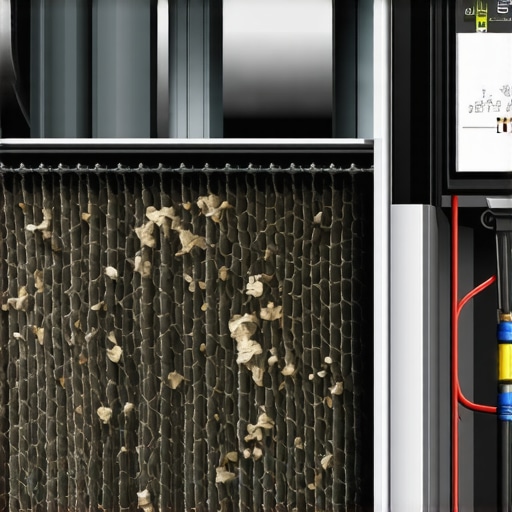
My old mentor, a man who had more refrigerant in his blood than blood cells, used to scream at me in the back of a cramped service van, ‘Kid, you can’t heat what you can’t touch!’ At the time, I thought he was just being a cranky old tin knocker, but thirty years of diagnostic calls have proven him right every single time. This is the fundamental physics of HVAC that every homeowner ignores until their system is a 400-pound paperweight. Airflow isn’t just a comfort preference; it is the lifeblood of the entire thermodynamic cycle. When you let a $15 pleated filter turn into a gray, fuzzy brick of dust, you aren’t just ‘forgetting a chore.’ You are effectively putting a plastic bag over your furnace’s mouth and asking it to run a marathon. In the cold, unforgiving winters of the North, where I’ve spent decades sniffing out cracked heat exchangers and listening to the death rattle of blower motors, a dirty filter is the number one cause of system homicide.
“The most expensive equipment in the world cannot overcome a bad duct system—or the restricted airflow caused by neglected maintenance.” – Industry Axiom
The Forensic Diagnosis: Anatomy of a Suffocating Blower
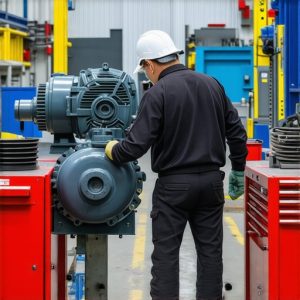
Let’s look at the mechanical anatomy of your furnace. At the heart of the system is the blower motor. If you have an older PSC (Permanent Split Capacitor) motor, it’s a simple beast. When the filter gets clogged, the motor struggles against the static pressure. It slows down, the ‘gas’ or heat isn’t carried away from the heat exchanger, and the motor eventually burns its windings because it relies on that very airflow to keep itself cool. However, if you have a modern ECM (Electronically Commutated Motor) found in high-efficiency systems, the situation is even more expensive. These motors are programmed to maintain a specific CFM (Cubic Feet per Minute). When they feel the resistance of a dirty filter, they don’t slow down; they ramp up. They fight. They pull more amperage, spinning faster and harder to force air through that wall of dust. This is where your electric bill spikes. You are paying for a high-performance motor to engage in a losing battle against a piece of cardboard. Eventually, the control board diagnostics will register a fault, or worse, the motor’s internal electronics will fry from the heat of its own labor. This is why preventative HVAC repair tips always start with the filter—it is the simplest way to avoid a $1,200 motor replacement.
Thermodynamic Zoom: Why Your Heat Exchanger is Screaming
When airflow drops, we enter the danger zone of ‘Temperature Rise.’ A furnace is designed to take cold return air and heat it by about 40 to 70 degrees as it passes over the heat exchanger. If the air is moving too slowly because of a clogged filter, that air stays in contact with the metal too long. It gets too hot. We call this ‘baking the exchanger.’ Most furnaces have a high-limit switch—a safety device that kills the flame if things get too toasty—but cycling on that limit switch over and over is like redlining your car engine while in park. The metal of the heat exchanger expands and contracts violently until it eventually cracks. A cracked heat exchanger is a death sentence for a furnace because it can leak carbon monoxide into your home. This isn’t a ‘Sales Tech’ scare tactic to get you to buy a new unit; it’s basic metallurgy. If you’re at the point where your unit is cycling off before the thermostat is satisfied, you need emergency heating repair immediately to check for flame rollout or flue pipe issues.
“Designers shall ensure that the system is capable of delivering the required airflow at the design external static pressure.” – ACCA Manual D
The Invisible Drain: Spiking Electric Bills and AI Optimization
Most homeowners don’t connect a dusty filter to a high electric bill in February, but the math is undeniable. Beyond the blower motor’s amperage draw, there is the issue of run-time. If your system is only moving 60% of the air it’s supposed to, it has to run twice as long to reach the set temperature on your remote thermostat access app. This extended run-time eats through your components’ lifespans like acid. Today, we use AI-driven HVAC optimization to monitor these trends, but even the smartest computer can’t reach into your return air drop and swap a filter. We often see homeowners get hit with a ‘double whammy’: the blower is pulling 12 amps instead of 8, and the furnace is running 20 hours a day instead of 10. That’s how a $150 bill becomes a $400 bill. If you’re tired of these surprises, heating service hacks often suggest switching to a lower-MERV filter and changing it more frequently rather than using those ‘ultra-fine’ filters that act like a brick to your airflow.
The Solution: Beyond the Filter
If you’ve already neglected the filter for a season, the damage might be deeper. Dust that makes it past a cheap or ill-fitting filter settles on the secondary heat exchanger (in 90%+ furnaces) or the evaporator coil, creating a ‘blanket’ that further restricts airflow. This is where top HVAC repair strategies come into play. We might need to perform a deep coil cleaning or install a UV light installation for HVAC to kill the organic growth that thrives in that damp, dusty environment. Additionally, if the constant cycling has weakened your start components, capacitor replacement services are a common necessity to keep the motor starting reliably. Don’t wait for the sound of silence on a -10°F night. Investing in priority service memberships or preventative maintenance contracts ensures that a pro actually checks your static pressure and ‘Pookie’ seals your ductwork before the system collapses. Comfort isn’t magic; it’s physics. Keep the air moving, or prepare to pay the ‘ignorance tax’ to the next ‘Sales Tech’ who walks through your door.