The Physics of Weeping Windows: Why Your House is Suffocating
My old mentor used to scream at me in the back of a freezing service van, ‘You can’t cool what you can’t touch, and you can’t heat what you can’t move!’ He was obsessed with airflow, and thirty years later, I’ve realized he was the only one in this industry who wasn’t full of it. Most guys want to sell you a bigger furnace or a high-efficiency heat pump, but they don’t understand the basic physics of the envelope. If you see water dripping down your window panes in January, your house isn’t just ‘tight’—it’s suffocating. That moisture is the physical manifestation of latent heat and indoor pollutants having nowhere to go. This is where the Energy Recovery Ventilator (ERV) steps in, not as a luxury, but as a mandatory lung for the modern home.
“The most expensive equipment in the world cannot overcome a bad duct system.” – Industry Axiom
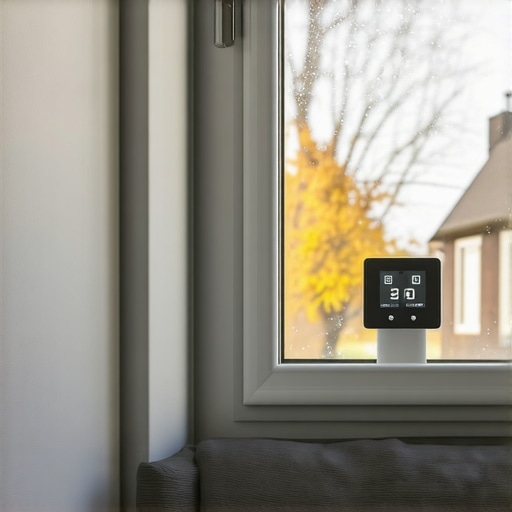
When we talk about cold weather window condensation, we are talking about the dew point. If the surface temperature of your glass is lower than the dew point of the air inside, you get rain in your living room. In the old days, houses were drafty enough that the air changed itself. Now, with ‘Pookie’ (mastic) sealing every joint and high-R-value insulation, we’ve created Tupperware boxes. Without proper HVAC repair and ventilation strategies, that moisture builds up from cooking, showering, and even just breathing. An ERV fixes this by swapping out that stale, humid air for fresh, dry outdoor air, but here is the trick: it does it without throwing your expensive heat out the window. It uses a desiccant-coated heat exchanger to transfer both sensible heat (temperature) and latent heat (moisture) between the two airstreams.
Thermodynamic Zooming: The Latent Heat Transfer
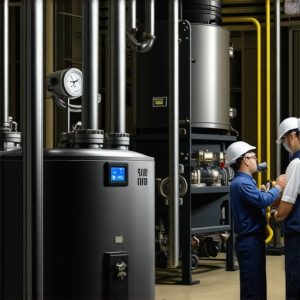
Let’s get technical. Most homeowners think a ventilator is just a fancy fan. It’s not. Inside an ERV, you have two separate air paths that never physically mix. However, they pass through a honeycomb-like core. In the winter, the warm, moist air leaving your house gives up its heat to the incoming freezing air. Because it’s an ERV and not just a standard HRV, the desiccant material also pulls the moisture out of that outgoing air and transfers it to the incoming stream if it’s too dry, or dumps it if the indoor humidity is peaking. This prevents the ‘cold swamp’ effect. If your system is struggling, it might not be the compressor; it could be a failure in the heating service innovations like integrated ERV controls. We often see homeowners trying to fix this with a bypass humidifier repair, but if you’re already seeing condensation, a humidifier is the last thing you need. You need a controlled air exchange.
Control Board Diagnostics and the R-454B Transition
If you’re running a high-end setup like a geothermal heat pump system, your control board diagnostics are critical. These systems are finely tuned to balance the load. When we introduce an ERV, the control board has to manage the static pressure of the entire house. As we move into 2025, the industry is also bracing for the R-454B refrigerant transition services. While refrigerants mostly live in the ‘gas’ or ‘juice’ side of the split system, the way we vent our homes changes when we use these mildly flammable A2L refrigerants. Proper ventilation through an ERV isn’t just about comfort anymore; it’s about safety. A ‘Sparky’ might tell you it’s just a wiring job, but a real tech knows that the airflow must be balanced using a manometer to ensure the house stays under slight positive pressure, preventing cold air from whistling through every outlet.
“Ventilation shall be provided by mechanical means… to ensure acceptable indoor air quality.” – ASHRAE Standard 62.2
The Maintenance Reality: Heat Exchangers and Exhaust
I’ve seen ERVs that haven’t been touched in five years, and the cores are so clogged they’re basically just plastic blocks. You need regular heat exchanger cleaning for both your furnace and your ERV. If the ERV core is dirty, it won’t transfer heat, and you’ll find yourself needing furnace repair because the unit is working overtime to compensate for the thermal loss. This is especially true in a restaurant kitchen exhaust repair scenario where grease can migrate if the systems aren’t isolated. For residential users, an annual heating inspection should always include a check of the ERV filters. If you ignore it, that moisture comes back, the ‘beer can cold’ suction line starts sweating in the wrong places, and you’re back to square one with moldy window sills.
Why Not Just a Whole-Home Humidifier?
Many ‘Sales Techs’ will try to sell you whole-home humidifiers when you complain about dry air, but they don’t check if the house is actually ‘wet’ at the windows. This is a scam. If you have condensation on your windows, you have too much moisture, not too little. The ERV is the regulator. It keeps the RH (Relative Humidity) in that sweet spot of 35-45%. Any higher and you’re growing a science project behind your drywall; any lower and you’re getting nosebleeds. If your pilot light relighting is becoming a frequent chore, it might even be a backdrafting issue caused by a house that’s too tight and lacks a fresh air intake. Don’t fall for the furnace repair myths that a bigger blower will fix humidity—airflow is about exchange, not just circulation. For expert help, you can always contact us to run a full diagnostic on your home’s psychrometrics. Refer to our privacy policy for how we handle your home data during inspections.