The Sound of a Silent Hospital: When Humidity Fails
I remember my old mentor, Gus, a man who had more grease under his fingernails than a gear assembly, used to scream at me every time I reached for a manifold gauge without checking the filters first. ‘You can’t cool what you can’t touch!’ he’d bark. He was talking about airflow, the absolute king of this trade. In the world of industrial climate control, specifically when we are dealing with hospital HVAC zoning or high-end pharmaceutical labs, that lesson translates perfectly to steam: ‘You can’t humidify what you haven’t boiled properly.’ When a steam humidifier goes silent in a critical zone, the static electricity starts popping, the wood finishes start cracking, and in a hospital, the risk of airborne pathogens increases as the mucous membranes of patients dry out. This isn’t a simple residential ‘set it and forget it’ bypass pad. We are talking about the thermodynamic reality of latent heat. To turn one pound of water at 212°F into one pound of steam, you need to add 970 BTUs of latent heat of vaporization. If your electrode cylinder is scaled up or your contactor repair was handled by a ‘Sales Tech’ who didn’t know a voltmeter from a toaster, that heat isn’t going anywhere.
“The most expensive equipment in the world cannot overcome a bad duct system.” – Industry Axiom
The Forensic Anatomy of Industrial Humidity
Let’s get technical. In an industrial setting, we usually see electrode steam canisters or resistive element humidifiers. The electrode type relies on the conductivity of the water itself to pass current between submerged electrodes, boiling the water. If your water is too soft, the ‘gas’ (refrigerant) of the humidity world—the water—won’t conduct. If it’s too hard, the electrodes get coated in calcium carbonate faster than a furnace repair call in a blizzard. You’ll hear the contactor chattering like a set of wind-up teeth, trying to pull in but failing because the mineral bridge has changed the resistance. This is where the contactor repair becomes a symptom, not the cure. You have to understand the psychrometrics. As the outdoor air temperature drops in regions like Chicago or the Northeast, the absolute humidity plummets. When that air is heated by a furnace tune-up services professional or an industrial heater services unit, the relative humidity (RH) can drop to below 10%. That’s desert-dry. We need to inject steam to maintain a healthy 40-60% RH. But if your blower motor replacement was sized incorrectly and you don’t have enough static pressure to carry that steam, it just condenses in the duct, turns into ‘pookie’ (mastic) destroying sludge, and creates a mold farm. You need a tin knocker who understands how to slope the steam lines back to the trap.
The Thermodynamic Trap: Why Maintenance Fails
I’ve seen it a thousand times. A ‘Sparky’ (electrician) gets called in because the humidifier is throwing a ‘low amps’ code. He sees a pitted contactor and replaces it, then leaves. Two days later, the unit is down again. The real problem? The drain pump is clogged with scale, preventing the unit from performing its ‘auto-flush’ cycle to manage mineral concentration. When the minerals get too thick, the conductivity spikes, the unit over-amps, and it shuts down to prevent a fire. This is why top HVAC repair strategies to extend your systems life always include a deep dive into water chemistry. If you’re running propane conversion services for your boilers or electric heater services, you have to realize that the humidifier is an integral part of the heat load. Dry air feels colder. If your humidifier is dead, people crank the furnace repair thermostat, wasting energy because the sensible heat is high but the comfort is low. We call this the ‘Cold Swamp’ effect when it goes the other way in the south, but in the north, it’s just ‘The Winter Itch.’
“Humidification systems shall be designed to prevent moisture accumulation in ductwork or equipment, which can lead to microbial growth.” – ASHRAE Standard 62.1
The 2025 Regulatory Cliff and Component Lifecycle
We are moving into an era where efficiency isn’t just a suggestion; it’s a legal mandate. Whether you are looking at ultimate guide to ac installation expert tips for 2025 success or maintaining an old steam boiler, the components are getting more sensitive. The old ‘Suction Line’ (beer can cold) logic doesn’t apply to modern high-precision hospital HVAC zoning. We now use modulated valves that can adjust the steam output to within 1% of the setpoint. This requires clean sensors and properly calibrated control boards. If you ignore your furnace tune-up services and the humidifier maintenance, you are essentially throwing money into the combustion chamber. When I perform a forensic diagnosis, I look at the blower motor replacement history. If you’ve been burning through motors, check your static pressure. High humidity caused by a malfunctioning steam head can increase the weight of the air (slightly) but more importantly, it can rust out the motor bearings if the steam isn’t being absorbed correctly. Using efficient HVAC repairs means looking at the system as a single organism. The boiler repair services you pay for are useless if the steam traps are stuck open, blowing live steam into the return air and melting your filters. For those utilizing heat pump installation in colder climates, the humidifier is even more critical because heat pumps provide a lower ‘discharge air temperature’ than gas furnaces, making steam absorption even trickier without the right ‘mixing’ distance.
The Math of the ‘Scam’ vs. The Science of the Service
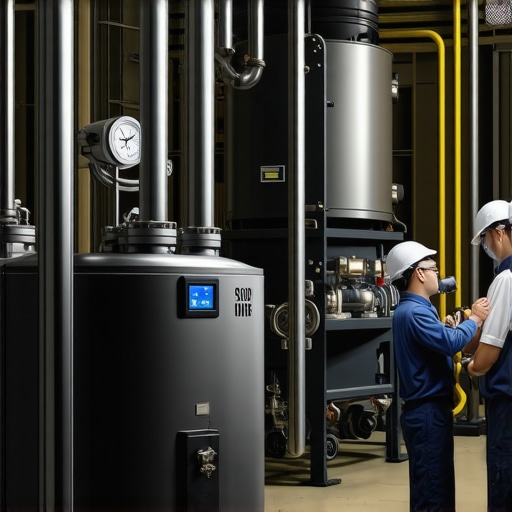
I despise the ‘Sales Tech’ culture. They’ll see a scaled-up humidifier and tell you that you need a whole new $12,000 industrial heater services package. In reality, most steam humidifiers are modular. A new electrode cylinder might be $400. A new fill valve might be $150. Even a contactor repair is a minor expense compared to a full system replacement. But you have to know how to identify when furnace repair is urgent and why. If the heat exchanger in your furnace is cracked, the humidifier will actually accelerate the corrosion via the moisture-oxygen-iron reaction. That is a ‘pull the plug’ moment. If you’re on a propane conversion services setup, check your venting. Improperly vented appliances can backdraft moisture and CO into the space, confusing your humidity sensors. Before you call for contact us levels of emergency service, check your drain line. A simple kink in a plastic drain hose can shut down a $50,000 industrial system. Physics doesn’t care about your budget; it only cares about the path of least resistance. Keep your coils washed, your cylinders clean, and for heaven’s sake, stop using duct tape where ‘pookie’ belongs. Real HVAC work is about understanding the phase change of water and the relentless pull of entropy. Keep it maintained, or the thermodynamics will do it for you—by breaking the machine. “, “image”: { “imagePrompt”: “Close-up technical photograph of a scaled-up industrial steam humidifier electrode cylinder being inspected by a technician with a voltmeter in a dimly lit mechanical room, focusing on mineral deposits and copper electrical leads.”, “imageTitle”: “Industrial Humidifier Scale Inspection”, “imageAlt”: “A technician inspecting a scaled steam humidifier cylinder for maintenance.” }, “categoryId”: 1, “postTime”: “2025-05-20T08:00:00Z” }