The Invisible Mechanical Saboteur: Why Your Winter Comfort Is Dying
The sound of a dry house isn’t a sound at all—it’s a feeling. It’s the sharp crack of static electricity when you touch a doorknob, the groan of hardwood floors shrinking in the dark, and that persistent, scratchy throat that no amount of tea can fix. As an HVAC veteran who has spent three decades crawling through frozen crawlspaces and diagnosticating cracked heat exchangers, I’ve seen homeowners spend thousands on furnace repair when their real problem was a $200 bypass humidifier that hadn’t seen a new water panel since the Bush administration. My old mentor used to scream, ‘You can’t heat what you can’t hydrate!’ He was a bit of a crank, but he was right. Airflow is king, but humidity is the queen that actually keeps the peace. If your air is too dry, you’re not just uncomfortable; you’re literally bleeding heat because dry air feels colder than moist air at the same temperature. This is the thermodynamic reality of latent heat.
The Physics of the Water Panel: A Thermodynamic Deep Dive
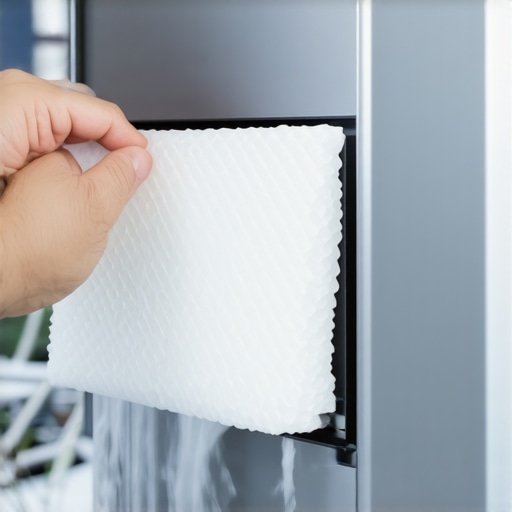
To understand why your humidifier is failing, you have to understand the phase change of water. In a whole-home bypass humidifier, we are taking sensible heat from your supply plenum and using it to drive the evaporation of water off a honeycombed pad. This isn’t just ‘sprinkling water into the air.’ It is a calculated exchange of energy. When that water panel gets coated in calcium and magnesium deposits—what we call ‘scale’ in the trade—it stops being a medium for evaporation and starts being a brick. Once the surface area is gone, the air just whistles past it, carrying zero moisture back into your living space. This puts an immense strain on your system. I’ve walked into jobs where a homeowner complained about a limit switch replacement being needed every year. Why? Because they were cranking the heat to 75 degrees just to feel warm because the air was at 10% relative humidity. That constant high-fire state overheats the heat exchanger, trips the high limit, and eventually cracks the metal. You don’t need a new furnace; you need to change your damn water pad.
“The addition of moisture to the air in a building during the heating season is necessary for comfort, the preservation of building materials, and the reduction of static electricity.” – ASHRAE Handbook—HVAC Systems and Equipment
The Forensic Diagnosis: Anatomy of a Humidifier Failure
When I perform a combustion analysis on a high-efficiency furnace, I’m also looking at the humidifier’s integration. A whole-home system is a delicate balance. First, check the solenoid valve. This is the ‘heart’ that allows the ‘juice’ (water, in this case) to flow. If you hear a click but see no water, the orifice is likely plugged with sediment. Next, look at the humidistat. Old-school mechanical humidistats use a nylon ribbon that stretches and shrinks. They are notoriously inaccurate. If you’re serious about 2025 comfort, you should be looking at AI-driven HVAC optimization and smart controls that calculate the outdoor dew point to prevent window sweating. If your windows are dripping, you’re rotting your sills. If your skin is flaking, you’re not evaporating enough. There is a sweet spot, and most people miss it because they treat the dial like a volume knob.
The Maintenance Checklist: Beyond the ‘Scam Tune-Up’
Don’t let a ‘Sales Tech’ tell you that you need a whole new system because your humidifier tray is messy. Real maintenance involves clearing the drain line. I’ve seen ‘Pookie’ (mastic) and dust combine in a drain line to create a sludge that backs up into the furnace cabinet, shorting out relay services and costing the homeowner a fortune in control boards. 1. Shut off the water. 2. Pop the cover. 3. Slide out the pad. 4. Clean the distribution tray with vinegar. 5. Inspect the gas line installation for furnaces nearby to ensure no corrosion from humidifier leaks. If you see white crusty buildup on your furnace cabinet, you have a leak that is actively eating your investment. Check out these preventative HVAC repair tips for year-round efficiency to see how these small components fit into the larger mechanical picture.
The Steam Boiler and Heat Pump Paradox
In the North, we deal with a variety of heat sources. If you’re running a steam boiler repair or a heat pump installation, your humidification needs change. Heat pumps, especially during a polar vortex, struggle with ‘sensible’ heat, making the air feel ‘thin.’ Adding a dedicated steam humidifier (not a bypass) is the gold standard here. Steam humidifiers don’t rely on the furnace’s heat to evaporate water; they have their own electrodes to boil it. This is ‘pure’ humidity injected directly into the ductwork. It’s more expensive to install, but for smart building management, it is the only way to maintain a perfect 45% RH regardless of the outdoor ambient temp. If you’re considering an upgrade, read more on choosing the right HVAC fixes before you let a tin knocker talk you into a cheap fix.
“Humidity control is as essential to the indoor environment as temperature control, yet it is frequently the most neglected aspect of residential HVAC design.” – ACCA Manual Low-GWP Standards
The 2025 Transition: Refrigerants and Humidification
We are currently entering the era of low-GWP refrigerant retrofits. While refrigerants like R-454B are more about cooling, the shift in equipment design means newer coils are thinner and more efficient at heat transfer. This changes the ‘Delta T’ (temperature difference) across your coil. If your humidifier is mounted too close to a new high-efficiency evaporator coil, you risk ‘slugging’ the coil with moisture, which leads to biological growth. This is why professional humidifier installation is critical. You can’t just slap a bypass on any piece of tin anymore. It requires a static pressure calculation to ensure you aren’t bypassing too much air and starving the far bedrooms of heat. If you’re wondering how these new standards affect your home, our guide on heating service innovations breaks down the 2025 regulatory cliff. Comfort isn’t magic; it’s physics. Stop ignoring the water panel and start respecting the psychrometric chart. Your furnace—and your skin—will thank you. For any urgent issues with your heating system’s integration, knowing how to identify when furnace repair is urgent is the first step in avoiding a mid-January catastrophe.