The Physics of the ‘Cranky Pete’ Lesson
My old mentor, a man we called ‘Cranky Pete’ who had seen more cracked heat exchangers than most guys have seen sunsets, used to grab me by the collar of my work shirt and scream, ‘You can’t cool what you can’t touch!’ He wasn’t talking about ghosts; he was talking about physics. He meant that if the air in your home isn’t actually making contact with the evaporator coil because it’s choked out by a layer of Labrador retriever fur and skin scales, your $10,000 high-efficiency unit is nothing more than an oversized paperweight. This is the ‘Airflow Manifesto.’ If you own a pet, you aren’t just a homeowner; you are a manager of a high-particulate environment that would make a clean-room engineer have a heart attack. Most people think a filter is just there to keep the air ‘clean.’ Wrong. A filter is there to keep the guts of the machine—the blower motor, the secondary heat exchanger, and the coil—from becoming a science project.
“The most expensive equipment in the world cannot overcome a bad duct system.” – Industry Axiom
The Micron War: Why Standard Pleated Filters Fail Pet Owners
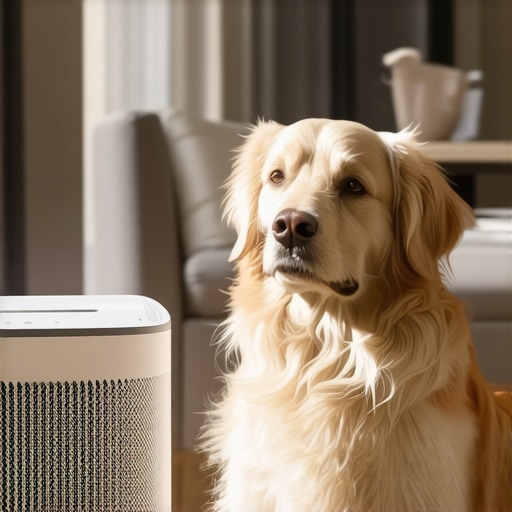
When you walk into a big-box store, they sell those cheap fiberglass filters that you can literally see through. In the trade, we call those ‘rock catchers.’ They might stop a stray tennis ball or a clump of hair, but they do nothing for the microscopic dander that actually triggers allergies and gums up your control board diagnostics. If you’ve got two cats and a Golden Retriever, you are living in a blizzard of organic matter. This is where HEPA (High-Efficiency Particulate Air) filtration comes in. True HEPA filters are designed to capture 99.97% of particles down to 0.3 microns. To put that in perspective, a human hair is about 70 microns. We are talking about capturing the invisible enemy. But here is the catch that the ‘Sales Techs’ won’t tell you: HEPA filters are incredibly restrictive. You can’t just slap a HEPA filter into a standard furnace rack and expect it to work. It’s like trying to breathe through a piece of plywood. Without proper static pressure testing, that HEPA filter will cause your blower motor replacement date to move up by about five years. The motor will hunt for air, overheat, and eventually fry a relay service on the board. You need a professional to look at your return air drop to see if your system can actually handle the ‘thirst’ of a high-efficiency filter.
The Cold Climate Crisis: Steam Humidifiers and Sticky Dander
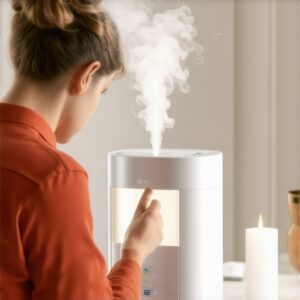
In the North, where the winter air is as dry as a desert bone, pet owners face a unique thermodynamic nightmare. When the humidity drops, dander becomes light and stays airborne longer. It’s like a dust storm in your living room. This is why I always recommend steam humidifiers over those cheap bypass pads. A steam humidifier injects actual vapor into the air stream, making those dander particles ‘heavy’ so they fall out of the air or get trapped in the filter. However, if you aren’t on one of our preventative HVAC repair tips for year-round efficiency, that moisture can mix with the dust in your ducts and create a sludge that we call ‘Pookie-light.’ It sticks to the fan blades and throws the whole system out of balance. I’ve seen biomass boiler services where the homeowner didn’t realize the wood dust and pet dander had combined to create a literal fire hazard in the intake vents. It smells like a burnt haircut when the furnace kicks on, and that’s usually the smell of your money evaporating.
“Indoor air quality is fundamentally linked to the exchange rate and filtration efficiency of the mechanical system.” – ASHRAE Standards
Hospital-Grade Zoning for Your Home
If you really want to get serious about pet dander, you need to look at hospital HVAC zoning principles. In a hospital, we use demand-controlled ventilation to move air where it’s needed most. For a pet owner, this means creating a ‘heavy’ return in the rooms where the animals spend the most time. If your ‘Tin Knocker’ (duct guy) didn’t size your returns correctly, you’re just circulating the same dirty air. I once followed a ‘Sales Tech’ who tried to sell a lady a whole new 16-SEER system because her house ‘smelled like dog.’ The unit was fine; her return air was undersized, causing the air to stagnate. We didn’t need a new unit; we needed to fix the physics. Understanding choosing the right HVAC fixes what homeowners need to know is the difference between a fix and a scam. We ended up installing a dedicated return with a HEPA bypass, and the smell vanished in 48 hours. No swamp cooler maintenance trick or ‘air freshener’ can compete with actual mechanical filtration and proper static pressure management.
The Silent Killer: Blower Motor Stress
Listen closely to your furnace tonight. If it sounds like a jet engine taking off, your filter is too restricted or your ducts are too small. That ‘whirring’ sound is the blower motor screaming for ‘juice.’ When pet owners go to HEPA without adjusting their fan speed or checking their relay services, they put an immense load on the capacitor. I’ve replaced hundreds of capacitors that blew because the motor was working 30% harder than it was designed to. If you don’t believe me, look at your control board diagnostics next time the system trips. If you see a code for ‘Limit Switch Open,’ it usually means the air is moving so slowly that the heat exchanger is overheating. That’s how you end up needing top HVAC repair strategies to extend your system’s life. We aren’t just changing filters; we are managing the lifeblood of the machine. Airflow is king, and if you have pets, you are at war with the particles. Don’t let a ‘Sales Tech’ talk you into a UV light before you’ve fixed the physical filtration. UV kills bacteria, but it doesn’t move the hair. Only a well-designed HEPA system with the right static pressure can do that. Comfort isn’t magic; it’s math and metal.