Why Flickering Lights When the AC Starts is a Job for an Electrician
It’s a quiet Tuesday evening. You’re finally settled on the couch, the house is cooling down, and you’re halfway through your favorite show. Suddenly, you hear it: the low, mechanical thump of the air conditioner’s outdoor compressor kicking into gear. Simultaneously, the LED lamps in your living room perform a synchronized “dip” – a split-second dimming that makes the room feel like a scene from a paranormal thriller. Then, just as quickly as it happened, the lights return to full brightness, and the steady hum of the AC fills the air.
In the trade, we often call this the “ghost in the machine.” As someone who has spent over two decades focused on electrical safety with the AVO Training Institute, I can tell you that while this “blip” is incredibly common, it’s not something you should simply shrug off as a quirk of homeownership. My name is Cornelia (Conny) Vansickle, and my career has been dedicated to understanding the fine line between “normal operation” and “impending electrical failure.”
When your lights flicker, your home is trying to tell you something about its health. It might be a minor complaint, or it might be a warning of a serious fire hazard. Before you go down a rabbit hole of DIY forum advice, it’s essential to understand Choosing the Right HVAC Fixes: What Homeowners Need to Know. But more importantly, you need to know why this specific issue often transcends the expertise of an HVAC technician and lands squarely in the lap of a professional electrician.
The Science of the Surge: What is Inrush Current?
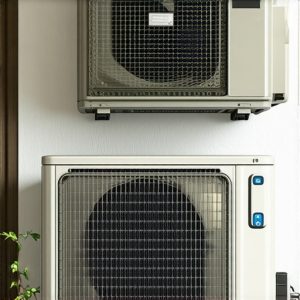
To understand why your lights are “bullying” your AC – or rather, why the AC is bullying your lights – we have to look at the physics of how your cooling system starts. Your air conditioner doesn’t just “turn on” like a lightbulb. It utilizes a massive induction motor to drive the compressor. When that motor is at a standstill, it requires a monumental amount of energy to overcome inertia and start spinning. This is known as Inrush Current or Locked Rotor Amps (LRA).
Think of it like trying to push a stalled car. It takes a massive burst of physical effort to get the tires rolling, but once the car is moving, you can keep it going with much less force. Your AC compressor is the same way. At the moment of startup, it can demand five to six times its normal running current. If your unit usually pulls 15 amps while running, it might “gulp” 75 to 90 amps for a fraction of a second during startup.
This sudden demand causes what we call a Voltage Drop. Electricity follows the path of least resistance, and because the AC is such a heavy hitter, it momentarily “hogs” the available voltage in your home’s electrical system. This leaves less “juice” for the other components on the circuit – like your lights. When the voltage drops, the light output drops, resulting in that characteristic flicker. If you are seeing this consistently, it is time to consult an electrician HVAC expert Mill Creek WA to ensure your system isn’t being overstrained.
When is Flickering a Red Flag?
A very brief, barely perceptible dimming (less than 5%) that lasts for a few milliseconds is often considered “within tolerance” for many older residential systems. However, there is a threshold where “normal” becomes “dangerous.” How do you know if you’re crossing that line?
First, look at the scope of the flicker. If only the lights in one specific room are dimming, you likely have a localized circuit issue or a loose connection in a junction box. If the entire house dims – including the microwave clock or the TV – you are looking at a problem at the main panel or the service entrance. Even in modern homes built after 2019 with 200-amp service, we see these issues. Research into modern residential grids shows that if a home has a pool, a hot tub, and a high-SEER AC unit all pulling from the same “phase” of electricity, the imbalance can cause significant flickering even if the total amperage capacity isn’t exceeded.
Second, watch for the duration. If the lights stay dim for more than a second, or if they continue to pulse while the AC is running, you have a serious problem. This often points to a failing compressor or a major “voltage sag” from the utility provider. Most alarmingly, if you ever notice a faint burning smell near your electrical panel or hear a buzzing sound (arcing) when the AC starts, shut off the breaker immediately. These are the precursors to an electrical fire.
The Usual Suspects: Why Your AC is Bullying Your Lights
While inrush current is the scientific cause, there are often underlying mechanical or electrical failures that exacerbate the problem. Here are the most common “suspects” we find during inspections:
1. Loose or Corroded Wiring
This is the most dangerous culprit. Over time, the vibrations of your home and the thermal expansion/contraction of wires can cause connections to loosen. A loose wire creates high resistance. When the AC demands that massive startup current, the resistance at the loose connection generates intense heat. This is why we often see cases why your outdoor AC disconnect box is melting and how to stop it. If the connection is loose at the main breaker or the “weather head” (where the power enters your house), the voltage drop will be much more severe.
2. A Failing Start Capacitor
Your AC unit has a component called a capacitor, which acts like a small, high-powered battery. Its job is to provide that initial “kick” of energy to start the motor so the rest of your home’s grid doesn’t have to do all the heavy lifting. If the capacitor is bulging, leaking, or simply losing its capacitance due to age, the motor has to pull more current directly from your panel, leading to more dramatic light flickering.
3. Undersized Electrical Service
Many homes built 30 or 40 years ago were designed for a 60-amp or 100-amp total load. Modern living – with electric vehicle chargers, high-end kitchen appliances, and powerful SEER2-compliant AC units – can easily overwhelm these older panels. If your service is undersized, the AC starting up is essentially the “straw that breaks the camel’s back,” momentarily starving the rest of the house of power.
The “Hard Start Kit” and Other HVAC-Side Fixes
When you call an HVAC professional, one of the first solutions they might suggest is a “Hard Start Kit” or a “rejuvenation kit.” From a technical standpoint, these are incredibly effective. A hard start kit consists of a start capacitor and a potential relay. It increases the starting torque of the compressor, allowing it to reach full speed much faster – often in half the time of a standard setup.
By shortening the duration of the inrush current, the “hit” on your home’s electrical system is significantly reduced. Instead of a noticeable dim, you might get a flicker so fast the human eye barely registers it. These kits are standard recommendations for older units that are starting to struggle, but they should only be installed by qualified HVAC installers who can verify that the compressor’s internal windings are still healthy.
Why This is a Job for an Electrician (The Safety Core)
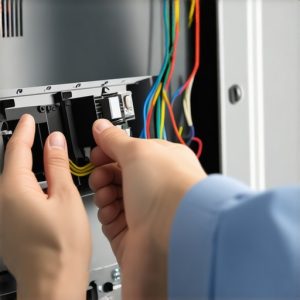
You might wonder: “If the AC is the problem, why do I need an electrician?” The answer lies in the division of labor and safety regulations. An HVAC technician is an expert on the refrigerant cycle and the mechanical components of the unit. However, they are often not licensed to diagnose or repair issues within your main electrical panel or the branch circuitry of your home.
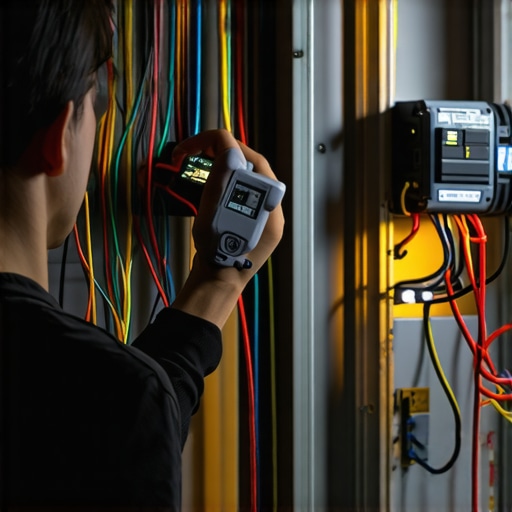
A professional electrician will look for two critical things that an HVAC tech might miss:
- Dedicated AC Circuits: Per the National Electrical Code (NEC), your AC should be on its own dedicated circuit. If a previous DIY homeowner or a “handyman” tapped into your lighting circuit to power a window unit or a small mini-split, your lights will flicker every single time because they are physically sharing the same wire and the same neutral.
- The “Shared Neutral” Issue: In many older homes, “multi-wire branch circuits” were common. This means two different circuits share a single neutral wire. If your AC is on one leg and your lights are on the other, a heavy load on the AC side can cause a voltage “imbalance” on the neutral, causing the lights to brighten or dim erratically. This is a complex diagnostic task that requires an electric panel upgrade Bothell WA or at the very least, a professional rewiring of the panel’s bus bars.
Electricians handle the “juice” – the infrastructure that delivers power to the machine. If the infrastructure is weak, no amount of HVAC repair will fix the flickering.
Long-Term Solutions & Preventative Care
Living with flickering lights is like driving a car with a “check engine” light on. You might get where you’re going today, but you’re courting a breakdown. To ensure your home remains safe and efficient, follow this preventative checklist:
- Annual Panel Inspections: Have an electrician tighten the “lugs” (the large screws holding the main power lines) in your panel. They can loosen over time due to thermal cycling.
- Check the Grounding: A poor ground rod connection can cause all sorts of electrical “noise” and voltage fluctuations.
- Upgrade to 200-Amp Service: If you are still running on a 100-amp panel and plan on adding more modern appliances, an upgrade is the only way to truly “future-proof” your home against voltage drops.
- Monitor LED Performance: Modern LEDs are much more sensitive to voltage changes than old incandescent bulbs. If you’ve recently switched to LEDs and noticed the flickering got worse, it’s a sign your home’s voltage regulation was already on the edge.
For more advice on keeping your system running smoothly, check out our guide on Preventative HVAC Repair Tips for Year-Round Efficiency.
Conclusion: Don’t Ignore the “Blip”
In the world of electrical safety, we have a saying: “Electricity is a great servant, but a terrible master.” Flickering lights when your AC starts are a symptom, not a mystery. Whether it’s a simple need for a hard start kit or a critical requirement for a dedicated circuit and a panel upgrade, addressing the issue now prevents expensive repairs – or worse, a fire – later.
Don’t wait for a “flicker” to become a “fire.” If your lights are dimming, your breakers are tripping, or you’re worried about the age of your electrical system, Contact Us at Heat Pros Services today. Our team of experts will perform a comprehensive system evaluation to keep your home cool and your lights steady.