The Sound of a Dying Summer: The Forensic Diagnosis
You know the sound. It is a Friday afternoon, the sun is beating down with the intensity of a blowtorch, and suddenly, the soothing hum of your outdoor unit turns into a rhythmic, desperate thrum-click… thrum-click. That is the sound of your compressor trying to start but failing because its heart—the capacitor—just gave up the ghost. Most folks think their AC ‘ran out of juice’ or the motor burned up, but as a guy who has spent thirty years dragging manifolds through crawl spaces, I can tell you that 90% of the time, it is a $20 silver cylinder that decided it could not take the heat anymore. This isn’t just about a part failing; it is about the physics of the Southwest heat and the way sensible heat cooks electronics until they pop.
The Sales Tech Scam: A Forensic Case Study
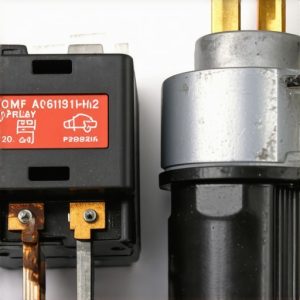
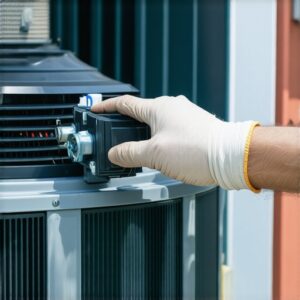
I remember following a ‘Sales Tech’—one of those guys in a starch-white shirt who carries a tablet instead of a nut driver—into a job last August. He had quoted a homeowner $16,000 for a full heat pump replacement, claiming her compressor was ‘electrically compromised.’ I walked out to that condenser, pulled the side panel, and saw a capacitor that was swollen like a tick on a hound dog. It had literally pushed its own top off from the internal pressure. I swapped it out with a high-grade 45+5 mfd capacitor, and that compressor roared to life with a purr that would make a kitten jealous. The homeowner saved $15,800 because she called a technician, not a salesman. This is why understanding ac installation secrets that hvac pros wont tell you is vital; most ‘dead’ units just need a heartbeat.
“Proper sizing and selection of HVAC equipment are critical to ensuring the longevity of electrical components, including capacitors.” – ACCA Manual S
The Anatomy of a Failure: Thermodynamic Zooming
To understand why this part fails so often, you have to look at the ‘Thermodynamic Zooming’ of the startup process. Your compressor is an induction motor. When it starts, it needs a massive ‘kick’ to overcome the inertia of the refrigerant (the juice) sitting in the lines. The capacitor is like a temporary battery that provides a phase-shift, giving the motor the torque it needs. In a high-heat environment like the Southwest, the head pressure in that suction line is sky-high. This means the compressor has to work harder to start. If your ‘tin knocker’ installed ductwork that is too small, that static pressure stays high, and the capacitor has to dump more energy every single time the unit cycles. Over time, the polypropylene film inside the capacitor degrades, the oil heats up, and the dielectric strength fails.
Climate Context: Why the Desert Kills Capacitors
In dry, high-heat zones like Nevada or Arizona, we deal with extreme Sensible Heat. When the ambient temperature hits 110°F, the air inside that condenser cabinet can reach 140°F. Capacitors are rated for specific temperatures, and we are constantly redlining them. This is where top hvac repair strategies to extend your systems life come into play. We often install ‘Hard Start Kits’—essentially a turbocharger for your capacitor—to help the unit start faster and run cooler. If you are dealing with a ductless mini-split installation, the electronics are different, often using integrated circuit boards, but for traditional split systems and even large-scale restaurant kitchen exhaust repair, the motor-run capacitor remains the single most common point of failure.
The Math of the Repair: Fix it or Junk it?
Homeowners always ask if they should just buy a new unit. Here is the veteran’s math: A capacitor replacement, even with a high-quality American-made part and a full system health check, shouldn’t break the bank. Compare that to the cost of a full heat pump replacement or a wall furnace installation. However, if I see that capacitor is failing because the compressor is ‘slugging’ liquid refrigerant or because the coils are so choked with dirt that the head pressure is hitting 500 PSI, then we have a bigger conversation. You can’t just keep throwing parts at a system that is fundamentally broken. Whether you are looking at crawl space heating solutions or a standard AC, airflow is king.
“The most expensive equipment in the world cannot overcome a bad duct system.” – Industry Axiom
The Physics of Integration: WiFi and High-Tech Controls
With the rise of WiFi thermostat integration, we are seeing units cycle more frequently as people try to ‘micro-manage’ their comfort from their phones. Every time that unit clicks on, that capacitor takes a hit. If you have a hyper-heat heat pump, the inverter technology actually bypasses traditional capacitors, which is one reason they last longer in extreme conditions. But for the millions of standard units out there, the capacitor remains the sacrificial lamb of the HVAC world. If you are also running steam humidifiers or have complex flue pipe installation requirements for your furnace, your total system load is higher, making electrical stability even more critical. Don’t forget that duct cleaning services aren’t just for allergies; they lower the static pressure, which saves your capacitor from an early grave.
Final Verdict: Don’t Be Fooled
If your AC stops, don’t panic. Smell the air near the condenser. If it doesn’t smell like the acidic, sour stench of a burnt compressor motor, there is a good chance your capacitor just needed to be swapped. Check for the bulge. If the top of that silver can is domed like a loaf of bread, you found your culprit. Before you sign a contract for a $15,000 system, make sure you aren’t being played by a Sales Tech who doesn’t know a capacitor from a contactor. For more expert advice, check out our ultimate guide to ac installation expert tips for 2025 success or contact us for a real diagnosis.”,”image”:{“imagePrompt”:”A macro photograph of a failed, bloated silver AC run capacitor with a domed top and rusted terminals, sitting on a dusty HVAC service van workbench with a multimeter in the background.”,”imageTitle”:”Failed Swollen AC Capacitor Comparison”,”imageAlt”:”A close-up view of a damaged and bloated air conditioner capacitor showing signs of electrical failure.”},”categoryId”:1,”postTime”:”2025-05-20T10:00:00Z”}萌