The Invisible Enemy: Why Physics Doesn’t Care About Your Feeling of Safety
You can’t see it. You can’t smell it. And unlike a refrigerant leak detection system that catches the sour, chemical odor of juice escaping a coil, Carbon Monoxide (CO) is a ghost. My old mentor used to scream at me when I was a green apprentice, ‘You can’t heat what you can’t exhaust!’ He’d whack his wrench against a galvanized return air drop and explain that if the combustion gases from a furnace don’t have a clear path out of the flue, they’ll find a path into the homeowner’s lungs. That is the fundamental physics of HVAC. If you’re running a variable speed furnace in a tight house, you are living inside a machine that is constantly balancing pressure. If that balance shifts, things turn deadly fast. We aren’t just ‘installing boxes’—we are managing a life-support system in your mechanical room.
“Carbon monoxide is produced by the incomplete combustion of fuels such as natural gas, LP gas, oil, wood, and coal.” – EPA Section 608 Technical Supplement
The Anatomy of a Silent Killer: Thermodynamic Zooming
When your furnace fires up, the burner creates a flame that heats the internal metal of the heat exchanger. In a perfect world, the combustion byproducts—CO, water vapor, and carbon dioxide—are pushed out the chimney by the draft. But here’s where cold climate heat pumps or variable speed furnace services get complicated. If your heat exchanger has a hairline fracture—something a Sales Tech will try to use to scare you into a $15,000 unit when you might just need a repair—the blower motor can actually push CO directly into your supply air. This isn’t just a ‘malfunction’; it’s chemical asphyxiation. CO molecules bind to your hemoglobin 200 times more effectively than oxygen. You aren’t just breathing ‘bad air’; you are literally being blocked from processing oxygen at a cellular level. This is why understanding how to identify when furnace repair is urgent is a matter of life and death, not just comfort.
The Strategy of Placement: Escaping the ‘Dead Air’ Zones
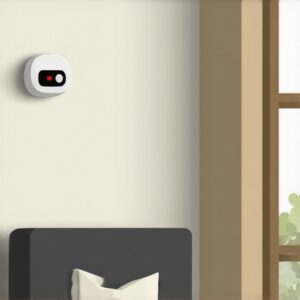
Most people stick a CO detector in the hallway and call it a day. That’s a amateur move. You need to think like a Tin Knocker looking for air dead-spots. CO has a molar mass of 28.0, while air is roughly 28.8. They are nearly identical in weight. This means CO doesn’t just float to the ceiling like smoke, nor does it hug the floor like a refrigerant leak. It mixes with the air in a ‘homogenous cloud.’ If you place a detector right next to a furnace or a swamp cooler maintenance hatch, you’ll get nuisance alarms. If you put it too far away, you’re already dead before it chirps. The sweet spot is 5 feet off the ground, or on the ceiling at least a foot away from any wall. You need one on every level of the home, but specifically within 10 feet of every bedroom door. If you’re sleeping, you won’t smell the ‘rollout’ of a blocked flue, but you might hear the 85-decibel scream of a properly placed sensor.
Modern Integration: Sensors, Alarms, and Smart Logic
In 2025, we’re seeing a massive shift in how we handle home safety. With voice control setup Alexa Google, your CO detector can now broadcast a message through the whole house. But don’t let the gadgets fool you. A smart sensor is only as good as the appliance it’s monitoring. If you’ve recently had an AC installation or a heat pump replacement, you might think you’re safe from CO because these units are electric. Wrong. Most homes still have a gas water heater or a backup furnace for those ‘polar vortex’ nights. Even baseboard heater repair won’t save you if your attic insulation for heating has blocked the soffit vents, creating a negative pressure environment that sucks flue gases back down the chimney. This is called ‘backdrafting,’ and it’s the most common way families get poisoned without the furnace ever ‘failing’ in the traditional sense.
“Detectors shall be located in each level of a dwelling unit, including basements, and in the immediate vicinity of the bedrooms.” – NFPA 720 Standard for the Installation of Carbon Monoxide Detection
The Foreman’s Final Verdict: Maintenance is the Only Shield
I’ve seen too many ‘Sales Techs’ ignore the flue pipe while they’re busy trying to upsell an occupancy sensor installation. Real safety comes from the grit of preventative HVAC repair. You need a pro who actually checks the manifold pressure and performs a combustion analysis. If your tech doesn’t pull out a digital analyzer to check the CO parts per million in your flue, they aren’t doing their job. They’re just looking for a commission. Whether it’s swamp cooler maintenance or a complex variable speed furnace service, the goal is the same: keeping the fire inside the box and the poison outside the house. Don’t fall for the furnace repair myths debunked by industry experts—safety isn’t a product you buy once; it’s a standard you maintain every season. If you’re worried about your system’s integrity, get a real tech out there who knows the difference between a minor tweak and a lethal hazard.