The Physics of Survival: Why Your Life Depends on Airflow Architecture
My old mentor, a grizzly veteran who spent more time in crawlspaces than in the sun, used to scream at me until his face turned the color of a cherry-red heat exchanger: ‘You can’t cool what you can’t touch, and you can’t vent what you don’t pipe!’ He was talking about airflow, the absolute king of the HVAC world. It wasn’t just about getting the juice—our trade slang for refrigerant—to the right pressure; it was about the physics of moving air. When it comes to carbon monoxide (CO), that airflow architecture becomes a matter of life and death. If the tin knocker who installed your ductwork didn’t understand static pressure, or if your flue pipe installation was botched by a ‘sales tech’ more interested in commissions than combustion, you are living in a ticking time bomb. This isn’t just a gadget on a wall; it’s a forensic tool in the battle against incomplete combustion.
“The presence of carbon monoxide is often the result of improper venting or a lack of adequate combustion air, which must be addressed through rigorous system performance testing.” – ACCA Standard 12
In the frigid climates of the North, where we rely on gas-fired furnaces and boilers, the danger is amplified. We aren’t just dealing with sensible heat; we’re fighting the byproduct of flame. When a furnace is running, it’s a controlled explosion. If that heat exchanger has the slightest hairline crack, those toxic gases leak into the supply plenum. I’ve seen homeowners try to mask the smell of a sour burn with air fresheners, not realizing that CO is odorless, colorless, and tasteless. It mimics the flu until it’s too late. This is why understanding how to identify when furnace repair is urgent and why is the first step in home safety. A cracked exchanger isn’t a ‘fix it later’ item; it’s a ‘get out of the house now’ emergency.
The Thermodynamic Reality of CO Placement
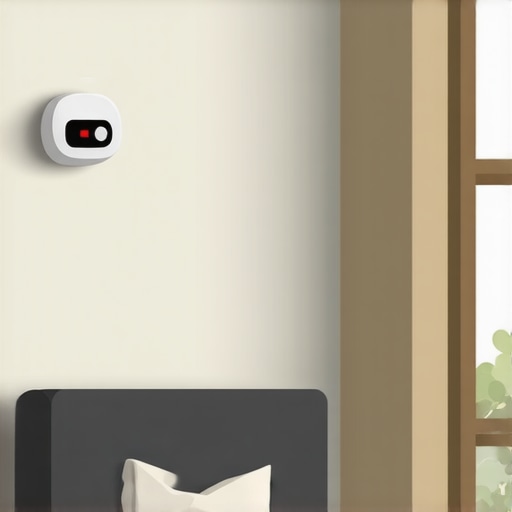
There’s a common myth that carbon monoxide is heavy and sinks to the floor. That is pure garbage. The specific gravity of CO is approximately 0.9657, which means it is slightly lighter than air. However, because it’s usually produced by hot combustion appliances, it rises with the warm air through convection. If you mount your detector near the floor, you’re waiting for the entire room to fill up before the alarm sounds. You want that detector at head height—about five feet off the ground—where you are actually breathing. This is the same principle we use when we talk about preventative HVAC repair tips for year-round efficiency; you have to place your sensors where the action is happening. If you have a humidifier installation integrated into your system, keep the detector at least 15 feet away to avoid false positives from the moisture, but keep it in the path of the airflow.
Critical Zones: Where the Sensors Must Live
Every floor of your home needs a sentry. Start with the sleeping areas. If a CO leak happens at 3 AM while the furnace is cycling, you won’t wake up unless the alarm is right outside your bedroom door. Next, you need one near the basement or the utility closet, but not right next to the furnace. If you place it too close to the burner, the tiny ‘puff’ of CO that occurs during a normal start-up might trigger a nuisance alarm. Give it twenty feet of breathing room. The same applies to restaurant kitchen exhaust repair scenarios; in commercial settings, we place sensors near the prep lines but away from the direct heat of the ranges. If you’re using hyper-heat heat pumps for your primary warmth, your CO risk is lower since there’s no combustion, but if you still have a gas water heater or a backup furnace, the detector is non-negotiable. Many homeowners are switching to ductless mini-split installation to avoid the risks of gas altogether, but even then, a detached garage or a nearby pool heater repair could lead to CO seeping into the living space.
“Detectors shall be located in accordance with the manufacturer’s instructions and should be placed on every level of the dwelling unit, including basements.” – NFPA 72: National Fire Alarm and Signaling Code
The Flue Pipe and The Tin Knocker’s Oversight
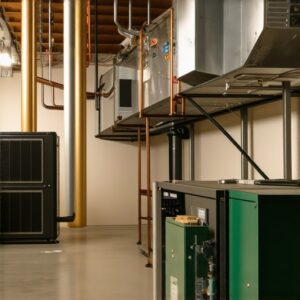
I’ve walked into too many mechanical rooms where the flue pipe installation looked like it was done by a ‘Sparky’ on his lunch break. If the pitch of the pipe isn’t correct, or if the joints aren’t sealed with the proper high-temp silicone or pookie, you’re leaking CO directly into the home. During a professional system performance testing, we use manometers to check for backdrafting. If your house is too ‘tight’ due to modern insulation, your water heater might not be able to vent properly, pulling exhaust back down the chimney. This is where UV light installation for HVAC can help with air quality, but it won’t do a damn thing for CO. You need physical venting integrity. If you’re managing a property with occupancy sensor installation to save on energy, remember that those sensors don’t care if the air is toxic; they only care if a body is in the room. A CO detector is the only sensor that actually protects the body.
The Alternative: Eliminating the Risk at the Source
If you want to sleep like a baby, consider the shift toward electrification. The latest hyper-heat heat pumps can pull warmth out of the air even when it’s -15°F outside. No gas, no flame, no CO. When we perform a ductless mini-split installation, we are effectively removing the primary source of household poisoning. But for those still on the gas grid, maintenance is the only shield. Don’t fall for the ‘Sales Tech’ who just wants to sell you a new blower motor. You need a tech who will perform a combustion analysis and check the manifold pressure. If you have an outdoor setup, even something like a pool heater, don’t assume you’re safe. I’ve seen pool heater repair jobs where the exhaust was blocked by debris, forcing CO through the soffits and into the attic. Always verify the venting path. For more insights on keeping your system in peak shape without getting scammed, check out furnace repair myths debunked by industry experts.
Maintenance: The Final Line of Defense
In the dry Southwest, we deal with evaporative cooler services where the main concern is calcium buildup, but in the North, it’s all about the heat exchanger. Every fall, before you kick that system on, you should be testing your detectors. These devices have a lifespan of 5 to 7 years. If yours is older than that, it’s just a plastic paperweight. Combine your safety check with heating service hacks for comfort and savings in 2025 to ensure your sensors and your furnace are working in harmony. Remember, comfort is physics, but safety is discipline. Don’t let a $30 sensor be the difference between a warm winter and a tragedy.