The Physics of Parched Air: Why Your Lungs Feel Like Sandpaper
My old mentor used to scream at me in the middle of a frozen January attic, ‘You can’t heat what you can’t touch, and you can’t feel the heat if the air is bone-dry!’ He’d be swinging a sheet metal hammer for emphasis while I was trying to wire a 24V transformer without blowing my fingers off. At the time, I thought he was just being a cranky old tin knocker. Thirty years later, I realize he was talking about the fundamental thermodynamics of comfort. We spend thousands on gas line installation for furnaces and high-efficiency burners, but if the relative humidity in your house is 15%, you’re going to feel cold even if the thermostat says 72°F. This is the ‘Sensible Heat’ vs. ‘Latent Heat’ battle that most homeowners lose every winter.
“Properly designed HVAC systems must account for moisture control to maintain structural integrity and occupant health.” – ASHRAE Standard 62.1
The Portable Myth: Why You’re Buying a Bacteria Bucket
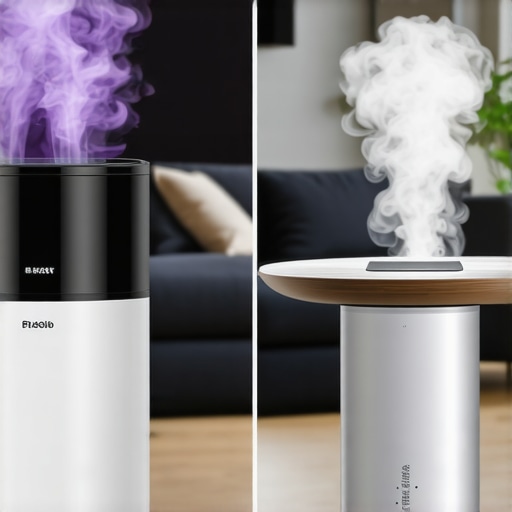
Let’s talk about those $50 plastic jugs you buy at the big-box stores. People love them because they don’t require humidifier installation or a professional tech. But here’s the truth from a guy who has seen the inside of more ‘portable’ units than I care to admit: they are localized failure points. A portable unit is a ‘point-source’ solution for a systemic problem. It dumps moisture into a five-foot radius, often leading to condensation on windows and mold growth on the drywall behind the dresser, while the rest of the house remains a desert. Worse, if you aren’t cleaning those things with distilled water every forty-eight hours, you’re just aerosolizing minerals and whatever else is growing in that stagnant reservoir. It’s a band-aid on a broken leg. In my book, portables are toys. If you want real comfort, you have to integrate it into the ‘tin’—the ductwork.
The Airflow Manifesto: Integration Over Isolation
When we talk about whole-home humidifiers, we are talking about using the furnace as a distribution engine. Whether it’s a bypass unit or a power humidifier, the goal is to introduce water vapor directly into the supply plenum. This is where static pressure testing becomes critical. You can’t just slap a humidifier on a return drop and hope for the best. If the static pressure is off, you’ll end up with ‘slugging’—water droplets that don’t evaporate, leading to rusted heat exchangers and ruined transformer replacement calls. A real pro checks the airflow first. If your ductwork is undersized, adding moisture just adds friction. This is why I always tell folks that top HVAC repair strategies must include a look at the entire envelope, not just the box in the basement.
Thermodynamic Zooming: How Humidity Saves Your Wallet
Dry air is an evaporative sponge. It pulls moisture off your skin, which has a cooling effect (the same way sweating works in July). This means in a dry house, you’re constantly losing body heat to the air. By performing a professional humidifier installation, we raise the dew point of the indoor environment. When the air is properly hydrated, you feel warmer at 68°F than you do at 72°F in a dry house. That 4-degree difference is massive when it comes to your gas bill. We aren’t just talking about comfort; we are talking about mechanical efficiency. If you’re tired of overworking your system, check out these heating service hacks for more ways to trim the fat off your utility costs. We also assist with rebate application assistance because many utility companies will actually pay you to make these upgrades.
“The most expensive equipment in the world cannot overcome a bad duct system.” – Industry Axiom
The Zoning and Purification Connection
If you have a multi-story home, the humidity problem is doubled. Heat and moisture rise. Your upstairs might be a swamp while your downstairs feels like a salt mine. This is where zoning system installation comes into play. By using dampers to control where the conditioned air goes, we can balance the humidity levels across the entire footprint. And don’t get me started on air quality. Dry air allows viruses and dust to stay suspended longer. Integrating air purification with your humidification system creates a ‘scrubbing’ effect. The moisture weighs down the particulates, making it easier for your MERV-13 filters to catch them. If you’re running an old pellet stove as a backup, you know the struggle of dry, ashy air. A whole-home system is the only way to counteract that localized parched heat.
The Technician’s Warning: Maintenance Matters
I’ve seen too many homeowners ignore their humidifiers until they see water leaking out of the furnace cabinet. That ‘gas’ or ‘juice’ isn’t the only thing that needs checking. You’ve got a solenoid valve, a humidistat, and a water pad that looks like a calcified coral reef after one season of hard water. Neglecting these leads to thermostat wiring upgrades because the old ones get corroded by the humidity or, worse, you end up needing dehumidification services in the summer because your bypass damper was left open. If your system is making a screeching sound or just isn’t keeping up, you need to know how to identify when furnace repair is urgent. Don’t wait until the ‘Pookie’ on your ducts is cracking from the dry heat. Real comfort is about the balance of physics, and a whole-home humidifier is the master scale. If you’re ready to stop the static shocks and start breathing again, contact us today to get a real tech on the job, not a sales guy.