The Death of the Soot-Stained Era
I’ve spent thirty years smelling like number two fuel oil and sulfur, crawling through New England basements where the floor is more mud than concrete. I’ve seen the way oil heat behaves—it’s dirty, it’s expensive, and it’s increasingly a relic of a time when we didn’t care about AFUE ratings or combustion efficiency. If you are reading this, you are likely looking to ditch that massive, leaking steel tank for a gas line. But before you let some tin knocker start ripping out your old unit, you need to understand that a conversion isn’t just a swap; it’s a total reimagining of your home’s thermodynamic envelope.
“The most expensive equipment in the world cannot overcome a bad duct system.” – Industry Axiom
I remember following a ‘Sales Tech’—one of those guys who spends more time on his hair than his manifold gauges—into a house last February. He’d quoted this retired teacher $18,000 for a new modulating furnace because her oil burner had a ‘cracked heat exchanger.’ I took one look at it and realized the flame rollout was just a dirty nozzle and a clogged pump. A simple $200 repair would have fixed it, but she wanted gas for the convenience. The problem? This kid hadn’t even checked if her basement had a proper drain for the condensate a high-efficiency gas unit produces. He was going to leave her with a basement full of acidic water. That’s why we do things the right way, starting with the physics of the basement itself.
The Physics of the Conversion: Why Gas is Different
When you move from oil to gas, you are moving from a high-heat-intensity fuel to one that requires precise airflow management. Oil burners are forgiving of sloppy ductwork; gas is not. If your blower motor isn’t sized correctly for the static pressure of your existing trunks, that expensive new furnace will hit the limit switch and shut down before the house even hits 68 degrees. This is why blower motor replacement or upgrade is often part of the conversation when we move to high-efficiency systems. We have to look at the modulating furnace repair data to see how these units ramp up and down. Unlike the old ‘on-off’ oil monsters, a gas furnace needs to breathe. If you’re considering this, check out our guide on choosing the right HVAC fixes to see how these systems differ in real-world applications.
Step 1: The Gas Line Installation and Infrastructure
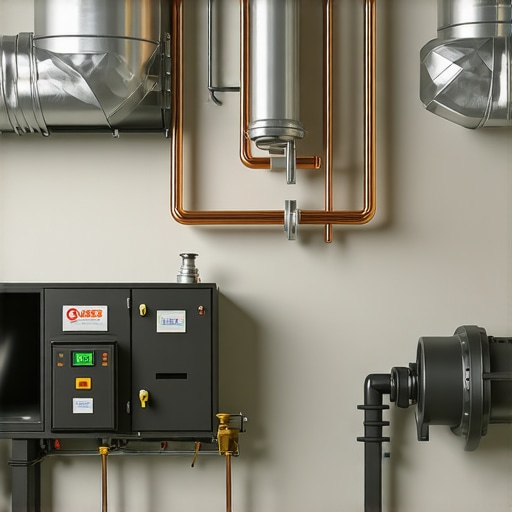
The first step in basement prep is the gas line installation for furnaces. This isn’t just about sticking a pipe through the wall. We have to calculate the total BTU load for every appliance in the house. If you’ve got a gas range, a water heater, and now a 100,000 BTU furnace, that 1/2-inch line isn’t going to cut it. You’ll starve the burners, causing a lean burn that can melt your primary heat exchanger in three seasons. We also look at wall furnace installation options if you have a finished basement area that the main trunk can’t reach. Modern gas lines require proper manifolding and pressure testing—not just ‘soap and bubbles’ but a real 24-hour pressure drop test to ensure there are no micro-leaks behind the drywall.
Step 2: Managing the Condensate (The Silent Killer)
Old oil furnaces vented into a masonry chimney. They were so inefficient that the exhaust stayed hot enough to rise out of the house as a gas. Modern gas furnaces are so efficient (95%+ AFUE) that the exhaust gas cools down and turns back into liquid water. This water is acidic. If you don’t have a floor drain or a condensate pump in your basement, you are asking for a structural nightmare. Preparing your basement means ensuring you have a dedicated drain line. This is often where homeowners get tripped up. While you’re at it, you should look into furnace repair myths to understand why ‘venting into the chimney’ is a death sentence for a high-efficiency unit.
Step 3: Combustion Air and The Regulatory Cliff
The HVAC industry is facing a massive shift in 2025 with new refrigerant regulations and efficiency mandates. When we install a gas furnace in a confined basement, we have to talk about combustion air. You can’t just seal up a basement and expect the furnace to find oxygen. We often have to install two-pipe systems—one for exhaust and one for fresh intake air from outside. This prevents the furnace from sucking the ‘conditioned’ air you just paid to heat right out of the room. We also see more people asking about solar thermal heating integration to offset costs, which requires even more basement real estate for storage tanks. If you’re worried about the costs, look into heating service hacks for 2025 to stay ahead of the regulatory curve.
“Equipment shall be installed in accordance with the manufacturer’s instructions and the terms of its listing.” – NFPA 54 / National Fuel Gas Code
Step 4: Electrical Upgrades and Sensors
Your old oil burner probably ran on a shaky 15-amp circuit with a toggle switch that looked like it belonged in a 1920s horror movie. A new gas furnace, especially one with a variable-speed ECM blower, needs clean power. We often recommend capacitor replacement services as part of initial furnace tune-up services for the rest of the home to ensure the electrical system can handle the new load. We’re also seeing a rise in occupancy sensor installation to manage dampers in zoned systems. If you are doing a full conversion, it’s the best time to think about how you actually use the house. Why heat the guest room to 72 degrees if nobody has been in there for three weeks?
The Warranty Trap and Maintenance
I see it every day: homeowners buy the cheapest unit they can find, ignore the warranty service plans, and then get angry when the secondary heat exchanger clogs with slime because they didn’t do their annual furnace tune-up services. Gas systems are sophisticated. They have flame sensors that need cleaning, pressure switches that can fail, and inducer motors that eventually wear out. If you are transitioning from oil, you are moving from a ‘tank-and-spank’ mentality to a ‘precision-tuning’ mentality. Learn more about preventative HVAC repair tips to keep that new gas investment running for 20 years instead of ten.
Final Verdict: Is the Conversion Worth It?
If you live in a cold climate like the Northeast or Chicago, oil is a ball and chain. Gas is cleaner, the equipment is more efficient, and you stop being a slave to the delivery truck. But if you don’t prep the basement—if you don’t fix the airflow, handle the condensate, and size the gas line properly—you’re just trading one headache for another. Don’t let a sparky or a tin knocker tell you it’s a ‘plug and play’ job. It’s an engineered solution. Whether you’re looking at hotel boiler services for a larger property or a simple residential swap, the physics of thermodynamic heat exchange remain the same. Get it right the first time, or you’ll be calling me back to fix a ‘brand new’ system that doesn’t work. Check out our expert tips for 2025 to see how the industry is changing even further.”,