The Death of the ‘Great Thermostat War’
In thirty years of crawling through fiberglass-filled attics and balancing on icy rooftops, I have learned one absolute truth: comfort is a matter of physics, not a dial on a wall. Most people live in a state of thermal compromise. One room is a meat locker, the other is a sauna, and the ‘Tin Knocker’ who installed the original ductwork probably did it with more ‘Pookie’ (mastic) than actual engineering. My old mentor, a man who could hear a failing bearing from three floors away, used to scream, ‘You can’t cool what you can’t touch!’ This is the Airflow Manifesto. If the air doesn’t move through the coil, the thermodynamics don’t happen. That is why multi-zone ductless mini-split systems are the ultimate solution for homes where traditional ductwork has failed the occupants. We are talking about moving the thermal exchange directly into the living space, bypassing the 30% energy loss typical of leaky, uninsulated attic ducts.
“The most expensive equipment in the world cannot overcome a bad duct system.” – Industry Axiom
When we talk about inverter-driven compressors, we are talking about the heart of the modern HVAC revolution. Traditional ‘Sales Techs’ want to sell you a 5-ton ‘on/off’ beast that hits the house like a sledgehammer. It turns on, blasts cold air, and turns off before it can even begin to address the latent heat—that sticky humidity that makes 72 degrees feel like a swamp. An inverter-driven system is different; it modulates. It’s like a dimmer switch for your compressor. It finds the exact speed needed to maintain the set point, which is why heating service innovations transforming 2025 climate control are centered on this variable-speed technology. By slowing down the compressor, the evaporator coil stays just below the dew point for longer periods, wicking moisture out of the air and into the condensate drain where it belongs.
The Northern Climate Challenge: Beyond Just Cooling
Since we are dealing with a climate that sees real winters, we have to look at the ‘Cold Climate’ heat pump performance. In places where the mercury drops into the negatives, the old-school heat pumps used to give up the ghost. But with propane conversion services and high-performance inverters, we are seeing units that can pull heat out of -15°F air. However, if you are relying on a wood-burning stove installation or a fireplace insert, your mini-split needs to be the ‘brain’ that balances the load. This is where remote thermostat access becomes more than a toy—it is a diagnostic tool. I have seen homeowners use their wood stoves to heat the main floor while the mini-split heads in the bedrooms manage the delta-T to prevent pipes from freezing in the far corners of the house. If you are worried about the safety of these hybrid setups, carbon monoxide detector installation isn’t optional; it’s a life-saving requirement for any home burning solid fuel or gas.
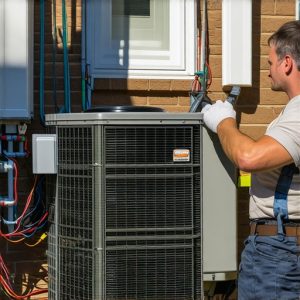
The installation of these systems is a surgical procedure. You are drilling a three-inch hole through the envelope of the house. If you don’t seal that right, you’re just inviting pests and drafts. When I perform air handler repair on these units, I often find that the previous installer didn’t flare the copper lines correctly or, worse, didn’t pull a proper vacuum. If there is moisture in that line-set, it reacts with the ‘juice’ (refrigerant) and the oil to create acid. That acid will eat your compressor from the inside out. You’ll know it’s happening when you smell that sour, metallic stench during a service call—that’s the smell of a $4,000 mistake. For those in high-snow areas, snow melt systems installation and proper mounting of the outdoor condenser are critical. If the outdoor unit is ‘on the ground,’ it will get buried, the fan will lock up, and you’ll be calling for emergency service on the coldest night of the year.
“Properly sized equipment is essential for maintaining indoor humidity levels and ensuring occupant comfort.” – ACCA Manual S
Maintenance on these systems is different than your old furnace. You can’t just ignore it for five years. Furnace filter replacement on a central system is easy, but on a mini-split, those high-density filters need to be washed every month. If they clog, the static pressure spikes, the blower motor works harder, and you lose the efficiency you paid for. I’ve seen ‘Sales Techs’ try to quote a whole new head unit when all that was needed was a deep cleaning of the squirrel-cage fan. Don’t be the person who pays for a new system because they didn’t want to clean a filter. If you’re looking for real advice on keeping your system alive, check out these top hvac repair strategies to extend your systems life. Whether it is industrial heater services for a garage or a delicate multi-zone setup for a Victorian home, the physics remains the same: manage the airflow, protect the compressor, and never trust a guy who doesn’t carry a micron gauge.