The Roar of the Single-Stage Dinosaur and the Future of Comfort
Most homeowners only notice their HVAC system when it stops working or when the compressor kicks on with a bone-jarring thud that rattles the windows. That ‘thud’ is the sound of an old-school single-stage compressor slamming into action at 100% capacity, regardless of whether you need a 2-degree drop or a 20-degree overhaul. As an HVAC veteran who has spent three decades dragging manifolds through crawlspaces, I’ve seen the industry transition from overbuilt cast-iron relics to the precision-engineered inverter compressors we see today. The shift isn’t just about noise; it’s about the fundamental physics of how we move heat. If you’re still running a system that operates like a light switch—either fully on or fully off—you’re burning money and sacrificing comfort. The new standard is variable-speed, and it’s a game of frequency, not just force.
The Narrative Matrix: The Condo Scam and the $12 Sensor
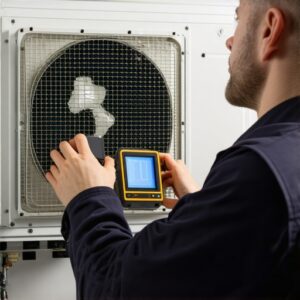
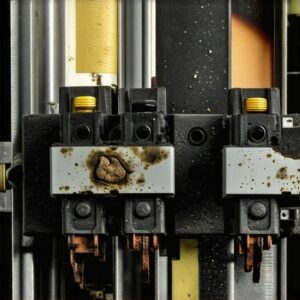
I remember following a ‘Sales Tech’ from one of those big-box franchises into a high-rise penthouse last August. The owner was told her multi-zone VRF system was ‘terminally grounded’ and needed a full $22,000 replacement because the compressor wouldn’t turn over. The kid didn’t even hook up his gauges; he just saw a communication error on the thermostat and smelled a commission. When I got there, I didn’t see a dead compressor. I saw a dirty heat sink on the inverter board and a $12 thermistor that had drifted out of calibration, telling the brain that the suction line was 200°F when it was actually ambient. I cleaned the fins, replaced the sensor, and that ‘dead’ unit hummed back to life at 40% capacity, whisper-quiet. That’s the difference between a parts-changer and a technician who understands efficient HVAC repairs. You can’t diagnose what you don’t understand, and most of these new guys don’t understand DC voltage rectification. For more on avoiding these traps, check out these ac installation secrets that hvac pros wont tell you.
Thermodynamic Zooming: The Physics of Latent Heat Removal
In a humid climate, the enemy isn’t just the temperature—it’s the latent heat, the moisture suspended in the air. A traditional single-stage unit is often oversized to handle the hottest day of the year (the ‘design temperature’). On a typical 85°F day, that oversized unit ‘short cycles.’ It blasts the house with cold air, hits the setpoint in ten minutes, and shuts off. The air feels cool, but your skin feels clammy. Why? Because the evaporator coil didn’t stay below the dew point long enough to wring the water out of the air. It’s like trying to dry a floor by splashing a bucket of water and immediately mopping it up. Inverter compressors solve this through zoning system installation and variable speeds. By running at a lower RPM for longer periods, the coil stays consistently cold, pulling gallons of water out of the air. The house doesn’t just feel cool; it feels crisp. This is why efficient hvac repairs focus so heavily on maintaining that delicate balance of airflow and refrigerant velocity.
“The most expensive equipment in the world cannot overcome a bad duct system.” – Industry Axiom
The Regulatory Cliff: R-410A and the A2L Transition
We are currently standing at the edge of the most significant regulatory shift in thirty years. The EPA is phasing out R-410A in favor of low-GWP (Global Warming Potential) refrigerants like R-454B and R-32. This isn’t just a ‘juice’ change; it’s a total engineering overhaul. These new A2L refrigerants are ‘mildly flammable.’ This means your new 2025 unit will have leak sensors in the evaporator cabinet and logic boards that will shut the system down and ramp up the blower if a leak is detected to prevent a flammable concentration. If you are looking at a ultimate guide to ac installation expert tips for 2025 success, you need to realize that buying the cheapest clearance R-410A model now might leave you with a ‘legacy’ system that is expensive to service in five years. Low-GWP refrigerant retrofits aren’t always possible on old tin; usually, it’s a full system swap. This is where heating service innovations transforming 2025 climate control really come into play, as dual fuel heat pump systems become the logical choice for those wanting to hedge their bets against rising energy costs.
The Airflow Manifesto: Why Your Ductwork is Choking Your Inverter
You can put a Ferrari engine in a lawnmower, but it won’t go 200 mph. An inverter compressor is a high-performance machine that requires precise static pressure. Most ‘tin knockers’ in the 90s undersized return airs, leading to systems that ‘hunt’ for capacity. When you perform a ductless mini-split installation, you bypass the ductwork issues, but for central systems, you must address the MERV filter upgrades. A high-restriction filter on a variable-speed motor can actually cause the motor to ramp up its wattage to compensate, defeating the energy-saving purpose of the inverter. I’ve seen homeowners put in a MERV 16 filter and wonder why their ‘quiet’ system now sounds like a jet engine. It’s because the motor is screaming for air. Proper top hvac repair strategies to extend your systems life always include a static pressure test to ensure the ‘Pookie’ (mastic) and duct design aren’t strangling the compressor. [image_placeholder_1]
The Anatomy of Silence: DC Inverters and Pulse Width Modulation
Traditional compressors run on AC (Alternating Current) at a fixed 60Hz. An inverter system takes that AC, rectifies it to DC (Direct Current), and then uses an inverter board to create a synthetic AC wave at varying frequencies. This allows the motor to run at 10% capacity or 110% capacity. This is why you don’t get the ‘flicker’ in your LED lights when the unit starts—the ‘inrush current’ is managed softly. This technology is essential for app-controlled heating systems where the homeowner wants to see real-time energy consumption. Furthermore, for those in colder climates, dual fuel heat pump systems utilize this inverter technology to provide heat even when the ambient temp drops to 5°F, only switching to the furnace for furnace repair prevention during extreme polar events. If you’re dealing with an older system, understanding how to identify when furnace repair is urgent and why is crucial before the heat exchanger cracks from improper cycling.
“Design for the 99% heating and cooling design temperatures, but install for the 1% of the time you actually need it.” – HVAC Fundamentals
Maintenance vs. The Scam Tune-Up
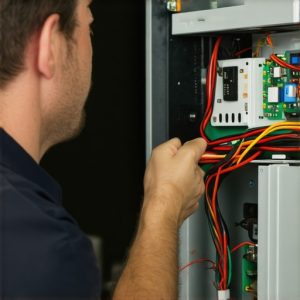
I despise the ‘$29 Tune-Up’ specials. They are nothing but a foot in the door for a sales tech to tell you that your thermocouple replacement is actually a sign of a dying furnace. Real maintenance on an inverter system involves checking the DC bus voltage, cleaning the inverter heat sinks, and ensuring the humidifier installation isn’t leaking moisture onto the control boards. These systems are computers that happen to move refrigerant. If your tech doesn’t have a multimeter that can read hertz and a digital manifold to check the ‘beer can cold’ suction line precisely, he’s just guessing. To keep your system running for 20 years, you need preventative hvac repair tips for year-round efficiency that focus on the electrical integrity of the inverter drive. Don’t be fooled by myths; read up on furnace repair myths debunked by industry experts to stay ahead of the curve. Whether it’s a new construction heating design or a simple retrofit, the inverter is no longer an ‘upgrade’—it’s the only way to achieve true climate control in 2025.