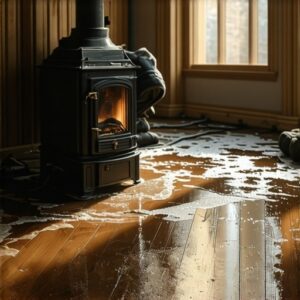
The silence of a frozen January night is only broken by the faint click of a thermostat. In the North, where the mercury hides below zero for weeks, that click is the heartbeat of the home. But when that heartbeat is followed by a thick, sulfurous stench—the unmistakable scent of rotten eggs—your home isn’t just cold; it’s a ticking clock. As a tech who has spent three decades dragging gauges through crawl spaces and diagnosing hydronic heating systems in the middle of a polar vortex, I can tell you that smells are the first line of forensic evidence. My old mentor used to scream, ‘You can’t heat what you can’t touch!’ This was his way of saying that if the energy isn’t transferring correctly, or if the medium of that energy—whether it’s the ‘gas’ (fuel) or the water—is escaping, you’ve got a failure of physics on your hands.
The Chemistry of the Stench: Mercaptan and Safety
Let’s get the ‘Sales Tech’ fluff out of the way. If you smell rotten eggs near your baseboards or your boiler, you are likely smelling Methyl Mercaptan. Natural gas and propane are naturally odorless. Utilities inject this sulfur-based odorant so you can detect a leak before your house becomes a local news headline. In hydronic heating systems, the boiler burns fuel to heat water, which is then pumped through copper fin-tube baseboards. A leak in the supply line to the boiler or a crack in the burner assembly can allow gas to migrate through the floor joists and out of the baseboard covers. This is a level-five emergency.
“Any odor of gas indoors requires immediate evacuation and notification of the local utility or fire department from a safe location.” – NFPA 54: National Fuel Gas Code
If you hit this point, do not flip a light switch. Do not look for your keys. The ‘Sparky’ (electrician) will tell you that a single arc from a light switch is enough to find the explosive limit of that gas. Get out, and then look into how to identify when furnace repair is urgent and why once the fire marshal clears the structure.
The Forensic Diagnosis: Hydronic vs. Electric Baseboards
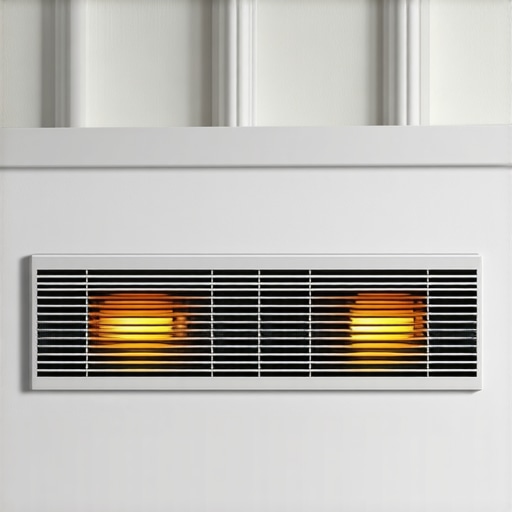
If the gas company clears your lines and that smell persists, we transition from chemistry to biology or mechanical failure. In the crawl space heating solutions I’ve inspected from Maine to Chicago, a ‘rotten egg’ smell can also indicate a dead rodent trapped against the heating elements. When the system kicks on, the ‘sensible heat’ (the temperature we can measure with a thermometer) cooks the carcass, releasing sulfur compounds. However, if you have electric baseboards, that smell might be the plastic casing of a capacitor or a wire nut melting. This is why predictive maintenance alerts on modern smart systems are becoming standard; they can sense the amperage spike before the insulation starts to off-gas. If you are running an older system, you are the sensor. Don’t ignore the ‘sour’ smell of an electrical short. You need to pull the covers and look for charred ‘Pookie’ (mastic) or melted wire jackets.
Thermodynamic Zooming: How Heat Moves and Why It Fails
To understand why your heater is failing, you have to understand the latent and sensible heat transfer happening inside those fins. In a hydronic loop, the boiler doesn’t just ‘make hot water.’ It’s a heat exchanger where the combustion of methane or propane releases thermal energy into the copper heat exchanger. This energy is then moved via a circulator pump. The fin-tube design of those baseboards relies on natural convection. Cold air at the floor is drawn up, heated by the fins, and rises. If those fins are clogged with dust, pet hair, or ‘Pookie’ from a sloppy renovation, the heat can’t escape. This leads to localized overheating. For those with boilers, boiler maintenance services are not optional. A scaled-up heat exchanger acts like an insulator, forcing the burner to run longer and hotter, which can lead to ‘flame rollout’ and—you guessed it—the smell of incomplete combustion. Proper HVAC maintenance plans focus on cleaning these convective surfaces to ensure the physics of the home remains balanced.
The Ventilation Solution: HRV, ERV, and IAQ
In modern, ‘tight’ homes, smells linger because there is zero natural air exchange. This is where heat recovery ventilators (HRV) and energy recovery ventilators (ERV) come into play. If your baseboard heater is producing a faint odor, an HRV/ERV system can help mitigate the buildup of pollutants while recovering the thermal energy you just paid for. An HRV is specifically designed for our Northern climates; it takes the ‘sensible heat’ from the exhaust air and transfers it to the incoming fresh, freezing air. This prevents the ‘cold swamp’ feel often found in poorly ventilated homes. Integrating demand-controlled ventilation ensures that the system only ramps up when CO2 or VOC levels rise, saving you ‘juice’ (electricity) on your monthly bill. If you’re looking for efficient HVAC repairs: the blueprint for cooler summers and warmer winters, you start with the envelope of the house and the ventilation rate.
The Math of Repair vs. Replace
I’ve seen homeowners pour thousands into pellet stove repair or ancient hydronic loops when the ‘Thermodynamic Cliff’ has already been crossed. If your boiler is over 20 years old and the heat exchanger is leaking gas or water, you are throwing good money after bad. A new 95% AFUE condensing boiler, combined with a smart thermostat setup, can pay for itself in five seasons of Northern winters.
“The most expensive equipment in the world cannot overcome a bad duct system or a poorly piped hydronic loop.” – Industry Axiom
When evaluating your next move, consider top HVAC repair strategies to extend your system’s life, but know when to call it. A cracked cast-iron section in a boiler is a death sentence. Don’t let a ‘Sales Tech’ convince you that a bottle of stop-leak is a permanent fix; it’s a bandage on a gunshot wound.
Final Verdict: Actionable Steps
If you smell that rotten egg scent right now, here is your checklist: 1. Shut off the gas main if it’s safe to reach. 2. Evacuate. 3. Call the utility company. 4. If the gas is cleared, check for ‘biological’ interference (pests) or electrical melting. 5. Consult a ‘Tin Knocker’ or a hydronic expert to evaluate your hydronic heating systems for integrity. For more on keeping your system running without the drama, check out our preventative HVAC repair tips for year-round efficiency. Comfort isn’t magic; it’s physics. If you maintain the equipment and respect the airflow, the system will respect your wallet. If you ignore the smells, you’re just waiting for the ‘Forensic Diagnosis’ to be written about your mechanical room. For expert assistance, you can always contact us to get a real tech on the job, not a salesman in a clean uniform.