The Airflow Manifesto: Stop Treating Your Attic Like a Garbage Can
Listen, I’ve spent thirty years crawling through blown-in insulation and dodging roofing nails, and if there is one thing I’ve learned, it’s that homeowners treat their HVAC systems like magic boxes. You push a button on a smart thermostat setup, and magic cold or hot air happens. But physics doesn’t care about your feelings. My old mentor used to scream at me until he was purple in the face, ‘You can’t treat what you can’t touch!’ He was talking about airflow. If you aren’t moving the air—and moving it correctly—your $15,000 geothermal heat pump systems or your fancy variable speed furnace services are just expensive paperweights. We are talking about Energy Recovery Ventilators (ERVs), and specifically, why that dusty, 130-degree attic is actually the throne room for indoor air quality.
“The most expensive equipment in the world cannot overcome a bad duct system.” – Industry Axiom
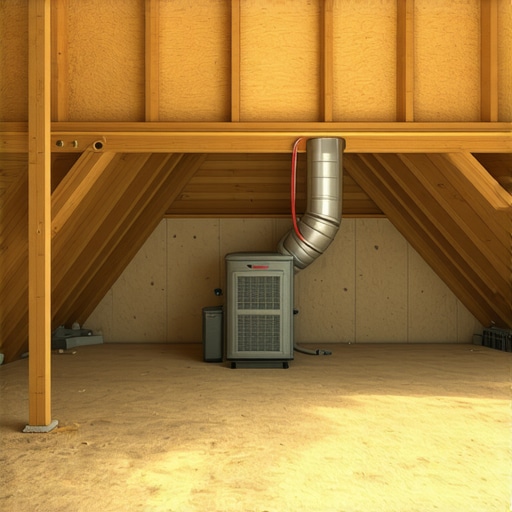
In a new construction heating design, architects love to hide the mechanicals. They want them in a crawlspace or a basement where they can rot in the damp. But when we’re talking about an ERV—a device that literally breathes for your house—the attic is the logical headquarters. Why? Because an ERV is all about the exchange of enthalpy. In the dead of a Northern winter, when the ‘Polar Vortex’ is trying to crack your gas line installation for furnaces, your house is a sealed tomb. You’re breathing skin cells, cleaning chemicals, and CO2. An ERV pulls that stale, nasty air out and brings fresh, filtered air in, but it does a magic trick: it uses the outgoing warm air to pre-heat the incoming freezing air. If that unit is in the attic, you have the shortest, most efficient runs to the ceiling registers where people actually breathe.
The Thermodynamic Zoom: Latent Heat and the Enthalpy Core
Let’s get technical for a second. We aren’t just moving air; we are managing energy. An ERV uses a desiccant-coated core—think of it as a high-tech honeycomb—that allows moisture and heat to pass between two airstreams without the air actually mixing. In a humid summer, it strips the ‘latent heat’ (the moisture that makes you feel like you’re wearing a wet blanket) from the incoming air and dumps it outside. In the winter, it keeps that precious humidity inside so your skin doesn’t flake off like a dry croissant. Placing this in the attic allows for a centralized ‘Tin Knocker’ masterpiece. You can drop your returns into the ‘wet’ rooms (bathrooms and kitchens) and supply fresh air to the bedrooms with surgical precision. This is why annual heating inspection routines often fail; techs look at the fire, but they never look at the breath. If your control board diagnostics show the system is running but you still feel groggy, your airflow is the culprit.
Why the Attic Wins (And How to Not Screw It Up)
I’ve seen ‘Sparkies’ (electricians) and wiring repair for heating systems experts mess up ERV installs because they don’t understand static pressure. If you put the ERV in the basement, you’re fighting gravity and long duct runs. In the attic, you’re at the top of the stack. However, the attic is a hostile environment. You can’t just throw it up there and walk away. You need ‘Pookie’—that’s duct mastic for the uninitiated. I don’t care how good your silver tape is; in five years, it’ll be brittle and leaking. You slap Pookie on every joint to ensure that the fresh air actually makes it to the bedroom and isn’t just cooling the squirrels in your eaves. This is the difference between a ‘Sales Tech’ install and a veteran’s craft. For more on the right way to handle these setups, check out these ac installation secrets that hvac pros wont tell you.
“Ventilation shall be provided by mechanical means… to ensure the health and safety of occupants by mitigating indoor pollutants.” – ASHRAE Standard 62.2
When we integrate an ERV into a system with radiant floor heating installation, the attic becomes even more critical. Radiant heat doesn’t move air—it just warms objects. Without an ERV in the attic to circulate and refresh the oxygen, a radiant-heated home can become a stagnant, humid mess. I remember a job where a homeowner complained of ‘weeping windows’—condensation so thick it was rotting the sills. They had a top-tier boiler but zero ventilation. We cut an ERV into the attic, ran the ‘Juice’ (refrigerant/power) and the control board diagnostics, and within 48 hours, the house was bone dry and smelled like the Maine woods. This is why choosing the right hvac fixes is about the whole house, not just the box in the closet. Learn more at choosing the right hvac fixes.
The Maintenance Reality: Beyond the Filter
If you think an ERV is ‘set it and forget it,’ you’re the reason I have a job. These units have filters that get absolutely choked with pollen and road dust. If you’re already doing a dryer vent cleaning, you should be checking your ERV intake hood on the gable wall. I’ve seen bird nests, wasp hives, and even plastic bags sucked into those intakes. When that happens, your ERV motor starts straining, the ‘amp draw’ goes up, and you’ll eventually be calling me for a motor replacement. This is part of preventative hvac repair tips that most people ignore until the control board diagnostics start flashing red. A solid preventative hvac repair plan keeps these lungs breathing. And don’t get me started on wiring repair for heating systems—if your ERV isn’t interlocked with your main blower, you’re just blowing fresh air into a dead duct.
Conclusion: Physics Doesn’t Negotiate
At the end of the day, an ERV in the attic is about maximizing the ‘Suction Line’ of your home’s health. It’s about ensuring that your variable speed furnace services are actually delivering tempered, fresh air, not just recycling the same old dust. Whether you’re looking at heating service innovations transforming 2025 climate control or just trying to survive the next winter, remember that airflow is the king of the mountain. Don’t let a ‘Sales Tech’ talk you into a bigger furnace when what you really need is better air. If you’re smelling something sour or your windows are sweating, it’s time to look up. Your attic might just be the solution you’ve been overlooking. For emergency help or a real diagnosis, you can always contact us here. “