The Sulfur Ghost in Your Basement: A Forensic Diagnosis
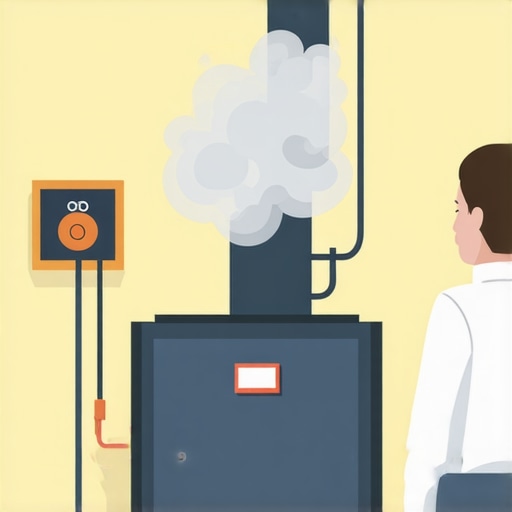
That smell—rotten eggs, sulfur, a swamp gas phantom—it isn’t just an annoyance; it’s the chemical mercaptan doing exactly what it was designed to do: warn you of a leak before the house becomes a fuel-air bomb. I’ve spent thirty winters in the frozen north, crawling through crawlspaces where the frost on the joists was thicker than a steak, and I’ve seen exactly what happens when people ignore that scent. If you smell gas near your furnace, you need to move, not think. My old mentor, a grizzly veteran who could diagnose a bad inducer motor by the vibration in the floorboards, used to scream at me, ‘You can’t burn what you can’t vent, and you can’t heat what you can’t control!’ This is the foundation of The Airflow Manifesto. It isn’t just about blowing hot air; it’s about the chemistry of combustion and the physics of static pressure. When that gas smell hits your nostrils, it’s often a sign that the stoichiometric ratio—that perfect 10-to-1 balance of air and natural gas—has gone sideways, or worse, your heat exchanger has developed a hairline fracture. This is why identifying when furnace repair is urgent is the difference between a cold night and a catastrophe.
The Mechanical Anatomy of a Gas Leak
Let’s look at the furnace like a living organism. Your gas valve is the heart, the heat exchanger is the lungs, and the flue is the throat. If the ‘heart’ is leaking, you have a mechanical failure at the threads or the diaphragm. If the ‘lungs’ are cracked, you aren’t just smelling gas; you’re flirting with carbon monoxide poisoning. In the cold climate zones of the North, where we run commercial furnace repair and residential calls back-to-back, the extreme temperature differentials cause the metal in the heat exchanger to expand and contract thousands of times a season. Eventually, the metal fatigues. If you have a high-efficiency 90%+ AFUE furnace, you have a secondary heat exchanger where latent heat is extracted. This is where the physics gets interesting: as the flue gases cool below the dew point, they turn into acidic condensate. If that condensate backs up because of a clogged drain or a failed bypass humidifier repair, it can eat through the metal, leading to the very gas smells and safety hazards we’re discussing. This isn’t a job for a ‘Sales Tech’ who only knows how to read a commission chart; it requires a real tech who understands manual J calculations and the nuances of steam boiler repair or baseboard heater repair.
“The most expensive equipment in the world cannot overcome a bad duct system.” – Industry Axiom
Thermodynamic Zooming: Why Combustion Fails
When we talk about gas smells, we have to talk about Sensible Heat versus Latent Heat. In a standard 80% furnace, we lose a lot of energy up the chimney. In a modern system, we capture the latent heat of vaporization. But if your duct design services were handled by a ‘tin knocker’ who didn’t know his math, your system is likely choking. High static pressure is the silent killer. It causes the furnace to overheat, which stresses the heat exchanger and leads to those cracks that let gas or CO into your living space. If you’ve been searching for MERV filter upgrades, be careful—thick filters can restrict airflow so much that you’ll cook your own blower motor and crack your exchanger from the sheer lack of cooling airflow across the cells. It’s all connected. You might want WiFi thermostat integration or voice control setup Alexa Google to make things convenient, but no app can fix a cracked secondary heat exchanger. If you’re looking for solar thermal heating integration, that’s great for the future, but right now, if you smell gas, your immediate priority is the mechanical integrity of your current rig.
“All gas piping and components must be tested for leaks before the appliance is placed into operation.” – NFPA 54 / National Fuel Gas Code
The Math: Repair vs. Replace in 2025
Here is the cynical truth: a ‘Sales Tech’ will see a gas smell and immediately quote you $15,000 for a new unit. But a real technician will find the leak. Is it a $200 gas valve or a $3,000 heat exchanger? If your furnace is over 15 years old, the ‘juice’ isn’t worth the squeeze. The labor for a heat exchanger replacement is astronomical, and you’re still left with an old blower motor and a crusty circuit board. However, don’t let them scare you into a sale without a combustion analysis. We use digital manometers to check the ‘W.C.’ (Water Column) pressure. If the manifold pressure is too high, it’s ‘over-firing,’ which is like redlining your car engine in the driveway. This leads to premature failure and, you guessed it, gas smells. For those in the North dealing with commercial furnace repair, the stakes are even higher—large scale boilers and rooftop units (RTUs) can leak massive amounts of ‘gas’ (fuel) before sensors even trip. This is why furnace repair myths are so dangerous. People think a little smell is ‘normal’ for an old unit. It’s not. It’s a sign of a system under terminal stress.
Immediate Steps to Stay Safe
If the smell of mercaptan is strong, do not flip a light switch—a single spark from a ‘Sparky’s’ wiring or even a standard toggle can ignite a pocket of gas. 1. Evacuate everyone. 2. Shut off the gas at the external meter if you can. 3. Call the utility company and then a reputable HVAC firm. Don’t worry about your WiFi thermostat integration or your solar thermal heating integration at this moment. You need a pro to perform a leak down test. Once the immediate danger is over, consider heating service innovations transforming 2025 climate control. We are moving toward more sensors and safer A2L refrigerants in heat pumps, but for gas furnaces, the tech still relies on solid ‘Pookie’ (mastic) on the ducts and a perfectly sealed combustion chamber. For more on how to keep your system running, check out preventative HVAC repair tips. Remember, comfort is a matter of physics, and safety is a matter of respect for the fuel you’re burning.