The Ghost in the Ductwork: Why Your Furnace is Shiver-Inducing
I remember my old mentor, a man who smelled like WD-40 and menthol cigarettes, used to scream at me in the back of a freezing service van: ‘You can’t cool what you can’t touch, and you can’t heat what you can’t move!’ This wasn’t just old-man rambling; it was a physics lesson that stuck with me for thirty years. Airflow is king. If the air doesn’t move across that heat exchanger, the heat stays in the box. And when heat stays in the box, the limit switch—the unsung hero of your furnace—does exactly what it was designed to do: it kills the fire before your house becomes a bonfire. When you’re sitting in a house that’s dropping to 50 degrees during a polar vortex, that silence is deafening. You hear the inducer motor kick on, that familiar whir of the small fan clearing the combustion chamber, but then… nothing. No roar of the burners. No warm blast from the registers. You’re likely looking at a tripped high-limit switch, and while every instinct tells you to just bypass it and get the juice flowing, you’re playing with a thermodynamic grenade.
“The most expensive equipment in the world cannot overcome a bad duct system.” – Industry Axiom
The Forensic Diagnosis: Anatomy of a Thermal Shutdown
In the North, where the frost line is deep and the wind off the lake bites through a Carhartt jacket, the furnace is the heart of the home. The limit switch is the coronary artery. Technically, it’s a normally-closed bimetallic disc or a capillary sensor that monitors the air temperature inside the furnace plenum. Its job is simple: if the temperature exceeds a factory-set safety threshold (usually around 140°F to 170°F depending on the AFUE rating), the switch opens, breaking the 24V circuit to the gas valve or the ignition control board. When this happens, the ‘Sparky’ side of the system takes over, shutting down the flames while keeping the blower running to cool the heat exchanger. If you’re dealing with urgent furnace repairs, understanding this sequence is the difference between a simple fix and a red-tagged unit. We aren’t just talking about a ‘broken heater’; we’re talking about sensible heat versus latent heat and the preservation of the heat exchanger’s structural integrity. When a limit switch fails, it’s often because it has been cycled so many times it’s lost its ‘snap’—a condition we call ‘nuisance tripping’—but 90% of the time, the switch is fine and your airflow is trash.
The Physics of the Bypass: Emergency Only, and I Mean ONLY
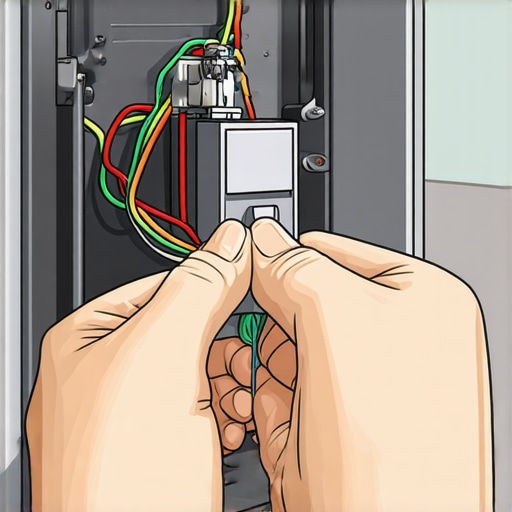
Let’s get one thing straight: bypassing a safety limit is like taping over the oil pressure light in your truck and flooring it down the interstate. You might get where you’re going, but you might also leave your engine on the pavement. If you are in a true emergency—meaning the pipes are about to burst and the HVAC tech is six hours away—you need to understand the electrical relay services involved. A limit switch is usually wired in series with other safeties like the rollout switches. To bypass it, a tech might use a jumper wire with alligator clips to bridge the two terminals on the switch, effectively telling the control board that everything is ‘cool’ even when it’s not. DO NOT LEAVE A BYPASS UNATTENDED. If you do this, the furnace will fire indefinitely. Without that high-limit protection, the heat exchanger can reach temperatures high enough to crack the metal. Once that happens, you aren’t just out of heat; you’re leaking Carbon Monoxide into the living space. This is why furnace repair myths that suggest bypassing is a ‘pro tip’ are dangerous. A cracked heat exchanger in a hydronic heating system or a forced-air furnace is a death sentence for the equipment. If you’re forced to jump a switch, you stay in front of that unit with a multimeter and a thermometer until the house hits 65 degrees, then you pull that jumper off. Better yet, check your furnace filter replacement status first. A clogged filter is the #1 reason for limit trips—it’s like trying to breathe through a wet towel while running a marathon.
Thermodynamic Zooming: The Hidden Culprits
Why does the limit trip? It’s rarely the switch itself. In my years of crawling through spider-infested crawlspaces, I’ve seen it all. In hotel boiler services or large residential hydronic systems, the issues might be pump-related, but in your standard gas furnace, it’s almost always static pressure. If your ‘Tin Knocker’ (duct guy) undersized the return air drops, the blower can’t pull enough CFM (Cubic Feet per Minute) to strip the heat off the exchanger. This causes the ‘delta T’—the temperature difference between the return and supply air—to skyrocket. We see this often when people try to get fancy with voice control setup Alexa Google to manage their climate but forget the basic mechanics. Your smart thermostat can’t fix a crushed flex duct in the attic. Similarly, if you’ve got a swamp cooler maintenance routine in the summer but ignore your furnace until the first snow, you’re asking for trouble. Dust buildup on the secondary heat exchanger of a high-efficiency furnace acts like an insulator, keeping the heat inside the metal instead of transferring it to the air. That’s why heat exchanger cleaning is a non-negotiable part of any top repair strategy. If the heat stays in the metal, the limit switch is the only thing keeping the furnace from melting into a puddle of slag.
“Any person who fails to comply with any provision of this subpart shall be liable for a civil penalty…” – EPA Section 608 Regulations
The Math: Repair vs. Replace in 2025
Look, I’m not a sales tech. I’m not here to tell you that a tripped limit means you need a $12,000 variable-speed unit. But you have to do the math. A replacement limit switch is a $50 part and 20 minutes of labor. But if that switch tripped because your heat exchanger is rusted out and ‘popping’ when it heats up, you’re looking at a different beast. A cracked exchanger is an automatic ‘red tag’—I shut the gas off and you don’t turn it back on until the unit is replaced. It’s a liability issue. In the cold North, we deal with extreme thermal expansion and contraction. Over 20 years, that metal gets tired. If you’re constantly bypassing or resetting safeties, you’re just accelerating the inevitable. Instead of a quick fix, consider HVAC load calculation services to see if your system was even sized right to begin with. Most ‘Sales Techs’ will just look at the old unit and swap it for the same size. A real pro does a Manual J. If you’re curious about how these things are changing, check out heating service innovations for 2025. We’re seeing more integrated sensors and ‘smart’ limits that can actually tell the thermostat *why* they tripped, but the basic physics of air-over-fire remains the same.
The Airflow Manifesto: Prevention Over Panic
If you want to avoid the ‘sound of silence’ this winter, stop treating your furnace like a magic box and start treating it like a breathing machine. Clean your ‘Pookie’ (mastic) sealed joints to ensure no air is leaking out before it hits the rooms. If you have baseboard heater repair needs on a separate hydronic loop, ensure those fins aren’t crushed. For the forced-air folks, the message is simple: furnace filter replacement isn’t a suggestion; it’s a requirement. A MERV 11 filter is great for allergies, but it’s a wall for air. If your blower motor is old and the capacitor is weak, it won’t spin fast enough to move the air, leading right back to that limit switch tripping. I’ve followed guys who quoted a whole new blower and control board when all the unit needed was a $5 capacitor and a good coil cleaning. Don’t be that victim. Learn the sequence of operation. Listen for the ‘click’ of the limit. And for the love of all that is holy, if you must bypass for an hour of emergency heat, don’t walk away from it. This industry is built on the backs of guys who know that the smallest part—a little 1-inch disc of metal—is the only thing between a warm house and a catastrophe. If you’re looking for more ways to keep the ‘Gas’ (refrigerant or gas) flowing safely, read up on preventative repair tips. Stay warm, stay safe, and keep your hands off the jumper wires unless you really know what you’re doing.