The Anatomy of the Puddle: A Forensic Diagnosis of Pool Heater Failure
I remember my old mentor, a grizzly veteran who smelled permanently of R-22 and pipe dope, screaming at me during a service call in late October. ‘You can’t heat what you can’t touch, kid!’ he barked. He was talking about surface area and the fundamental laws of thermodynamics. In our world, whether we are talking about heating service for a residential furnace or the complex combustion cycle of a high-BTU pool heater, the physics don’t lie. Most homeowners see a puddle under their heater and immediately assume the worst: a cracked heat exchanger or a dangerous gas leak. But more often than not, it is simply the byproduct of physics doing its job. This is what we call latent heat in action.
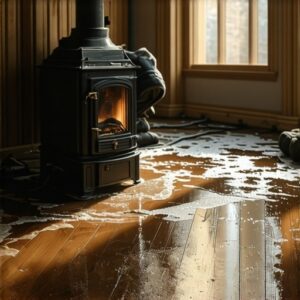
When you fire up a pool heater, especially in the cooler climates of the North where we rely on furnace repair services and steam humidifiers for half the year, the temperature differential is staggering. You have 60-degree pool water rushing into a copper heat exchanger while a gas-fired burner is dumping 200,000 to 400,000 BTUs of raw energy into the combustion chamber. This causes the air around the heat exchanger to drop rapidly below its dew point. Just like a cold beer can on a July afternoon, the heater starts to sweat. This isn’t a leak; it’s condensation. If you don’t understand the psychrometrics of the situation, you’re going to get fleeced by some ‘Sales Tech’ who thinks every drop of water is a sign you need a new $5,000 unit.
“The most expensive equipment in the world cannot overcome a bad duct system, nor can it violate the laws of combustion chemistry.” – Industry Axiom
The Physics of the ‘Sweat’: Why Condensation Occurs
To understand why your heater is crying, you have to look at Combustion Analysis. Natural gas and propane are hydrocarbons. When they burn, they create two primary byproducts: carbon dioxide and water vapor. In a perfect world, that water vapor stays as a gas and exits the flue. However, when that hot vapor hits a cold heat exchanger filled with 60-degree water, it undergoes a phase change. It turns back into a liquid. This is latent heat of vaporization being released. If your heater is oversized or the water flow is too fast, the heater stays ‘cold’ longer, and the sweating becomes a flood. This is why we perform system performance testing to ensure the bypass valve is balanced. If the water is moving too fast, the internal temperature never rises high enough to stop the condensation cycle.
If you’re seeing water, do the ‘Bucket Test.’ Shut the heater off but leave the pump running. If the puddle dries up, it was condensation from the combustion process. If the puddle stays or grows while the heater is off, you have a mechanical leak in the heat exchanger or the plumbing headers. This is a crucial distinction. A mechanical leak means the copper has likely been eaten away by poor water chemistry—usually low pH or high chlorine levels that have turned the ‘Juice’ (our trade term for the water/refrigerant balance) acidic. This is similar to why we see furnace repair myths suggesting that a little water in the tray is ‘normal’ when it’s actually a cracked secondary heat exchanger.
Identifying the Sour Smell: Is it a Gas Leak?
Now, let’s talk about the smell. If you smell something akin to rotten eggs, that’s the mercaptan added to the gas. That is not condensation. That is a life-safety issue. I’ve walked into backyards where the ‘Sparky’ (the electrician) didn’t properly bond the unit, or the gas line was installed with cheap ‘Pookie’ (mastic) instead of proper thread sealant. Gas leaks at the gas valve or the orifice manifold are often caused by vibration or corrosion. Unlike a hot water heater repair where the tank is stationary, pool heaters deal with massive amounts of airflow and vibration. If your WiFi thermostat integration or app-controlled heating systems are showing an ‘Ignition Failure’ or ‘Low Flame’ code, don’t just keep hitting the reset button. You are potentially loading the combustion chamber with unburned gas.
“Carbon monoxide is the silent byproduct of incomplete combustion; a cracked heat exchanger is the primary delivery vehicle for this hazard.” – ASHRAE Standards
The Cost of Ignorance: Repair vs. Replace
In our trade, we see a lot of people trying to bypass safety switches to get one last weekend out of a dying heater. This is how you end up with a ‘melted’ unit. If your combustion analysis shows high levels of CO or if the flame is ‘rolling out’ (licking out of the cabinet), the heat exchanger is likely soot-clogged or breached. Replacing a copper heat exchanger can cost $1,500 to $2,500. For an older unit, that’s often throwing good money after bad. We often recommend a ductless mini-split installation for pool houses or infrared heater installation for patios, but for the pool water itself, you need a healthy, sealed combustion system. If the cabinet is rusted out and the burner tray looks like a shipwreck, it’s time for expert advice on new equipment.
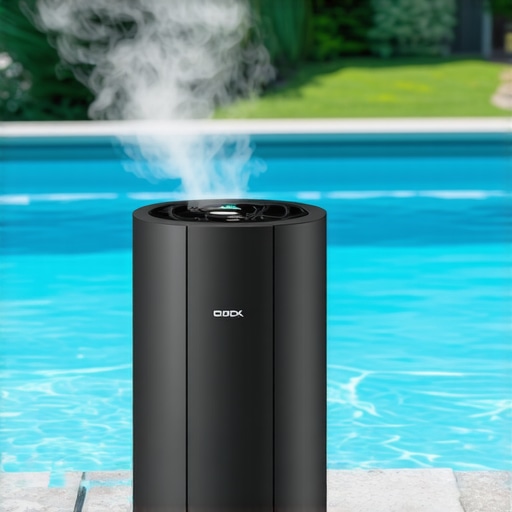
Before you call out a tech to spend $200 just to tell you it’s raining inside your heater, check your flow. High-efficiency pumps often don’t provide enough GPM (gallons per minute) to keep the internal pressure switch closed, or they provide too much, causing excessive condensation. Proper maintenance, including cleaning the burner orifices of spider webs and checking the manifold pressure, will extend the life of the unit. Remember, a pool heater is just a giant furnace that works in a wet environment. Treat it with the same respect you would your home’s heating system, and you’ll avoid the mid-summer panic call. Stop looking for ‘magic’ fixes and start looking at the physics. Comfort is a science, and as a veteran ‘Tin Knocker’ turned service master, I can tell you that the numbers never lie.