The sound of a freezing garage in January isn’t silence; it’s the brittle creak of a car engine trying to turn over and the sharp snap of frozen pipes in the wall. I’ve spent thirty winters hauling my tool bag through snowbanks, and the number one mistake I see homeowners make is thinking they can just hack a hole in their existing supply trunk to ‘bleed’ some heat into the garage. My old mentor, a guy who could smell a refrigerant leak from the curb, used to scream at me, ‘You can’t cool what you can’t touch, and you can’t heat what you can’t circulate!’ This is the foundation of the Airflow Manifesto: comfort is a matter of physics, not just blowing hot air into a cold box. If you tap into your home’s HVAC system to heat a garage, you aren’t just breaking code; you are destroying the static pressure balance of your entire house. Your main unit was sized by a manual J calculation for the finished square footage of your living room, not the uninsulated cavern where you keep your lawnmower. By adding that duct, you starve the rest of the house, causing the blower motor to ramp up, the heat exchanger to overheat, and eventually, you’ll be calling for furnace repair when the high-limit switch finally snaps. We need to talk about independent thermal envelopes and why keeping your garage warm requires a dedicated strategy that doesn’t involve killing your main system.
“The most expensive equipment in the world cannot overcome a bad duct system.” – Industry Axiom
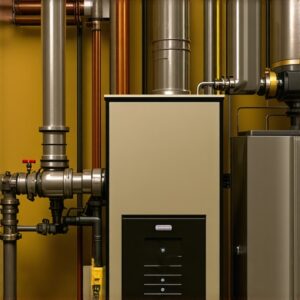
When we look at the climate in the North and Northeast, the enemy is simple: sensible heat loss through uninsulated slabs and overhead doors. To heat a garage effectively, we have to look at the ‘Thermodynamic Zooming’ of the space. Air molecules in a cold garage are sluggish; to get them moving, you need a high Delta T (temperature difference). This is where wall furnace installation comes into play. Unlike a central system that relies on a complex ‘Tin Knocker’s’ dream of ductwork, a wall furnace is a localized beast. It uses a dedicated gas line to heat a combustion chamber, and a simple fan pushes that heat directly into the space. But you can’t just slap one in. You need to consider the combustion air. If you don’t have enough ‘make-up air,’ that furnace will starve for oxygen, leading to incomplete combustion and the production of carbon monoxide. I’ve seen ‘handymen’ install these without proper venting, and it’s a death trap. Always ensure your wall furnace installation includes a proper flue and system performance testing to verify that the ‘juice’ is burning clean and the exhaust isn’t rolling back into the garage.
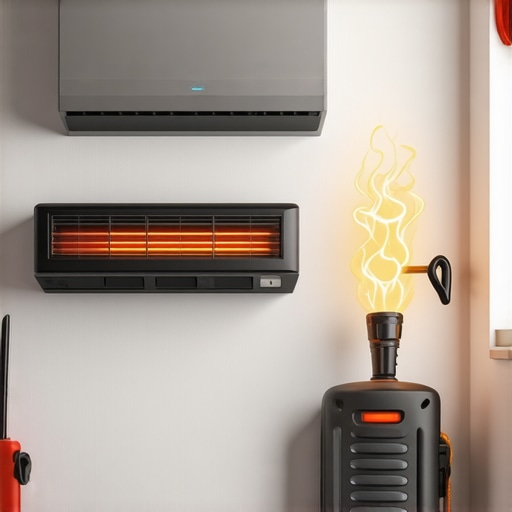
For those looking for a more modern, ‘all-electric’ approach, we have to talk about the heat pump revolution. Now, before you tell me heat pumps don’t work in the cold, you’re living in 1995. Modern cold-climate mini-split systems can pull heat out of the air even when it’s 5°F outside. This is where financing for heat pump installs becomes a major factor for homeowners. These systems are an investment, but they are the king of ‘Airflow Logic.’ They don’t use ducts at all. A small outdoor condenser sends ‘gas’ (refrigerant) through copper lines to an indoor head mounted on the garage wall. Because there’s no ductwork, there’s no static pressure loss. You get 100% of the energy you pay for delivered directly to your workbench. However, we are currently at a ‘Regulatory Cliff.’ As of 2025, the industry is moving away from R-410A toward ‘mildly flammable’ A2L refrigerants. If you are looking at low-GWP refrigerant retrofits or new installs, you need a tech who understands that these new systems require leak sensors and different manifold gauges. This isn’t a job for a ‘Sparky’ or a plumber; it requires a specialized skill set in refrigerant leak detection and vacuum pump procedures to ensure the system is moisture-free before it’s charged.
“Design conditions for heating shall be based on the 99% or 97.5% column for the city nearest the project location.” – ACCA Manual J, 8th Edition
Let’s talk about the ‘scam’ of the quick fix. I see people buying those 240V electric ‘space heaters’ and then wondering why their electric bill looks like a mortgage payment. Electric resistance heat is 100% efficient at the wire, but it’s the most expensive way to move a BTU. If you’re serious about the garage, you need a preventative maintenance contract that covers a dedicated unit. Part of that maintenance isn’t just checking the ‘juice’ levels; it’s about dryer vent cleaning and air purification integration. Why? Because garages are dirty. Sawdust, car exhaust, and chemical fumes get sucked into your heating unit. If you don’t have a high-MERV filter and a clean heat exchanger, you’re just recirculating poison. I’ve opened up garage heaters that were so clogged with dryer lint from an adjacent laundry room that the burner was literally choking. If you have an old-school setup, you might even be looking at steam boiler repair if your garage is heated by an old radiator off a main boiler. Those systems are rare now, but they require a ‘wet-head’ technician who knows how to balance a steam trap—something most ‘Sales Techs’ couldn’t do if their life depended on it. For most, the choice between capacitor replacement services on an old unit and a new, high-efficiency install comes down to the math of the thermal load. If you want real comfort, stop thinking about ‘adding a vent’ and start thinking about dedicated, balanced airflow. You can read more about making the right choice in our guide on choosing the right HVAC fixes. At the end of the day, physics doesn’t care about your budget; it only cares about the path of least resistance and the transfer of energy. Keep your garage separate, keep it safe, and stop starving your home’s main lungs for a little bit of warmth in the workshop.
{“@context”:”https://schema.org”,”@type”:”HowTo”,”name”:”How to Heat a Garage Without New Ductwork”,”description”:”Expert advice from a master HVAC technician on the best methods to heat a garage independently from the main home system.”,”step”:[{“@type”:”HowToStep”,”name”:”Assess the Thermal Envelope”,”text”:”Determine the insulation levels of the garage walls, ceiling, and overhead door to calculate the required BTUs.”},{“@type”:”HowToStep”,”name”:”Choose the Heat Source”,”text”:”Select between a gas-fired wall furnace for high Delta T or a cold-climate mini-split heat pump for efficiency.”},{“@type”:”HowToStep”,”name”:”Verify Power and Fuel Lines”,”text”:”Ensure adequate gas pressure for wall furnaces or dedicated 240V electrical circuits for heat pumps.”},{“@type”:”HowToStep”,”name”:”Professional Installation”,”text”:”Hire a licensed technician for wall furnace installation or heat pump refrigerant charging to comply with EPA and 2025 A2L regulations.”},{“@type”:”HowToStep”,”name”:”Perform Static Pressure Testing”,”text”:”Verify that the new installation does not interfere with the home’s primary HVAC system performance.”}],”totalTime”:”PT4H”}