The Airflow Manifesto: Why Your Tiny Home is a Thermodynamic Battlefield
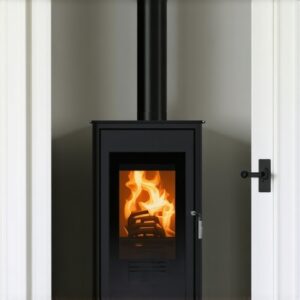
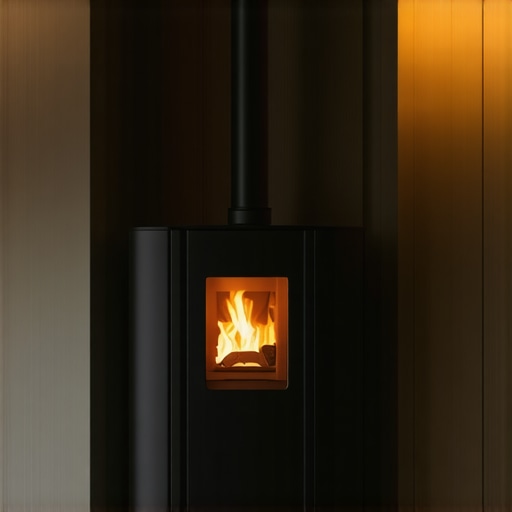
You’ve seen the photos: a cozy loft, a cedar-clad interior, and a tiny little heater tucked into the wall. It looks simple. It looks efficient. But as a guy who’s spent thirty years crawling through crawlspaces and sweating out five pounds of water weight in attics every July, I’m here to tell you that small spaces are the most difficult environments to master. My old mentor used to scream at me until his face was the color of a manifold gauge: ‘You can’t heat what you can’t touch!’ He wasn’t talking about the equipment; he was talking about the air. In a 250-square-foot tiny home, airflow isn’t just a comfort metric; it’s a survival requirement. If you don’t get the physics right, your loft will be a 90-degree sauna while your floor stays a 50-degree icebox. This is the reality of air stratification, and most wall furnaces are ill-equipped to fight it without help.
“The most expensive equipment in the world cannot overcome a bad duct system.” – Industry Axiom
The Physics of the Wall Furnace: Convection vs. Reality
A wall furnace is essentially a box that gets hot and hopes for the best. It relies on natural convection—hot air rises, cold air sinks. In a warehouse heating solutions context, we use massive blowers to force that air down. In a tiny home, you’re often relying on a tiny integrated fan or, worse, no fan at all. When that heat leaves the unit, it heads straight for the highest point: your sleeping loft. Without airflow measurement services to balance the pressure, you end up with a ‘dead zone’ at the floor level. This is where the latent heat—the energy required to change the state of moisture in the air—becomes a nightmare. In northern climates, if that air isn’t moving, moisture settles on cold windows and walls, leading to mold before you’ve even finished your first winter. This is why dehumidification services and heat recovery ventilators are often more important than the furnace itself in a tight envelope.
Why Most Tiny Home Heaters Fail the ‘Static Pressure’ Test
I’ve seen ‘Tin Knockers’ try to run ductwork in tiny homes, and it’s a mess. Because there’s no room for proper plenums, the static pressure (the resistance to airflow) skyrockets. If you decide to go with a wall furnace, you have to understand the ‘Pookie’ (mastic) principle. Every air leak in your tiny home’s envelope is a direct hit to your heater’s efficiency. If your furnace is gas-fired, you also have the danger of ‘flame rollout’ if the venting isn’t perfect. I’ve been called out for a blower motor replacement on units that were only two years old because they were choking on their own heat, unable to move the air through the restrictive space. Before you install, check out these HVAC fixes what homeowners need to know to avoid the common pitfalls of small-space heating.
“Proper sizing and equipment selection are critical to maintaining indoor air quality and comfort in high-performance building envelopes.” – ASHRAE Standard 62.2
The 2025 Regulatory Cliff: Efficiency and the Tiny Home
We are moving into a new era of climate control. The old days of just ‘slapping in a heater’ are gone. With the 2025 shift toward A2L refrigerants and higher AFUE ratings, even wall furnaces are getting more complex. If you’re looking at a unit today, you need to consider leak detector integration and WiFi thermostat integration. Why? Because in a tiny home, the margin for error is zero. A small gas leak or a frozen pipe from a failed heater isn’t just an inconvenience; it’s a total loss. Integrating a smart thermostat allows you to monitor the ‘Sensible Heat’—the temperature you actually feel—versus the ‘Latent Heat’—the humidity that makes it feel miserable. I often recommend humidifier installation for tiny homes in the Northeast because the wood-burning or propane wall units strip every ounce of moisture out of the air, cracking your beautiful wood finishes and drying out your sinuses. You can learn more about these shifts in heating service innovations for 2025.
The Technician’s Verdict: Is it the Right Choice?
If you are building a tiny home on a slab in a cold climate, you might be better off looking at snow melt systems installation techniques applied indoors (hydronic radiant heat) rather than a wall furnace. However, if a wall furnace is your only option due to space or budget, you must treat it like a surgical tool. You need to ensure the venting is sealed with the best ‘Pookie’ money can buy, and you must have a plan for air circulation. Don’t be the person who calls me for an emergency hotel boiler services-style repair on a tiny DIY unit because you forgot about combustion air requirements. If your unit starts making a screeching sound—that’s a bearing failing in the inducer motor, and it’s a sign your furnace is working too hard. Know how to identify when furnace repair is urgent before you’re stuck in a 10-degree night with no ‘juice’ in the lines. Comfort isn’t about the size of the heater; it’s about the mastery of the air it produces.