
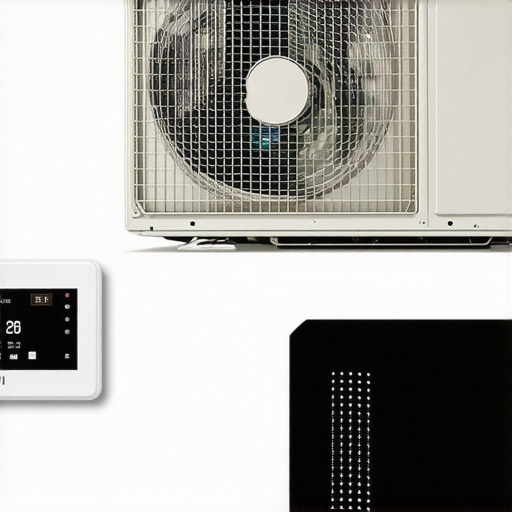
The Phantom Brain: Why Your Legacy Thermostat is Killing Your New Heat Pump
My old mentor used to scream at me in the middle of a crawlspace, ‘You can’t cool what you can’t touch, and you can’t heat what you don’t understand!’ He was a ‘Tin Knocker’ from the old school who believed that airflow mattered more than horsepower. He was right. Today, as we stare down the barrel of the 2025 refrigerant transition, that lesson has never been more relevant. If you just dropped a fortune on a high-efficiency heat pump installation, but you are still using that old 24-volt ‘dumb’ thermostat, you are essentially trying to drive a Tesla with a horse-and-buggy whip. You are strangling the machine’s ability to actually perform its thermodynamic magic.
“The most expensive equipment in the world cannot overcome a bad duct system.” – Industry Axiom
The 2025 Regulatory Cliff: R-410A is Dead
We are currently standing at the edge of a regulatory cliff. The EPA is phasing out R-410A in favor of A2L refrigerants like R-454B. This isn’t just a simple swap of the ‘juice’ or gas in the lines. These new systems are ‘mildly flammable’ and require sophisticated leak detector integration to meet safety standards. When you install a modern inverter-driven heat pump, the thermostat isn’t just a switch anymore; it is the CPU of a complex thermodynamic computer. If you are in a Northern climate, dealing with a polar vortex that requires gas furnace repair or backup electric heater services, your thermostat has to be smart enough to manage the ‘balance point’—the exact temperature where the heat pump loses its efficiency and the backup heat needs to kick in.
Thermodynamic Zooming: The Latent Heat Struggle
To understand why the thermostat matters, you have to look at how a heat pump actually works. It doesn’t ‘make’ cold; it removes heat. In the winter, it harvests heat from the freezing outside air by dropping the evaporator coil temperature well below the ambient dew point. This is where new construction heating design often fails. A standard thermostat just tells the unit to turn ‘on’ or ‘off.’ But a specialized communicating thermostat modulates the blower motor replacement frequency and the compressor speed. It understands latent heat. If your unit short-cycles because the thermostat is poorly calibrated, it won’t run long enough to dehumidify the air or properly manage the defrost cycle, leaving your outdoor unit looking like a block of ice. This is why heating service innovations transforming 2025 climate control are centered entirely on the communication between the wall unit and the air handler.
The Communication Trap: Pulse Width Modulation vs. 24V
Standard thermostats use a 24-volt signal. It’s binary. It’s ‘Sparky’ logic. Modern heat pumps use PWM (Pulse Width Modulation) or digital serial communication. They talk to each other. When the thermostat detects a rise in humidity rather than just a rise in temperature, it tells the blower motor to slow down. This increases the ‘dwell time’ of the air over the cold coil, pulling more moisture out of the air. If you use a generic thermostat, you lose this functionality. You’re paying for a 20-SEER system but getting 14-SEER performance. Furthermore, specialized thermostats are required for ultimate guide to ac installation expert tips for 2025 success because they track the system’s static pressure, alerting you before a clogged filter burns out your motor.
“Ventilation systems shall be designed to provide the required outdoor air-flow rates… to ensure indoor air quality is not compromised during compressor modulation.” – ASHRAE Standard 62.2
The Financial Angle: Rebate Application Assistance
In 2025, the government is handing out money for high-efficiency upgrades, but there’s a catch. To qualify for most tax credits, the system must be ‘AHRI Matched.’ This often includes the thermostat. If you skip the specialized control, you might disqualify yourself from rebate application assistance programs that can save you thousands. Whether you are managing hotel boiler services or a residential split system, the paperwork requires proof that the system can communicate its efficiency data. Don’t let a $200 savings on a thermostat cost you a $2,000 tax credit. If you’re unsure about your current setup, check out these heating service hacks for comfort and savings in 2025.
Emergency Response and Safety Checks
When things go wrong at 3 AM in a blizzard, you need a 24/7 heating emergency response. A specialized thermostat can actually run a self-diagnostic, telling the technician exactly what failed before he even steps out of the truck. Is it a blower motor replacement issue? Is the flame sensor fouled? On a commercial level, this is why hotel boiler services rely on integrated controls to prevent mass guest complaints. Even for homeowners using portable heater safety checks as a temporary fix, the main system’s thermostat remains the primary defense against frozen pipes. You can find more about identifying these crises in our guide on how to identify when furnace repair is urgent and why.
The Final Word: Physics Isn’t Magic
At the end of the day, comfort is about physics. If your thermostat doesn’t understand the refrigeration cycle’s pressure-temperature relationship, it can’t lead the system effectively. We see it all the time: a ‘Sales Tech’ sells a high-end unit but keeps the old thermostat to make the quote look cheaper. That’s a scam. True climate control requires a brain that matches the brawn. For more on making the right choices for your home, read about choosing the right hvac fixes what homeowners need to know. Don’t settle for ‘beer can cold’ when you could have precision engineering. “, “image”: {“imagePrompt”: “A high-tech digital communicating thermostat mounted on a modern home wall, showing complex HVAC diagnostics, humidity levels, and outdoor temperature, with a blurred background of a cozy living room.”, “imageTitle”: “Modern Communicating HVAC Thermostat”, “imageAlt”: “A specialized thermostat for high-efficiency heat pump systems showing diagnostic data.”}, “categoryId”: 1, “postTime”: “”}