The Anatomy of a Brain Transplant: Why Your Smart Thermostat Fails Without Basic Physics
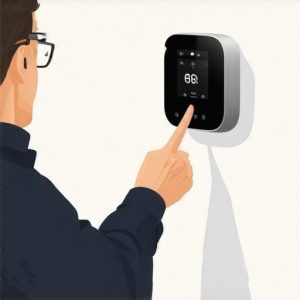
I followed a ‘Sales Tech’ last February into a three-story Victorian where the homeowner was shivering under three blankets while the tech tried to convince her that her three-year-old high-efficiency furnace had a ‘catastrophic primary heat exchanger failure.’ He quoted her $14,500 for a full replacement. I walked in, pulled the faceplate off her fancy new WiFi thermostat, and saw a charred mess. The kid hadn’t checked the voltage; he’d shoved a smart brain onto a 40-year-old system without a common wire, causing a backfeed that fried the transformer and the control board. A $150 transformer replacement and a proper C-wire later, the house was 72 degrees. This is the reality of the trade: everyone wants the ‘smart’ tech, but nobody respects the thermodynamics behind it.
The Thermodynamic Reality of Control
A thermostat is not just a switch; it is the conductor of a complex mechanical orchestra. When we talk about high-efficiency furnace installation, we are dealing with systems that must manage condensation, varying blower speeds, and precise fuel-to-air ratios. If the thermostat doesn’t understand the latency of your heat exchanger, you’re just wasting gas. In colder climates like the Northeast or the Midwest, where a flue pipe installation must be pitched perfectly to prevent acidic condensate from rotting out your inducer motor, the thermostat is your first line of defense against short-cycling. Short-cycling is the silent killer of compressors and ignitors alike; it’s like drag racing your truck from every red light. You might get there, but your engine won’t last 50,000 miles.
“Designers shall ensure that the control system is capable of maintaining the specified indoor environmental conditions under all anticipated outdoor conditions.” – ASHRAE Standard 55
The Step-by-Step for a Flawless WiFi Integration
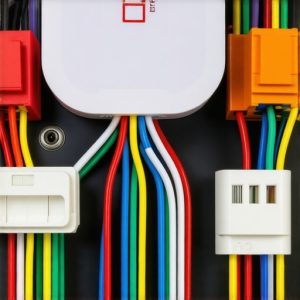
If you’re planning on HVAC repair or an upgrade, the integration starts at the air handler, not the wall. Step 1: The Power Audit. Most smart thermostats need a constant 24V supply (the C-wire). If your old wall furnace installation only has two wires, don’t use those ‘power extender kits’ unless you want to hear your contactor chatter like a pair of false teeth in a blender. Run a new 18/5 thermostat wire. Step 2: Voltage Verification. Use your multimeter to ensure the transformer is putting out at least 24-27 volts under load. Step 3: Zoning Logic. If you are dealing with hospital HVAC zoning or even a large residential split, the thermostat must be calibrated to the static pressure of the ductwork. If the Tin Knocker who built your returns didn’t give the system enough ‘juice’ to breathe, a smart thermostat will just highlight how fast your high-limit switch trips. Step 4: The Flue Check. Especially with a wall furnace installation, ensure your flue pipe installation isn’t compromised during the vibration of a new system startup. A smart thermostat can’t detect Carbon Monoxide, but it can certainly cause the furnace to run long enough to create it if the venting is restricted.
Why High-Efficiency Needs High-Intelligence
Modern hyper-heat heat pumps are a different breed of cat. These systems don’t just turn on; they ramp up. If you slap a generic thermostat on a hyper-heat system, you’re stripping away the variable speed logic that makes it efficient in sub-zero temps. You need a control interface that understands the ‘defrost cycle.’ I’ve seen homeowners go into a panic during an emergency heating repair call because they saw ‘steam’ coming off their outdoor unit. It wasn’t smoke; it was the heat pump doing its job. A properly integrated WiFi thermostat will communicate this status rather than just showing a generic ‘Heat On’ signal. This level of detail is why heating service innovations are leaning so heavily into proprietary communicating controllers.
The Maintenance Contract: Protecting the Brain and the Brawn
I tell every client that a smart thermostat without preventative maintenance contracts is like a Ferrari with a ‘check engine’ light taped over. During an annual heating inspection, a real tech (not a Sales Tech) will check the micro-amps on your flame sensor and the static pressure across the evaporator coil. If your coil is plugged with dog hair and Pookie (mastic), that WiFi thermostat will keep calling for cooling until the compressor slugs juice and dies a screaming death. You can find more on this in our top HVAC repair strategies. When the suction line isn’t ‘beer can cold’ because of a restricted orifice, no amount of ‘smart’ scheduling will save your electric bill.
“The most expensive equipment in the world cannot overcome a bad duct system or an improperly configured control interface.” – Industry Axiom
Identifying the Urgent Over the Aesthetic
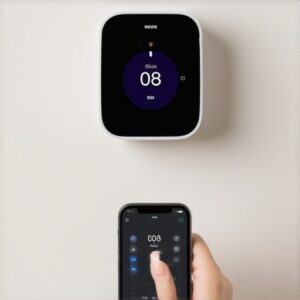
Many homeowners call for emergency heating repair because their WiFi screen went black. Nine times out of ten, the furnace’s secondary drain pan is full of water because the condensate line is clogged, and the float switch cut the power to the transformer to keep from flooding the ceiling. It’s a safety feature, not a broken ‘brain.’ Understanding how to identify when furnace repair is urgent can save you a $400 after-hours dispatch fee just to have a guy blow out a plastic tube. If you are struggling with a complex setup, you should contact us before you start clipping wires and blowing fuses. Remember, the goal of a flawless WiFi thermostat integration isn’t just to change the temp from your phone—it’s to ensure the high-efficiency furnace installation you spent thousands on actually lives to see its fifteenth birthday.