The Myth of the ‘Magic’ Clicker
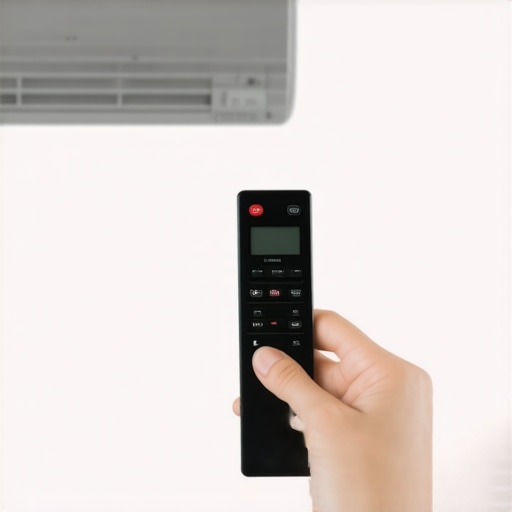
Listen, if you think that little plastic remote for your mini-split is just a lazy man’s way to change the temperature without getting off the couch, you are the reason I’m still working 60-hour weeks. After thirty years of crawling through spider-infested crawl spaces and nearly sliding off frozen commercial roofs, I can tell you that the most sophisticated piece of tech in your house isn’t the inverter compressor outside—it’s that remote. My old mentor, a man who could smell a compressor burnout from the driveway, used to scream at me, ‘You can’t cool what you can’t touch!’ This is why airflow matters more than raw horsepower. In a mini-split system, the remote is often the only thing ‘touching’ the actual temperature you feel.
“The most expensive equipment in the world cannot overcome a bad duct system, or in the case of ductless, a poorly placed sensor.” – Industry Axiom
Thermodynamic Zooming: How Your Remote Controls Latent Heat
In a Northern climate where we deal with everything from damp springs to bone-chilling winters, the mini-split has to be a master of all trades. When you hit a button on that remote, you aren’t just turning on a fan. You are initiating a complex dance of thermodynamics. The evaporator coil inside that wall-mounted head drops below the dew point. As air passes over those fins, it sheds latent heat—that’s the humidity that makes your shirt stick to your back. If your remote is sitting on top of the unit or tucked in a drawer, the system ‘short cycles.’ It thinks it has hit the setpoint because the air right at the ceiling is cool, but down where you’re sitting, it’s still a swamp. This is why a proper smart thermostat setup for mini-splits often involves ‘I Feel’ or ‘Follow Me’ technology, which moves the temperature sensing from the wall unit to the remote itself. If you don’t use this, you’re basically driving a Ferrari with a blindfold on.
The Airflow Manifesto: Why Distance and Direction Matter
Most folks ignore the ‘swing’ or ‘vane’ buttons. Big mistake. Airflow is the vehicle that carries your comfort. In the winter, when we’re talking about crawl space heating solutions or keeping a drafty room warm, you want that air pushed down. Heat rises—physics doesn’t care about your floor plan. If you don’t use the remote to aim that air at the floor, you’re just heating the top six inches of your ceiling. It’s the same reason I tell people that radiator replacement or boiler maintenance services are vital; it’s all about how the heat enters the space. If the heat stays trapped at the source, the rest of the room suffers. I’ve seen hotel boiler services fail because the distribution was off, and your mini-split is no different. It’s a miniature version of a massive system, and the remote is your command center. Check out heating service hacks for comfort and savings in 2025 to see how control logic is changing the game.
The Anatomy of a Cold Call: Beyond the Remote
While the remote is the brain, the rest of the body needs to work. I’ve been called out for ‘broken’ units where the homeowner was frantic, only to find they hadn’t cleaned the filters in a year. When air can’t get through the coil, the ‘suction line’ starts to freeze up, and you’re just blowing air over a block of ice. This is where IAQ improvement services come in. Indoor Air Quality isn’t just a buzzword; it’s about making sure your system isn’t recirculating skin cells and pet dander until the coil is choked. For those in the commercial world, like restaurant kitchen exhaust repair, you know that if the air can’t move, the kitchen becomes a furnace. Your home is no different. If you’re hearing a screech, it might be a bearing, but if you’re hearing a whistle, it’s a plea for more air. Sometimes the fix is as simple as a furnace ignition repair or a flue pipe installation adjustment, but usually, it’s about the basics of flow.
“Ventilation shall be provided in accordance with ASHRAE Standard 62.1 to ensure acceptable indoor air quality.” – ASHRAE Standards
The Physics of Efficiency and the 2025 Shift
We are moving into an era where Energy Star heating certification isn’t just a sticker on the box; it’s a requirement for your wallet. With the transition to new refrigerants, the way we handle ‘gas’ (refrigerant) is changing. If you have an older unit and it’s leaking, don’t let some ‘Sales Tech’ tell you that ‘topping it off’ is a permanent fix. It’s a sealed system. If the ‘juice’ is low, you have a hole. Period. I’ve followed too many guys who quoted 15 grand for a new system when all that was needed was a properly flared joint or a $50 capacitor. Understanding the top hvac repair strategies to extend your systems life can save you thousands. Whether you’re dealing with hotel boiler services or a single-zone mini-split, the physics remain the same: Pressure, Temperature, and Airflow. If you master that remote, you’re mastering the physics of your own home. Stop treating it like a TV remote and start treating it like the precision instrument it is. And for heaven’s sake, keep it away from the window where the sun can bake it, or you’ll be calling me for a ‘repair’ that doesn’t exist.